
Unlike standard pacemakers, the EV-ICD serves a dual purpose by maintaining steady rhythms and delivering emergency shocks during life-threatening episodes. Sudden cardiac arrest is often perceived as a condition primarily affecting the elderly, yet the case of 20-year-old student Coeus Lee illustrates its startling impact on the young and healthy. While undergoing a routine medical check-up, Lee collapsed due to a sudden electrical malfunction in his heart, despite having no prior history of congenital disease or lifestyle-related warning signs. His survival, made possible by immediate medical intervention and the presence of trained medics, highlights a critical need for advanced preventative measures in a demographic where lifestyle-related arterial blockages are rarely the culprit. While sudden cardiac death among individuals under 35 accounts for a small percentage of fatalities, the occurrence often stems from undiagnosed electrical issues or heart muscle disorders that can strike without warning.
Revolutionary Design and Implantation
Engineering a Safer Placement: The Extravascular Advantage
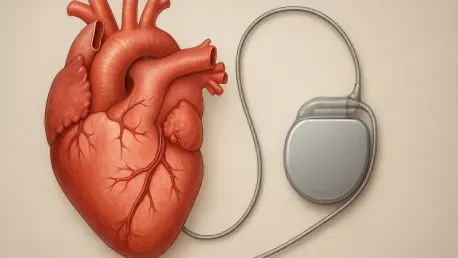
The EV-ICD represents a paradigm shift because it remains entirely outside the vascular system and the heart itself, prioritizing long-term safety for younger recipients. The system features a thin lead placed under the breastbone and a battery pack roughly the size of a smartwatch face, typically situated near the left armpit. This extravascular placement is a significant engineering feat, ensuring the device can effectively regulate heart activity without the risks of threading wires directly through blood vessels and into the heart chambers. By positioning the heart between the wire and the battery box, the device creates a protective field that can accurately sense abnormal rhythms. This layout allows for the delivery of life-saving interventions while keeping the delicate interior of the cardiovascular system free from foreign objects that could cause scarring or mechanical failure over decades of use. This approach preserves the natural anatomy of the patient while providing a robust defense against electrical failure.
Innovative Surgical Approaches: Navigating the Thoracic Space
Implanting this device requires a specialized surgical approach, particularly in younger patients who often possess denser muscle tissue and a different anatomical profile than older recipients. Unlike traditional procedures that rely heavily on sharp cutting tools to create a path for the hardware, surgeons often use manual techniques to navigate the space beneath the sternum. This manual dissection method reduces the risk of damaging vital structures near the heart or lungs, ensuring the highest level of precision in a region where even minor errors have significant consequences. The procedure is typically performed under general anesthesia and lasts roughly one hour, demonstrating a balance between technical complexity and efficiency. Although the recovery involves temporary discomfort, most patients are monitored briefly and are able to return home within twenty-four hours of the operation. This rapid turnaround is crucial for minimizing disruption to the education and personal lives of young cardiac patients.
Comparing Clinical Outcomes and Long-term Health
Sustainable Protection: Managing Vascular Integrity
When compared to traditional transvenous ICDs, the EV-ICD offers a clear advantage in terms of long-term maintenance and the preservation of vascular integrity over several decades. Traditional devices utilize leads threaded through veins and anchored inside the heart, where they are subjected to mechanical stresses. Over time, these leads can become encased in scar tissue or malfunction after twenty or thirty years of use. Because the EV-ICD avoids the bloodstream entirely, the patient’s veins remain clear and unobstructed, which is a critical consideration for young individuals who will likely need the device for the remainder of their lives. If a component ever needs to be replaced or updated, the process does not involve the high-risk task of extracting wires from delicate vein walls, which can sometimes lead to life-threatening tears. By maintaining the natural anatomy of the heart and its surrounding vessels, the system ensures that long-term cardiovascular health is not compromised by the implant.
Holistic Management: Transitioning to Future Care Models
The implementation of the EV-ICD in Singapore marked a major milestone in cardiac care by providing a tailored solution for young survivors of cardiac arrest. This shift toward extravascular technology ensured that medical professionals could address life-threatening electrical instabilities without the complications associated with traditional intravascular wiring. Clinicians recommended that patients maintain regular check-ups and utilize remote monitoring systems to track the device’s performance in real-time. For recipients, this meant transitioning into a lifestyle that balanced physical safety with the pursuit of personal goals and education. The medical community focused on expanding access to such specialized technology, recognizing that proactive intervention was the most effective way to prevent future tragedies. By adopting these less invasive and more durable long-term interventions, healthcare providers successfully transformed a potentially fatal condition into a manageable one, offering young patients a clear path toward a secure and active future.