
Mixed pathology, where a patient harbors multiple types of protein aggregates simultaneously, often leads to a diagnostic odyssey that delays critical medical intervention. This complexity arises because different neurodegenerative diseases frequently share overlapping symptoms, making it nearly impossible for clinicians to pinpoint the exact underlying cause through behavioral observation alone. For decades, the medical community struggled with the limitations of standard brain scans that could only reveal the late-stage physical shrinkage of the brain, rather than the subtle molecular shifts occurring years earlier. Consequently, patients often receive general diagnoses that do not account for the specific protein abnormalities driving their cognitive decline. This lack of precision not only hinders the development of targeted therapies but also leaves families without a clear understanding of the disease’s progression. Modern neurology is now witnessing a profound transformation as artificial intelligence begins to decode these signals with unprecedented clarity.
Advanced Neuroimaging Techniques
Enhancing Routine Scans with Free-Water Tracking
The integration of artificial intelligence into neuroimaging is fundamentally changing how medical professionals interpret the data gathered from standard magnetic resonance imaging (MRI). One of the most promising advancements involves a technique known as free-water imaging, which leverages specialized algorithms to monitor the diffusion of fluid molecules within the brain’s extracellular space. Traditionally, these subtle shifts in water movement were considered noise or were simply beyond the resolution of the human eye to analyze effectively. By applying AI models to these datasets, researchers at institutions like the University of Florida have successfully identified specific patterns of tissue decay that correlate with various forms of dementia. This method is particularly revolutionary because it utilizes the MRI hardware already present in most community hospitals, eliminating the need for expensive hardware upgrades or the installation of specialized, high-cost machinery for regional centers.
Recent clinical validation of free-water tracking has demonstrated an extraordinary ability to distinguish between Alzheimer’s disease and Dementia with Lewy bodies, reaching a verified accuracy rate of 99 percent. This distinction is vital because, although the symptoms may overlap, the management strategies for these conditions differ significantly. The AI achieves this by comparing current patient scans against an extensive database of brain tissue samples, creating a structural fingerprint that can isolate the unique signature of Parkinson-related dementia from other pathologies. This data-driven approach moves the diagnostic process away from subjective interpretation and toward a standardized, evidence-based model. For the first time, doctors can offer a high degree of certainty early in the disease process, allowing for the immediate implementation of specialized care plans that are tailored to the specific neurodegenerative pathways identified by the software.
Mapping Metabolic Signatures: The StateViewer Algorithm
While structural imaging provides a snapshot of brain anatomy, functional imaging through positron emission tomography (PET) scans offers a window into how the brain utilizes energy. Analyzing these metabolic patterns has historically required the eyes of a super-specialist, as the differences in glucose consumption across various dementia types are often incredibly subtle. To address this scarcity of expert knowledge, the Mayo Clinic introduced a sophisticated algorithm called StateViewer, which functions as a digital assistant for radiologists. This tool was meticulously trained on a massive dataset involving thousands of patients diagnosed with nine distinct types of neurodegenerative disorders. By learning to recognize the specific metabolic maps associated with each condition, the software can highlight areas of concern that a general radiologist might overlook. This collaboration between human intuition and machine precision ensures that the depth of a patient’s diagnosis is no longer limited by the staff on hand.
The implementation of the StateViewer algorithm has yielded impressive results in clinical settings, demonstrating an 88 percent accuracy rate across a broad spectrum of dementia types. Perhaps more importantly, the tool has proven to be a force multiplier for medical staff, as radiologists utilizing the software were found to be three times more likely to provide an accurate diagnosis compared to those working without AI assistance. This level of support is particularly transformative for regional clinics and smaller healthcare facilities that may not have round-the-clock access to world-renowned neurology experts. By embedding top-tier diagnostic intelligence into the software, the technology ensures that a patient in a rural setting receives the same quality of insight as one visiting a specialized urban medical center. This democratization of expert-level diagnostic capability is a crucial step toward reducing the disparities in neurological care that have persisted for generations.
Biological Breakthroughs and Future Trends
The Promise of Multi-Protein Blood Tests
Beyond the realm of advanced imaging, the focus of dementia research is shifting toward the development of non-invasive biological screenings that can be performed during a routine checkup. Artificial intelligence is playing a pivotal role in this transition by enabling the analysis of complex protein panels within simple blood samples. Rather than searching for a single biomarker, such as amyloid-beta, these modern AI models examine a comprehensive array of 15 different proteins simultaneously. This holistic approach allows for the creation of a detailed biological profile that reflects the underlying pathology of the brain with high fidelity. By processing the intricate relationships between these various proteins, the AI can detect the earliest signs of neurodegeneration long before a patient begins to exhibit noticeable cognitive symptoms. This shift from reactive scanning to proactive biological screening represents a significant milestone in the effort to manage the global rise in age-related cognitive decline.
The efficacy of these blood-based diagnostic tools has been validated by recent studies showing a 90 percent accuracy rate in identifying not just the presence of disease, but also the specific combination of diseases affecting a patient. While the current focus remains on refining these tests to meet all remaining regulatory standards, the path forward involves making these screenings as common and accessible as a standard cholesterol panel. Early detection via blood tests provides a critical window of opportunity for intervention, allowing patients to participate in clinical trials or adopt lifestyle changes when they can still make a meaningful impact. Furthermore, the low cost of these tests compared to expensive neuroimaging makes them a sustainable solution for large-scale population health management. As these tools become more integrated into primary care, the vision of early, accurate, and affordable dementia diagnosis is becoming a reality for millions of people worldwide.
Achieving Precision: The Multi-Modal Strategy
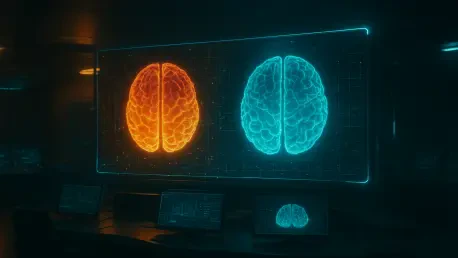
The evolution of neurological diagnostics is moving toward a tiered, multi-modal strategy that combines diverse data sources to create a comprehensive biological roadmap for each patient. By synthesizing information from blood tests, AI-enhanced MRI scans, and metabolic functional data, clinicians can now achieve a level of precision that was previously unattainable. This integrated approach is particularly effective at uncovering cases of mixed dementia, where multiple neurodegenerative conditions coexist within the same individual. Historically, these cases were frequently misdiagnosed because the presence of one disease often masked the clinical symptoms of another. AI algorithms, however, excel at identifying the subtle, overlapping signals that characterize these complex pathologies. This ability to disentangle multiple disease processes ensures that the medical response is calibrated to the actual biological reality of the patient’s condition, rather than a simplified or singular interpretation.
As pharmaceutical research yields new therapies designed to target specific toxic proteins in the brain, the requirement for an exact diagnosis has shifted from a clinical preference to a medical necessity. AI provides the essential clarity needed to ensure that the right patient receives the right treatment at the right time. For instance, a patient with high levels of tau protein requires a different therapeutic approach than one whose cognitive decline is driven primarily by alpha-synuclein. By converting massive amounts of complex biological data into actionable medical insights, these AI tools are stripping away the ambiguity that has long defined the field of neurology. This transformation turns what was once a frightening and unpredictable decline into a manageable medical condition that can be monitored and treated with scientific rigor. Ultimately, these advancements are empowering both doctors and families to face neurodegenerative challenges with a clear plan of action and renewed hope.
Transforming Patient Outcomes through Evidence
Recent advancements in artificial intelligence have fundamentally altered the landscape of dementia diagnosis, moving the needle from general observation toward high-resolution precision. Medical professionals discovered that by leveraging machine learning, they could transcend the historical limitations of the human eye and traditional diagnostic checklists. This shift allowed for the identification of specific protein signatures and structural changes with a degree of accuracy that was once thought impossible. Clinicians began to implement tiered diagnostic strategies that combined accessible blood screenings with sophisticated imaging, ensuring that personalized care was based on comprehensive biological data. As a result, the management of neurodegenerative diseases transitioned into a proactive discipline, where early intervention became the standard rather than the exception. These technological tools provided the necessary evidence to align patients with the most effective emerging therapies, thereby optimizing long-term health outcomes and providing families with much-needed clarity.