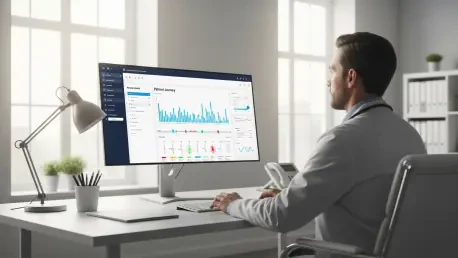

Healthcare organizations are currently grappling with an unprecedented surge in digital complexity as the initial excitement surrounding generative artificial intelligence gives way to the harsh administrative realities of maintaining a disjointed ecosystem of software tools. While the promise of increased efficiency once drove hospitals to acquire specialized applications for everything from radiologic image analysis to automated nursing notes, this haphazard procurement strategy has inadvertently created a sprawling network of disconnected systems that threaten to undermine the productivity gains they were intended to deliver. The financial burden of managing multiple subscriptions alongside the technical debt accrued from poorly integrated software is forcing executive leadership to reconsider the long-term viability of these niche products. As the industry moves into a more mature phase of adoption, the focus is shifting away from the novelty of individual capabilities and toward the foundational necessity of operational coherence.
The Operational Burden: Addressing Excessive Application Growth
The current reliance on a piece-by-piece acquisition strategy has left modern health systems struggling to manage an essentially unmanageable volume of disparate applications within their technological infrastructure. Recent industry analysis indicates that a significant majority of larger healthcare organizations are now tasked with overseeing more than 75 different operations-focused applications while simultaneously coordinating with nearly 20 separate electronic health record vendors. Although a specific AI-driven scribe or a standalone diagnostic tool might offer impressive results during an isolated pilot program, the cumulative effect of stacking dozens of these bolt-on solutions creates a layer of logistical friction that quickly becomes unsustainable for most institutions. This phenomenon, often referred to as vendor sprawl, forces clinical staff to jump between multiple interfaces, which not only degrades the user experience but also introduces potential points of failure in data transmission.
The Management Crisis: Balancing Maintenance and Innovation
This fragmentation imposes an immense burden on internal IT departments, which frequently find themselves dedicating nearly half of their total staff hours to the basic oversight and integration of these conflicting tools. Most technology leaders within the sector report a critical shortage of the personnel and budget required to maintain such a complex web of external vendors over a multi-year period. Integration tasks are relentless. Consequently, the time and financial resources allocated to troubleshooting interoperability issues are rapidly eroding the return on investment that these specialized artificial intelligence tools were originally projected to provide to the stakeholders. Without a centralized method for managing these assets, the overhead costs associated with security patches, API maintenance, and user training begin to outweigh the incremental benefits of any single point solution. Efficiency suffers. The industry is reaching a definitive breaking point where the cost of complexity has finally surpassed the value of specialized functionality.
The Regulatory Gap: Navigating Inconsistent Standards
A significant portion of the current dilemma stems from the fact that many emerging AI applications do not operate under the same stringent regulatory requirements that govern traditional electronic health record systems. While existing federal mandates require certified medical record platforms to ensure seamless data exchange and interoperability, no equivalent legal framework exists to hold standalone AI point solutions to these same standards. Recent regulatory updates, such as the HTI-1 rule, primarily target functionalities that are built directly into certified health information technology, effectively leaving third-party applications in a significant regulatory blind spot. This lack of centralized oversight means that niche tools often lack the standardized protocols necessary for sharing information across the broader care continuum. As a result, critical patient data becomes trapped within proprietary silos, preventing clinicians from gaining a holistic view of the patient journey and increasing the risk of medical errors.
The Security Imperative: Mitigating Risk in Siloed Environments
The persistence of these data silos creates a fundamental disconnect between the high-speed processing capabilities of modern algorithms and the practical requirements of daily clinical decision-making. When a specialized tool generates insights that cannot be automatically reconciled with the primary patient record, it forces providers to manually bridge the gap, leading to documentation fatigue and data inconsistency. Furthermore, the absence of a unified data architecture makes it exceedingly difficult for health systems to implement comprehensive cybersecurity measures across their entire digital footprint. Each isolated point solution represents a potential entry point for unauthorized access, yet many of these tools lack the robust encryption and audit logging features found in more integrated enterprise platforms. By relying on a patchwork of disconnected apps, healthcare organizations inadvertently weaken their overall defensive posture while simultaneously complicating their efforts to comply with evolving patient privacy laws.
The Strategic Transition: Moving Toward Comprehensive Platforms
Although a substantial majority of healthcare executives express a desire to transition toward a single, comprehensive AI partner, only a small fraction of organizations have successfully executed this strategic shift. The primary obstacle remains the allure of specialized features that offer immediate but narrow solutions to specific problems, often referred to as the curb appeal of individual gadgets. However, the long-term sustainability of the medical enterprise depends on moving past these superficial benefits to focus on a unified platform that can oversee the entire care continuum effectively. An ideal enterprise partner should provide a cohesive environment that streamlines everything from initial patient scheduling and triage to the final processing of insurance claims within a single interoperable framework. By centralizing these functions, health systems can ensure that their technological investments remain adaptable to changing market conditions and the increasingly complex landscape of healthcare compliance.
The Sustainable Outcome: Achieving Long-Term Technological Cohesion
The transition toward a unified platform allowed healthcare leaders to do more than just aggregate raw data; it facilitated the synthesis of information to produce high-quality clinical documentation and verifiable evidence. While the process of decommissioning legacy point solutions and replacing them with integrated systems proved to be a demanding and resource-intensive endeavor, it became a strategic necessity for survival in a modern landscape. Organizations that successfully navigated this change implemented centralized governance models and prioritized vendors with proven longitudinal interoperability. Consolidating into a holistic infrastructure offered the only viable path to ensuring technological longevity, protecting the organization’s financial health, and ultimately enhancing the overall patient experience. Stakeholders who chose enterprise-wide integration over the temporary appeal of niche applications successfully mitigated the risks of vendor fatigue and operational stagnation while laying the groundwork for more advanced autonomous medical workflows.