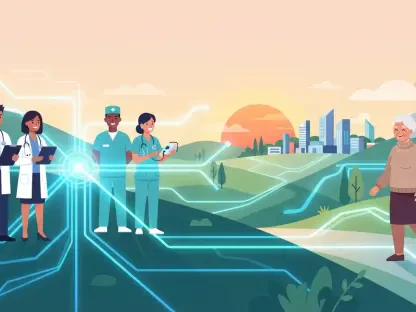

Recent data indicates that approximately one in five adolescents in the United Kingdom now experiences a diagnosable mental health condition before reaching adulthood. To address this growing challenge, Warwickshire County Council has introduced the Extension for Community Healthcare Outcomes, or ECHO, a transformative framework designed to revolutionize how frontline professionals support the emotional well-being of young people. This initiative serves as a response to the increasing demand for specialized mental health services which often face significant backlogs and resource constraints. By creating a hub-and-spoke model, the program connects local practitioners with subject-matter experts, ensuring that high-quality clinical knowledge reaches those on the ground. The implementation of this model signifies a departure from traditional siloed approaches, prioritizing a shared responsibility for youth development. Through the deployment of this sophisticated tele-mentoring system, the region aims to foster a more resilient community where every child receives timely and effective intervention tailored to their specific psychological needs.
Strengthening Community Care Pathways
Strategic Training: Integrating Specialized Knowledge for Caregivers
The ECHO framework operates on the principle that local healthcare providers and educators are often best positioned to identify early signs of distress but may lack the specialized training to intervene effectively. By leveraging regular virtual clinics, the program allows school nurses, social workers, and general practitioners to present anonymized cases to a multidisciplinary team of psychiatrists and psychologists. This collaborative environment does not merely provide a consultation; it facilitates a deep, iterative learning process where participants gain competencies that they can apply to future situations. For instance, a teacher noticing behavioral changes in a student can now access guidance on evidence-based strategies to support that individual before a crisis occurs. This proactive strategy reduces the burden on secondary care facilities by managing less complex issues within the primary care setting. Furthermore, it empowers frontline staff to feel more confident in their professional roles, ultimately creating a more robust safety net for the vulnerable youth population across the county.
Knowledge Transfer: Building Competency within Local Networks
Moving beyond simple advice, the curriculum within these sessions is meticulously structured to cover a broad spectrum of mental health concerns, including anxiety disorders, neurodiversity, and the impact of social media on self-esteem. Experts provide the latest clinical insights and therapeutic techniques, which are then adapted by local professionals to fit the unique socio-economic context of their specific communities. This localization of expert knowledge ensures that the support provided is culturally sensitive and practically feasible within the constraints of local schools or community centers. As participants engage in these case-based discussions, they build a network of peers who share similar challenges, fostering a sense of solidarity and collective efficacy. The reduction in professional isolation is a key secondary benefit, as burnout among youth workers is frequently cited as a barrier to consistent care quality. By establishing this ongoing professional development loop, Warwickshire is not just solving immediate problems but is building a sustainable infrastructure capable of evolving alongside the changing landscape of adolescent mental health needs.
Expanding Digital Connectivity and Reach
Technological Integration: Overcoming Geographic Barriers to Care
The digital nature of the ECHO initiative allows for a level of scalability and accessibility that was previously impossible under traditional face-to-face training models. Practitioners from rural areas of Warwickshire can participate in high-level clinical briefings without the need for extensive travel, ensuring that geographical location no longer dictates the quality of care available to a child. This democratization of expertise is critical in ensuring equity across the region, particularly for families living in underserved or isolated districts. The platform utilizes secure, high-definition video conferencing to facilitate real-time interaction, allowing for nuanced discussions that text-based resources cannot provide. Consequently, the time elapsed between the identification of a mental health concern and the implementation of a support plan is significantly reduced. This rapid response is vital during the formative years of adolescence, when early intervention can drastically alter the trajectory of a young person’s life. By utilizing modern telecommunications to bridge the gap between tertiary expertise and local delivery, the county is effectively shortening the distance between need and solution.
Future Implementation: Enhancing Long-term Outcomes through Collaborative Practice
Stakeholders involved in the initial rollout recognized that the success of the ECHO program depended on the active participation of diverse agencies across the public sector. They observed that the interdisciplinary connections formed during the sessions broke down bureaucratic barriers that historically hindered effective communication between schools and clinical settings. Moving forward, it became clear that the next phase should involve expanding the curriculum to include parents and legal guardians, providing them with the digital literacy and emotional tools necessary to support their children at home. Evaluation metrics suggested that tracking the longitudinal progress of youth who benefited from these interventions would be essential for refining the model over the next several years. Organizations were encouraged to integrate these tele-mentoring sessions into their standard operating procedures rather than treating them as optional extras. Decision-makers finalized plans to invest in more robust data-sharing agreements that protected privacy while allowing for a more holistic view of a child’s journey through the care system. These steps ensured that the foundation laid during the pilot phase evolved into a permanent, adaptive pillar of the regional health strategy.