
The landscape of psychiatric treatment is currently undergoing a fundamental shift as neuromodulation moves from a niche, final-stage option to a primary method of care for millions of patients. Transcranial Magnetic Stimulation, commonly referred to as TMS, has traveled a long road since its initial FDA approval in 2008. Originally utilized only when multiple rounds of medication and psychotherapy failed, the technology is now being repositioned as a frontline intervention for depression and several other neurological conditions. This transition signifies a broader movement in the medical community to embrace biological treatments that directly target brain circuitry rather than relying solely on chemical interventions. Furthermore, the clinical scope of this technology continues to widen at an impressive rate. Beyond its established reputation for alleviating major depressive disorder, the FDA has granted clearances for obsessive-compulsive disorder, smoking cessation, and migraines. Many providers are also reporting success with off-label applications for generalized anxiety and post-traumatic stress disorder, suggesting a highly versatile future for the field.
Addressing the Constraints of Traditional Therapy
Financial and Logistical Barriers: The Cost of Clinical Infrastructure
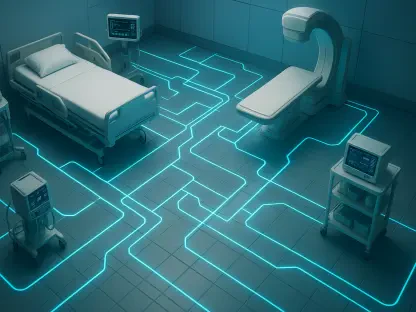
Despite the undeniable clinical success of traditional brain stimulation, the logistical requirements to maintain such a practice remain a significant hurdle for many healthcare providers. A standard, high-powered TMS machine can cost anywhere from seventy thousand to two hundred thousand dollars, a price tag that is often prohibitive for independent psychiatric practices or smaller community clinics. This high capital expenditure means that advanced neuromodulation has historically been concentrated in affluent urban centers or large academic hospitals, leaving a massive gap in access for patients in rural or underserved areas. Beyond the initial purchase price, these units are typically bulky and require dedicated, climate-controlled rooms to house the cooling systems and power supplies needed for operation. Consequently, many behavioral health professionals who wish to incorporate interventional psychiatry into their workflow are forced to refer patients elsewhere, which often disrupts the continuity of care and creates unnecessary friction for individuals seeking relief from chronic mental health struggles.
The spatial constraints associated with legacy brain stimulation equipment further complicate the integration of these services into modern outpatient settings. Many psychiatric offices are designed for talk therapy and do not have the square footage to accommodate a large medical device and the accompanying technician station. This physical limitation has inadvertently created a barrier to entry that favors larger medical conglomerates over personalized, boutique mental health services. As a result, the “last resort” stigma of neuromodulation has been reinforced not necessarily by its clinical efficacy, but by the physical and financial difficulty of providing it. In the current medical environment, there is a growing demand for solutions that can be integrated into existing office layouts without requiring a complete overhaul of the facility. Addressing these overhead costs and space requirements is the primary driver behind the recent push toward miniaturization. If brain stimulation is to become a truly accessible standard of care, the technology must evolve to fit the diverse environments where mental healthcare is actually delivered, from rural clinics to busy suburban practices.
Technological Scalability: The Rise of Compact Alternatives
In response to these pervasive infrastructure challenges, medical technology manufacturers have pivoted toward the development of portable neuromodulation devices that offer a more flexible approach to treatment. These newer tools are engineered to provide therapeutic benefits without the massive financial investment or permanent floor space required by traditional legacy systems. By utilizing advanced materials and more efficient energy delivery mechanisms, engineers have managed to shrink the hardware significantly while maintaining the necessary magnetic or electrical output to stimulate specific brain regions. This shift toward portability allows for a decentralized model of care, where brain stimulation can be administered in a variety of settings or even utilized as a bridge between more intensive in-office sessions. Such scalability is essential for the long-term growth of the industry, as it allows providers to grow their interventional offerings gradually rather than committing to a massive upfront equipment purchase that could take years to pay off.
The emergence of smaller, more affordable units also facilitates a more personalized and frequent treatment schedule for patients who may not have the time to visit a clinic daily. While the most intensive phases of therapy might still occur under direct medical supervision, portable devices provide a pathway for maintenance therapy that is both convenient and cost-effective. This model mirrors other successful medical transitions, such as the move from inpatient dialysis to home-based solutions, which greatly improved the quality of life for millions. For the mental health provider, these tools represent a way to provide evidence-based biological interventions to a much larger patient population. As the technology continues to mature, the focus is shifting away from merely creating a “smaller machine” and toward creating an integrated system of care. This systems-based approach ensures that even when the hardware is portable, the clinical oversight remains rigorous, ensuring that safety and efficacy are never sacrificed for the sake of convenience or reduced overhead costs.
Technological Advancements and Market Validation
Precision Through Real-Time DatEEG and Adaptive Algorithms
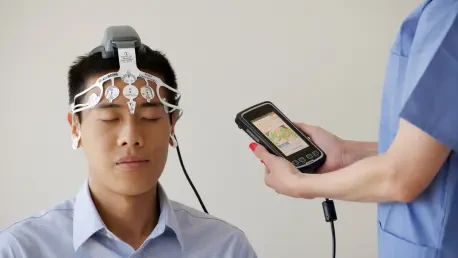
The newest generation of portable brain stimulation devices is distinguished from its predecessors by the integration of sophisticated electroencephalography sensors. These sensors allow for the continuous monitoring of the brain’s electrical activity during the stimulation process, creating a closed-loop system that was previously impossible in a portable format. Rather than delivering a standardized pulse based on a general map of the human brain, these devices use real-time data to adjust the frequency and intensity of the stimulation to match the patient’s unique neurological rhythms. This shift from a one-size-fits-all protocol to a highly personalized, data-driven approach represents a significant leap forward in the precision of psychiatric medicine. By identifying the specific oscillatory patterns of an individual’s brain, algorithms can now optimize the timing of each pulse to maximize the therapeutic impact on the targeted neural circuits. This level of customization ensures that the treatment is as effective as possible for every patient, regardless of their specific neurological makeup.
One of the most promising applications of this integrated technology is found in Magnetic EEG-guided Resonance Therapy, which has recently gained significant traction for its results in treating complex conditions. This method relies heavily on personalized data to identify disruptions in the brain’s natural communication patterns and then uses targeted magnetic pulses to restore healthy synchronization. Clinical trials have demonstrated that this level of individualized care can lead to symptom reduction that far exceeds the minimum requirements for clinical significance, particularly in patients who have been non-responsive to other treatments. This data-centric model also provides clinicians with objective metrics to track a patient’s progress over time, moving away from subjective self-reporting as the only measure of success. As these adaptive algorithms become more refined, the ability to tailor treatment in real-time will likely become the standard requirement for any neuromodulation device, effectively bridging the gap between high-end clinical research and everyday psychiatric practice.
Market Evolution: Balancing Innovation with Scientific Rigor
There has been a notable surge in interest from both major employers and insurance providers regarding the widespread adoption of interventional psychiatry tools. Economic analyses have indicated that the long-term cost of managing chronic, treatment-resistant mental health conditions far outweighs the initial investment in advanced neuromodulation technology. To meet this growing demand, new business models have emerged, such as per-patient licensing fees or subscription-based access, which allow clinics to offer these treatments without taking on substantial financial risk. This shift in the economic landscape has made it much easier for practitioners to adopt new technologies, leading to a rapid expansion of the market from 2026 to 2030. Payers are increasingly recognizing that providing effective, biological interventions early in the treatment cycle can prevent the high costs associated with emergency room visits and long-term disability. This alignment of financial incentives and clinical outcomes is a powerful catalyst for the continued miniaturization and democratization of brain health technology.
However, the rapid pace of innovation has also been met with a degree of healthy skepticism from the medical community and chief medical officers. Concerns remain regarding whether portable, more accessible devices can truly replicate the precision and deep-tissue penetration of the larger, stationary machines that have been the gold standard for years. Many clinical leaders have adopted a “wait-and-see” approach, calling for more robust, multi-center longitudinal studies to verify that the efficacy of these compact tools is maintained across diverse patient populations. There is a delicate balance to strike between making these life-changing treatments available to as many people as possible and maintaining the rigorous scientific standards that define modern medicine. Industry leaders are currently working to bridge this gap by prioritizing the publication of peer-reviewed data and establishing clear guidelines for the use of portable devices. By fostering a culture of transparency and scientific integrity, the field can ensure that the transition to more accessible brain stimulation is built on a foundation of proven clinical success and patient safety.
Establishing the Future Standards of Neurological Care
As these technologies became more integrated into the healthcare ecosystem, the medical community recognized the need for a fundamental shift in how brain health was measured and maintained. Providers integrated regular neurological assessments into standard wellness exams, utilizing compact devices to capture “neurological vital signs” alongside traditional metrics like heart rate and blood pressure. This proactive approach allowed clinicians to identify subtle disruptions in neural connectivity before they manifested as full-blown psychiatric crises, fundamentally changing the timing of interventions. Researchers confirmed that by correcting minor neurological imbalances early, patients avoided the debilitating cycles of chronic illness that characterized previous decades of mental healthcare. This shift toward a biological, preventive model was supported by insurance frameworks that rewarded early detection and long-term stability over reactive, crisis-based treatment. The industry pivoted toward a holistic view of the patient, where portable technology served as the bridge between clinical expertise and daily functional health.
The successful implementation of these advanced tools demonstrated that the gap between high-precision clinical machines and accessible portable units could be bridged through rigorous data integration. Clinicians observed that while the stationary, high-powered units remained the gold standard for the most severe cases, the portable alternatives filled a critical void in the care continuum. This dual-layered strategy ensured that every patient, regardless of the severity of their condition or their geographical location, had access to some form of life-altering neuromodulation. The focus of development moved toward creating even more seamless interfaces that allowed for remote monitoring and tele-neuromodulation, further reducing the burden on the patient. As these systems matured, they provided a wealth of anonymized data that helped scientists refine their understanding of the human brain, leading to even more precise and effective protocols. Ultimately, the industry moved toward a future where mental health was treated with the same biological precision as any other physical ailment, ensuring a higher quality of life for millions of people worldwide.