
Hospitals must now treat crypto-agility as a mandatory requirement for procurement to ensure that new medical devices can adapt to future security standards. As quantum computing advances, the foundational encryption that protects patient records is rapidly becoming vulnerable to sophisticated decryption techniques. This shift creates a massive burden for healthcare delivery organizations that rely on thousands of connected devices. The core challenge lies in the fact that while conventional computers are frequently updated, the Internet of Medical Things (IoMT) often utilizes rigid hardware configurations that cannot support modern post-quantum cryptographic algorithms. This technical debt leaves a vast surface area exposed to attackers who are already gathering data today. The sensitivity of medical information, ranging from genomic profiles to health histories, means that a breach today has consequences that will last for decades. Security must be baked into the physical infrastructure to prevent a collapse of patient privacy.
Measuring the Cryptographic Readiness Gap
Quantitative disparities across the healthcare landscape reveal a concerning lack of preparation within specialized clinical environments. Recent audits of over two million devices across dozens of health systems indicate that while 50% of standard IT infrastructure is ready for the transition to post-quantum standards, the same cannot be said for clinical technology. Only 6% of medical devices using Secure Shell (SSH) implementations are currently capable of supporting these new cryptographic demands. Operational technology, which manages the physical environment of a hospital such as HVAC systems, shows a slightly better but still inadequate readiness rate of 16%. This disparity highlights a two-tier security system where the back-office functions are becoming resilient while the bedside technology remains stuck in an older era. The slow adoption of quantum-resistant protocols in specialized hardware creates a massive bottleneck for organizations attempting to achieve enterprise-wide security standards.
Further complications arise when examining the network protocols that facilitate secure communication between medical devices and central databases. Of the thousands of internet-exposed healthcare systems surveyed, including critical Electronic Medical Record (EMR) and Picture Archiving and Communication Systems (PACS), less than one-third currently support TLS 1.3. This specific version of the Transport Layer Security protocol is the essential benchmark for supporting standardized post-quantum cryptographic algorithms effectively. Without this foundational layer, implementing advanced encryption becomes a technical impossibility for most existing medical hardware. The reliance on legacy versions like TLS 1.1 or 1.2 not only limits encryption strength but also restricts the ability to update systems remotely. This protocol gap serves as a gateway for attackers to intercept traffic, making the transition to quantum-resistant standards a secondary concern to the problem of upgrading communication.
Hardware Limitations: The “Harvest Now” Risk
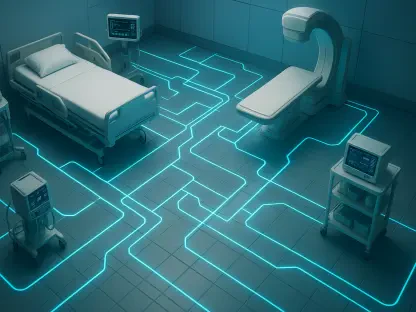
The primary obstacle to quantum readiness in the medical sector is the extended lifecycle of physical hardware. Unlike the commercial software industry, where update cycles are measured in months, medical equipment like infusion pumps, patient monitors, and laboratory imaging systems is designed for operational longevity. These assets frequently remain in active service for a decade or more due to high capital costs and the complexities of clinical certification. Many of these legacy devices were never engineered with crypto-agility in mind, meaning their firmware is often hard-coded with specific cryptographic primitives. Attempting to update these devices to support quantum-resistant algorithms is not just a software patch; it often requires a total hardware replacement that hospital budgets cannot immediately absorb. This creates a situation where functional equipment becomes a security liability because its internal processing power is insufficient for the larger keys required.
This technical lag is particularly dangerous because of the “harvest now, decrypt later” strategy currently employed by sophisticated threat actors. Cybercriminals are actively exfiltrating encrypted sensitive data today with the expectation that they can decrypt it once quantum computers reach sufficient maturity. This creates a unique risk for healthcare because the shelf life of medical data is exceptionally long. While a stolen credit card number can be cancelled and a password changed, a patient’s medical history or genetic information records remain sensitive for the duration of the individual’s life. If this data is harvested now, its eventual decryption in the coming years will lead to permanent privacy violations, potential insurance fraud, or even personal targeting. The industry is essentially fighting a battle against time, where the data stolen today acts as a ticking time bomb that will explode once the cryptographic barriers of the past are rendered obsolete by new tech.
Strategic Defenses: Future Procurement Standards
Given that a significant portion of the current medical device install base may never natively support post-quantum cryptography, hospitals must shift their defensive strategies toward a more holistic network architecture. One of the most effective methods is the implementation of strict network segmentation, which isolates vulnerable legacy devices into secure zones with restricted access. By creating these digital silos, security teams can limit the “blast radius” of a potential compromise and prevent attackers from moving laterally through the network. In addition to segmentation, organizations are deploying enhanced surveillance and anomaly detection as essential compensating controls. These tools monitor network traffic for any signs of unauthorized data exfiltration, providing a safety net in environments where native encryption is lacking. A comprehensive asset inventory serves as the foundation for these efforts, allowing administrators to identify devices needing extra protection.
Looking back at the evolution of medical security, the industry successfully transitioned from a purely clinical focus to one that integrated cybersecurity into the core of patient care. Procurement teams began to demand that manufacturers provide detailed documentation regarding the cryptographic capabilities of their products. This shift turned crypto-agility into a non-negotiable metric, ensuring that any new hardware added to the network could evolve alongside the threat landscape. Organizations also invested heavily in training IT and clinical staff to recognize the risks associated with long-lived assets, moving away from a “set it and forget it” mentality. By prioritizing systems that supported TLS 1.3 and modular encryption, healthcare providers established a resilient framework that protected sensitive patient data against future decryption threats. This proactive approach eventually bridged the gap between traditional IT systems and the Internet of Medical Things.