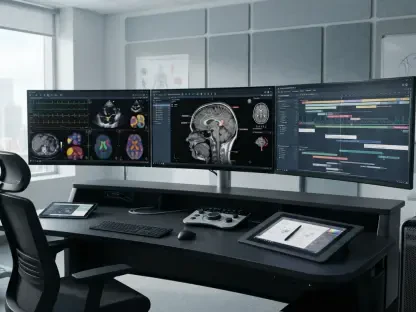

The current fragmentation of the United Kingdom’s National Health Service often leaves medical professionals working in a vacuum, where critical patient histories are trapped within isolated silos that fail to communicate with one another during life-saving moments. This legislative push aims to bridge these gaps by mandating a transition to a unified digital framework, ensuring that a patient’s medical journey is accessible to any authorized clinician regardless of their physical location within the country. The proposed modernization is not merely a technical upgrade but a fundamental restructuring of how the state manages public health information. By centralizing disparate records into a singular, cohesive architecture, the government intends to eliminate the administrative friction that has long plagued the system. This move reflects a broader strategic shift toward a tech-driven operational model designed to treat the health service as a single integrated organism rather than a loose federation of independent hospital trusts.
Revolutionizing Healthcare Through Integrated Data
The Shift Toward a Single Patient Record
A primary objective of this reform involves the creation of a mandatory, comprehensive patient record system that requires every NHS provider to contribute data to a centralized national database. For decades, the lack of interoperability between different healthcare providers has resulted in clinicians operating with an incomplete picture of a patient’s health, leading to redundant tests and delayed interventions. The new legislation explicitly targets the culture of data hoarding, where specific trusts or local clinics treat patient information as proprietary intellectual property rather than a public good. By standardizing data entry protocols and enforcing strict compliance across all levels of the service, the government seeks to create a seamless flow of information. This integration ensures that when a patient moves from primary care to a specialist hospital, their history follows them instantly, providing doctors with immediate access to allergy lists, previous surgical outcomes, and medication histories.
Beyond the technical aspects of data synchronization, this initiative serves to dismantle the geographical barriers that have historically dictated the quality and speed of medical care. The bill establishes a framework where digital health records are no longer confined by the physical walls of the institution that generated them, allowing for a truly nationalized approach to patient management. This shift is expected to empower patients by giving them greater visibility into their own health metrics while simultaneously providing the NHS with a powerful tool for population health management. By analyzing aggregated data from this unified system, health officials can identify emerging public health trends and allocate resources more effectively across various regions. The emphasis is on moving away from reactive medical care toward a proactive model where data-driven insights inform every decision. Successfully implementing this mandate requires replacing legacy systems with modern cloud solutions.
Clinical Impact of Real-Time Information
Integrating medical data across the entire network is projected to yield substantial improvements in patient safety and overall clinical outcomes by reducing the likelihood of human error. Government researchers have indicated that a unified record system could prevent approximately 10,000 misdiagnoses every year, a figure that highlights the dangers inherent in fragmented information systems. When clinicians have instant access to a patient’s full diagnostic history, they are significantly less likely to prescribe conflicting treatments or overlook subtle indicators of chronic illness. This is particularly relevant for frail and elderly patients who often suffer from multiple comorbidities and receive care from numerous specialists across different regions. By streamlining the management of conditions such as heart failure and severe mental health crises, the legislation aims to decrease preventable hospital admissions by thousands annually, ensuring medical interventions are both timely and accurate for all patients.
Furthermore, the centralization of diagnostic results and treatment plans allows for a more rigorous application of evidence-based medicine across the entire National Health Service. Instead of relying on decentralized notes that may be lost or misinterpreted during handovers, clinicians can utilize standardized digital templates that ensure all necessary protocols are followed. This transition is expected to drastically reduce the administrative burden on frontline staff, who currently spend a disproportionate amount of time tracking down paperwork from other departments. By automating many of these information-gathering tasks, the modernization bill frees up doctors and nurses to focus more of their attention on direct patient interaction. The secondary benefits of this digital transformation include more robust data for clinical research, as the unified system provides a high-quality dataset for studying the long-term effectiveness of various treatments, representing a high-stakes investment in the future of public health.
Balancing Efficiency and Independent Oversight
Restructuring the Administrative Landscape
To facilitate a leaner and more responsive healthcare system, the proposed legislation includes provisions for the dissolution of several large oversight bodies, including NHS England. Proponents of this administrative cull argue that the current bureaucratic structure is characterized by overlapping jurisdictions and redundant management layers that stifle innovation and delay critical decision-making processes. By consolidating these disparate functions into a single internal directorate within the Department of Health and Social Care, the government aims to centralize control and improve the speed of policy implementation. This move is designed to redirect funding away from executive salaries and administrative overhead toward frontline medical services where it is needed most. Critics of the existing model have often pointed out that the separation between the Department of Health and NHS England created a complicated chain of command that made accountability difficult to track in a modern digital environment.
The removal of middle-management layers is intended to create a direct link between national policy objectives and local clinical delivery, theoretically reducing the time it takes for new medical guidelines to be adopted. However, this centralization of power has prompted concerns among some health experts who value the semi-autonomous nature of the current system as a buffer against political interference. The plan assumes that a more vertically integrated structure will lead to greater efficiency, but it also places a significant burden on the new directorate to manage a vast and complex organization without the specialized expertise previously housed in independent bodies. For the restructuring to be successful, the Department of Health must develop robust internal mechanisms for monitoring performance across diverse regions. This consolidation represents a significant change to the governance of the NHS, signaling a clear preference for a command-and-control model to prioritize operational results over complexity.
Future Accountability and Strategic Implementation
One of the most contentious aspects of the bill involves the decision to phase out independent watchdogs such as Healthwatch England and move their functions into the central government. Critics argue that this shift compromises the transparency of the health service, as it effectively allows the government to mark its own homework regarding patient safety and institutional performance. There is a palpable concern that without independent bodies to provide external scrutiny, the voices of patients may be marginalized in favor of political or budgetary considerations. Furthermore, the loss of neutral platforms for reporting systemic failures could potentially discourage whistleblowers from coming forward, as they might fear that reporting issues through an internal chain of command will lead to professional repercussions. To mitigate these risks, the government must establish clear and transparent protocols within the new directorate to ensure that patient advocacy remains a top priority and public trust is maintained.
The successful modernization of the healthcare infrastructure required administrators to transition from legacy hardware to scalable cloud environments that supported real-time data exchange. Stakeholders prioritized the implementation of rigorous zero-trust security models to ensure that centralized databases remained resilient against sophisticated cyberattacks while maintaining patient confidentiality. To foster public trust, the government established clear opt-out mechanisms and transparent data-use agreements that gave individuals greater agency over their medical information. Moving forward, the framework focused on integrating social care and community health data to create a truly holistic view of patient well-being beyond the hospital setting. This comprehensive approach allowed for more accurate predictive modeling, enabling the service to anticipate demand and allocate resources before crises occurred. By standardizing protocols and eliminating redundant oversight, the system achieved a level of operational agility that was previously impossible.