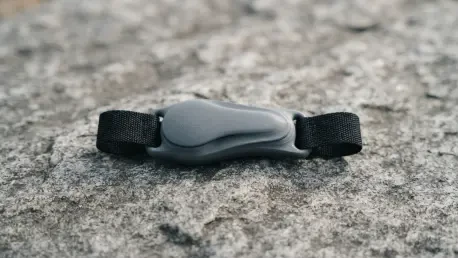

The use of a clinical-grade digital temperature sensor combined with empirical curve-fitting models allows for the estimation of internal body heat from skin surface data. This technological advancement addresses a critical vulnerability in modern sports medicine, where tracking the physiological limits of an athlete often relies on delayed or imprecise metrics. Sudden cardiac death remains a primary concern in competitive environments, claiming a significant number of lives annually among participants who appear to be in peak physical condition. These tragic events are frequently linked to undetected cardiac anomalies that become life-threatening when coupled with the extreme heat and dehydration inherent in professional training. While the consumer market is currently flooded with smartwatches and chest straps, these tools often provide isolated data points that lack the clinical depth required to predict acute medical crises. The development of an integrated, energy-harvesting patch marks a shift toward a more comprehensive safety paradigm, combining heart rate monitoring, core temperature estimation, and sweat chemistry analysis into a single, cohesive interface designed for high-intensity environments.
Advancing Hardware Design for Ergonomic Precision
The physical architecture of this new wearable system focuses on maintaining a stable connection to the skin without hindering the natural range of motion required by high-performance athletes. Researchers utilized a lightweight pod design, which is mounted on a breathable, adjustable strap crafted from high-performance elastomeric textile. To prevent the data corruption often caused by vigorous movement, the device is further secured using specialized polyamide gripper tape on the upper arm. The protective housing for the sensitive electronics was produced using precision 3D printing techniques and impact-resistant resin, ensuring that the internal components remain shielded from mechanical stress during contact sports or heavy training sessions. This durable exterior houses a sophisticated microcontroller, specifically the Arduino Nano RP2040 Connect, which was selected for its ability to handle complex computational tasks in real time while maintaining a small enough footprint for a wearable form factor.
Within this compact housing, the spatial arrangement of the sensors ensures that every diagnostic element remains in direct contact with the wearer’s skin for maximum fidelity. The device incorporates a high-speed Wi-Fi module that enables the continuous transmission of physiological data to a mobile application, allowing coaching or medical staff to monitor health metrics from the sidelines without interruption. This architectural strategy prioritizes both data integrity and wearer comfort, addressing the common complaint that many professional-grade medical monitors are too bulky or invasive for use during actual competition. By integrating a USB-C interface and status-indicating LEDs into the outer shell, the design remains user-friendly for daily use. This synergy between materials science and microelectronics provides a robust foundation for the multi-modal sensing capabilities that define the patch’s performance in the field, representing a significant step forward from the simpler hardware found in standard consumer electronics.
Interpreting Biological Data Through Algorithmic Safety
The sensory capabilities of the patch are divided into three distinct modalities that together form a complete picture of an athlete’s physiological resilience. For cardiac monitoring, the system uses an optical photoplethysmography sensor to detect blood volume changes, which allows it to track heart rate fluctuations and identify signs of extreme overtraining. Simultaneously, the thermal regulation component employs a clinical-grade digital temperature sensor that offers high precision within the critical range of 37 to 39 degrees Celsius. Because external skin temperature is rarely an accurate reflection of internal heat, the system applies complex mathematical modeling to generate a reliable estimate of the core body temperature. This feature is particularly vital for identifying the early stages of exertional heat stroke, a condition that can escalate rapidly if the athlete does not receive immediate intervention.
Beyond heart rate and temperature, the patch introduces a custom electrochemical sensing cell designed to monitor hydration levels through the analysis of sweat. This sensor utilizes a microfluidic channel that passively draws in perspiration as it is produced, passing it over gold cup electrodes to measure ionic concentration. Laboratory validation has shown a strong linear correlation between the voltage produced by these sensors and the sodium chloride levels in the sweat, providing a direct metric for electrolyte loss. To make this data actionable, the researchers developed a two-level warning framework. Level 1 alerts indicate early dehydration or mild heat exhaustion, prompting the athlete to hydrate or rest. Level 2 alerts signify critical emergencies, such as core temperatures exceeding 40.5 degrees Celsius or heart rates that surpass age-predicted safety limits while electrolyte levels are dangerously low. This logic-driven approach transforms raw data into a life-saving diagnostic tool.
Energy Harvesting and Environmental Adaptability
A primary innovation of this safety patch is the inclusion of a flexible thermoelectric generator that addresses the common issue of battery depletion in portable medical devices. This component operates on the Seebeck effect, a phenomenon where a voltage is generated by the temperature gradient between the warm human skin and the surrounding air. To manage this harvested energy, the system employs an ultralow-voltage boost converter and a high-ratio transformer, which stabilize the minute electrical charges and use them to trickle-charge the internal lithium-ion battery. This design ensures that the device can extend its operational life even during long training sessions where external power sources are unavailable. In simulations involving extreme ambient heat, such as those found in desert climates reaching 54 degrees Celsius, the generator proved capable of maintaining functionality by utilizing the gradient between the body and the environment.
Despite the promise of thermoelectric energy, the current iteration of the patch faces a significant challenge regarding the total power consumption required for continuous wireless data transmission. The microcontroller and its integrated Wi-Fi module account for the vast majority of the device’s energy use, which currently exceeds the amount of power the thermoelectric harvester can consistently produce. While the harvester currently adds several minutes of runtime to the battery life, its primary role in the current prototype is to demonstrate the feasibility of self-powering sensors in high-stress environments. Future refinements are expected to focus on utilizing low-energy communication protocols, such as Bluetooth Low Energy, to drastically reduce the power footprint. By narrowing the gap between energy consumption and energy generation, the device moves closer to becoming a truly autonomous monitoring system that could function indefinitely without requiring a traditional plug-in charge.
Exploring Economic Feasibility and Future Clinical Integration
The economic analysis of the prototype suggests that a multifunctional safety device can be produced at a cost that is competitive with existing high-end sports wearables. With a total hardware component cost of approximately $203, the patch offers a significantly more comprehensive suite of diagnostic tools than many single-metric sensors currently available to consumers. However, transitioning from a research prototype to a commercially available product involves navigating complex regulatory environments and establishing a manufacturing infrastructure that can scale without compromising sensor accuracy. The path to widespread adoption will likely require further investment in software development to create secure, user-friendly data ecosystems for teams and medical professionals. Furthermore, securing certifications such as FDA approval remains a critical milestone for any device intending to provide clinical-grade medical alerts in a professional athletic setting.
The researchers successfully established a functional proof of concept that demonstrated the practical integration of energy harvesting and multimodal sensing in a wearable format. This development represented a clear departure from traditional reactive sports medicine, moving instead toward a model of proactive risk management. Future efforts were directed toward conducting extensive human-subject trials to validate the risk-detection algorithms across a diverse range of body types and sweat compositions. These trials were essential for refining the sensor selectivity and ensuring that the estimated core temperature models remained accurate under varying humidity and movement conditions. By addressing the specific limitations of battery life and chemical selectivity, the engineering team prepared a foundation for a more resilient safety net for athletes. The project concluded with a strategy to integrate these patches into collegiate and professional sports programs, aiming to reduce the incidence of preventable medical emergencies during peak physical performance.