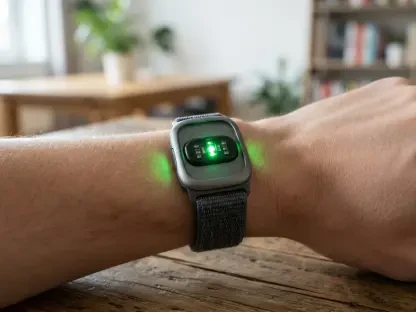
Continuous streaming of high-fidelity ECG signals creates a massive volume of data that often exceeds the bandwidth capabilities of resource-constrained IoT networks. As the healthcare landscape in 2026 increasingly shifts toward decentralized patient monitoring, the reliance on wearable sensors like smart rings, chest patches, and advanced smartwatches has grown exponentially. While these devices provide invaluable real-time insights into cardiac health, they also represent a significant cybersecurity risk. The sensitive nature of physiological data makes these signals a prime target for interceptors who could exploit personal medical history or biometric identities. A landmark study recently published in the journal Cluster Computing by a research team led by Fatma Khallaf addresses this dilemma by introducing a multi-level security architecture specifically tailored for the technical limitations of modern medical wearables. Unlike traditional methods that treat data protection as an external addition, this framework integrates privacy and data reduction directly into the physical signal acquisition process, ensuring that security is a foundational property of the hardware’s operation rather than a secondary software layer.
The fundamental challenge within the current medical IoT ecosystem lies in the inherent conflict between the necessity for robust data encryption and the severe physical constraints of wearable hardware. Most contemporary devices are powered by compact batteries and feature processors with limited computational overhead, making traditional cryptographic standards like AES or RSA difficult to implement without causing significant battery drain. Furthermore, high-latency encryption can be dangerous in critical care scenarios where every millisecond of delay in transmitting an abnormal heart rhythm could impact clinical outcomes. Regulations such as the GDPR have further heightened the stakes, mandating that privacy be a core component of system design. An ECG signal is essentially a medical record in motion, and because it contains unique biometric markers, any breach could lead to long-term identity theft or unauthorized medical profiling. The newly proposed framework bridges this gap by utilizing mathematical shortcuts that protect data while simultaneously reducing the workload on the device’s central processor.
Efficiency Through Mathematical Innovation
Compressive Sensing: The Mathematics of Sparsity
The cornerstone of the newly developed security architecture is a sophisticated mathematical technique known as compressive sensing. Traditional digital signal processing has historically relied on the Nyquist-Shannon sampling theorem, which dictates that a signal must be sampled at twice its highest frequency to be accurately reconstructed. For a continuous ECG stream, this results in a massive influx of data that a wearable device must store, encrypt, and transmit over a wireless connection. Compressive sensing challenges this long-standing paradigm by leveraging the fact that most biological signals are “sparse” in a specific mathematical domain, such as the wavelet or frequency domain. This means that the essential information within the signal can be captured using far fewer measurements than the Nyquist rate would suggest. By identifying these critical coefficients, the framework allows the device to capture only the most vital data points, effectively compressing the signal at the exact moment it is measured by the sensor.
Because ECG signals are highly structured and repetitive by nature, they are the ideal candidates for this form of data reduction. When the wearable device implements compressive sensing at the point of acquisition, it takes a small number of random linear measurements rather than a high-frequency stream of raw data points. This produces a measurement ratio significantly lower than one, which drastically reduces the total volume of information that needs to leave the sensor. This reduction in data volume is not merely a matter of storage efficiency; it serves as the first line of defense in the security framework. By transmitting only a compressed, randomized representation of the heartbeat, the system ensures that any intercepted data is mathematically unintelligible to an attacker who does not possess the specific reconstruction matrix used by the device. This approach allows the hardware to maintain a high level of security without the need for the power-hungry mathematical operations typically associated with standard encryption protocols.
Strategic Power Management: Extending Wearable Longevity
In the practical environment of 2026 healthcare monitoring, the primary bottleneck for continuous observation is the energy consumption of wireless transmitters. Transmission is often the most power-intensive task a wearable device performs, and reducing the bit-rate of the outgoing signal directly translates to a longer operational life for the battery. By utilizing the data-thinning properties of compressive sensing, the researchers have created a system where the device can remain active for significantly longer periods between charges, which is essential for patients with chronic cardiac conditions who require 24/7 surveillance. This shift in processing philosophy moves the heavy lifting of data reconstruction away from the power-constrained wearable and onto the robust hospital servers or cloud platforms. This asymmetry is the key to creating a sustainable IoT healthcare network where patients are not burdened by frequent device maintenance or the risk of their monitors failing due to excessive computational demands.
Beyond simple power savings, the reduction in data volume also addresses the growing problem of network congestion in smart clinical environments. As more devices connect to healthcare local area networks, the available bandwidth becomes a precious resource that must be managed carefully to avoid packet loss or transmission delays. The framework’s ability to transmit high-fidelity medical information using a fraction of the standard bandwidth ensures that critical alerts can be prioritized and delivered with high reliability. This efficiency is particularly important in emergency departments or large-scale residential care facilities where hundreds of sensors may be operating simultaneously. By optimizing the signal at the source, the architecture ensures that the overall network infrastructure remains responsive and capable of handling the high-stakes data flow required for modern telemedicine. This strategic management of resources ensures that the system remains scalable as the number of connected patients continues to grow globally.
Tiered Access for Diverse Healthcare Needs
Hierarchical Security: Implementing Multi-Level Masking
To address the diverse needs of the modern healthcare ecosystem, the researchers engineered a sophisticated hierarchical access control system. In traditional security models, access is often binary, meaning a user either has total access to the raw medical data or no access at all. This framework departs from that rigid structure by introducing a multi-level masking process that functions in both the time and frequency domains. By applying different layers of mathematical “masks” to the compressed ECG signal, the system can provide varying degrees of clinical visibility based on the specific credentials of the person or application accessing the data. This allows the healthcare provider to adhere to the principle of data minimization, ensuring that only the information necessary for a specific task is revealed, thereby reducing the overall risk of exposure for the patient’s most sensitive diagnostic details.
The implementation of this tiered masking system relies on reversible mathematical transformations that can be partially or fully undone depending on the user’s authorization level. For example, a basic fitness tracking application might only need to know the patient’s heart rate, while a specialized cardiologist needs to examine the subtle variations in the P-wave or T-wave of the ECG signal. The framework manages these requirements by providing different “keys” that unlock specific layers of the masked data. This approach not only enhances privacy but also streamlines the workflow for healthcare providers, as they are not overwhelmed with unnecessary raw data when they only require high-level metrics. This granular control over data visibility represents a significant advancement in how medical information is handled in transit, providing a flexible solution that can be adapted to various clinical and administrative roles within a large organization.
Clinical Fidelity: Balancing Access and Accuracy
The system’s utility is most apparent when examining how it serves semi-authorized users, such as general monitoring services or auxiliary healthcare staff. For these individuals, the framework provides a reconstructed version of the ECG signal that is clear enough to detect R-peaks, which are the sharp spikes indicating a heartbeat. This allows for accurate heart rate calculation and the detection of basic rhythm irregularities without revealing the “morphological” details of the waveform that a specialist would use to diagnose complex conditions like ischemia or specific types of arrhythmias. By obscuring these diagnostic features, the system protects the patient’s detailed clinical profile from individuals who do not have the medical authority to interpret it, while still allowing for the basic safety function of heart rate monitoring to proceed unhindered. This balance is critical for maintaining patient privacy in an era where data is shared across multiple platforms.
When a primary physician or a specialized cardiologist requires the full diagnostic picture, the framework utilizes a “watermark-assisted mask extraction” process to provide the original data. A digital watermark is embedded within the compressed stream, acting as a high-level security key that allows fully authorized users to completely reverse all masking operations. This ensures that when a life-saving diagnosis is needed, the clinical fidelity of the signal is near-perfect, with no loss of the subtle features required for expert analysis. This reversible nature of the masking is the framework’s most innovative feature, as it allows the same data stream to serve multiple purposes without compromising security or medical accuracy. The ability to reconstruct the original signal with high precision ensures that the security measures do not interfere with the cardiologist’s ability to detect life-threatening anomalies, providing a robust tool for both emergency response and long-term diagnostic care.
Empirical Validation and Strategic Impact
Testing Accuracy: Results from the MIT-BIH Database
The research team validated the effectiveness of their framework using the MIT-BIH Arrhythmia Database, a standard benchmark for evaluating cardiac monitoring systems. They employed a one-dimensional convolutional neural network (1D CNN) to simulate how an automated diagnostic system would react to both the masked and unmasked versions of the ECG data. The results provided clear empirical evidence of the system’s success in enforcing privacy. When the AI model attempted to classify anomalies in the signals provided to semi-authorized users—the masked versions—the accuracy of the classification dropped by approximately 50 percent. This indicated that the masking process successfully hid the diagnostic markers that the neural network relied on to identify specific heart conditions, effectively “anonymizing” the clinical content of the signal for lower-tier users.
Despite this significant drop in diagnostic visibility for unauthorized parties, the system maintained an impressively high level of accuracy for heart rate detection across all tiers. This confirmed that the primary safety function of the wearable—ensuring the heart is beating and tracking its rate—remained intact even when the privacy protections were at their most restrictive. For the fully authorized users, the 1D CNN achieved classification accuracy that was virtually identical to that of the original, uncompressed signal. This performance consistency proved that the framework could reliably deliver high-quality data to the right people while keeping it secure from everyone else. The study’s findings demonstrated that the computational cost of this security could be successfully shifted away from the patient’s body without losing the ability to perform high-level medical analysis at the receiving end of the data stream.
Future Implementation: From Lab to Hospital Ward
The strategic implications of this research are profound, particularly regarding the protection of biometric identities. Because an individual’s ECG waveform is as unique as a fingerprint, a breach of this data could allow an attacker to create a permanent biometric profile of a patient. This framework mitigated that risk by ensuring that identifying morphological features were never visible to unauthorized parties, even if they managed to intercept the signal during transmission. As wearable technology became a standard component of chronic disease management, this type of integrated, layered security model offered a viable path forward for protecting the digital heartbeat of the modern patient. The work emphasized that privacy should not be a luxury but a fundamental engineering requirement for all future medical IoT devices, especially those used for long-term health surveillance.
In the final assessment of the project, the researchers recommended that the next phase of development should focus on large-scale clinical trials involving diverse patient populations. It was noted that while the historical data provided a strong proof of concept, real-world testing would be necessary to ensure that the reversible masking remained consistent across different types of cardiac pathologies. Additionally, the study suggested that hospital networks needed to develop robust protocols for the management and distribution of the digital watermark keys to ensure that authorized specialists could access data without administrative delays. By successfully demonstrating that security and efficiency were not mutually exclusive, the team provided a comprehensive blueprint for the next generation of secure, connected healthcare. The project concluded that moving the burden of security from the sensor to the cloud was the most effective way to protect patient data while preserving the limited resources of wearable medical technology.