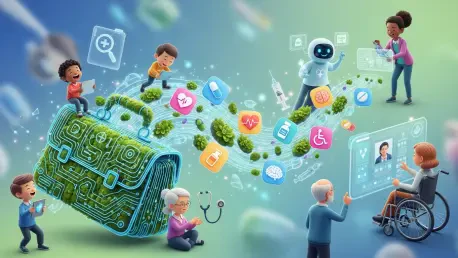

The standard medical model typically relies on clinical environments that can feel intimidating or inaccessible to the very individuals they are specifically designed to serve. At Northern Arizona University, Jared Duval, an assistant professor within the School of Informatics, Computing, and Cyber Systems, is spearheading a movement to transform this dynamic through the Playful Health Technology Lab. Supported by a substantial $300,000 grant from the Flinn Foundation, this initiative seeks to merge the therapeutic benefits of medical intervention with the engaging nature of digital play. By moving away from rigid, expensive diagnostic equipment, the lab is developing a suite of tools that prioritize user enjoyment and cultural relevance. This shift represents a broader trend in the 2026 healthcare landscape, where the focus is transitioning from reactive clinical visits to proactive, home-based wellness management. The goal is to create a sustainable system where health monitoring is no longer a burdensome chore but a seamless and even joyful part of everyday life.
Redefining Wellness: The Power of Playful Probes
The foundational philosophy of this research centers on the creation of playful probes, which are flexible technological tools designed to be adapted by users based on their unique needs. Unlike traditional medical engineering that often produces high-cost, specialized devices, the lab prioritizes the use of ubiquitous, low-cost hardware. This approach effectively democratizes healthcare by ensuring that effective interventions are not restricted to well-funded urban clinics but are available to families in rural or underserved areas. By intentionally building ambiguity and flexibility into the software, the research team allows the technology to evolve according to the specific cultural or physical contexts of the individual user. This methodology recognizes that the human experience of health is multifaceted and cannot be captured solely through the lens of rigid clinical metrics. Consequently, these probes provide a more holistic view of well-being that includes emotional and social factors alongside physical data.
Furthermore, the emphasis on play serves to increase patient compliance and long-term engagement with health protocols. When a medical device is designed as a game or a creative tool, the psychological barrier to using it daily is significantly lowered. This is particularly important for chronic condition management, where consistency is the primary factor in determining long-term outcomes. The lab’s work demonstrates that technology does not need to be aesthetically sterile to be medically effective; in fact, the inclusion of artistic and playful elements can lead to higher data quality because users are more likely to interact with the system naturally. By focusing on the whole-person experience, the lab ensures that the digital tools of the future are as compassionate as they are functional. This paradigm shift encourages a transition where patients are no longer passive recipients of care but are active participants in a personalized health journey that respects their autonomy and personal lifestyle.
Bridging the Data Gap: Real-World Health Integration
A persistent challenge in modern medicine is the significant data gap that exists between occasional clinical visits and the reality of a patient’s daily life. Doctors often make critical decisions based on snapshots of health captured in controlled environments, which may not reflect how an individual functions at home. The Playful Health Technology Lab addresses this by deploying devices that function in the “wild,” gathering real-world evidence on how interventions perform during standard daily routines. This allows researchers to identify which strategies are sustainable and which are abandoned due to practical or cultural friction. By utilizing cultural probes, the team ensures their technology is tailored to diverse populations, such as the Diné people or children with autism. This sensitivity is crucial for building trust within communities that have historically been overlooked by mainstream medical technology, ensuring that the benefits of innovation are shared equitably across all demographics.
Another critical component of this integrated approach is the NetGauge project, which examines the role of broadband access as a fundamental determinant of health. In an era where telemedicine and remote monitoring are becoming standard, a lack of reliable internet acts as a barrier to essential medical services. The lab developed a gamified system that encourages residents in rural areas to map broadband signal strength while interacting with a digital interface. This crowdsourced data provides a factual counter-narrative to the often-optimistic coverage maps provided by commercial providers and federal agencies. By identifying specific geographic gaps in connectivity, the project advocates for the recognition of high-speed internet as a prerequisite for modern public health. This initiative illustrates how technology can be used not only to treat symptoms but to address the structural inequalities that prevent people from accessing the care they need to live healthy, productive lives.
Enhancing Human Agency: Expressive Tools and Future Directions
The Robomoji project exemplifies the lab’s commitment to restoring agency and self-expression to individuals who rely on assistive technologies. For wheelchair users, operating a robotic arm for daily tasks can be a frustrating and stigmatizing experience due to complex controls and the mechanical nature of the hardware. The lab simplified this interaction by allowing users to control the device through familiar emojis, which trigger complex, pre-programmed three-dimensional motions. This innovation transforms a utilitarian tool into a medium for personality and creativity, effectively reducing the social stigma often associated with physical disabilities. By prioritizing the user’s desire for expression, the research moves beyond the basic restoration of function to enhance the social and psychological quality of life. This focus on agency ensures that technology serves as an extension of the person rather than a constant reminder of their physical limitations or medical conditions.
The success of these initiatives was deeply rooted in consistent community engagement and the personal history of the researchers involved. Through events like the Hozhoni Game-o-Rama, the lab established a vital feedback loop where individuals with disabilities and their caregivers tested prototypes and offered direct insights. This collaborative process ensured that the resulting technology addressed genuine human needs rather than abstract academic theories. Looking forward, the integration of machine learning and human-centric play offered a blueprint for future public health strategies that are both inclusive and scientifically rigorous. Developers were encouraged to adopt these participatory design methods to ensure that emerging health tools remained accessible to those with varying levels of technical literacy. By shifting the focus from clinical symptoms to the lived experience of the individual, the lab provided actionable evidence that joyful, user-driven technology can solve some of the most complex challenges in modern healthcare delivery.