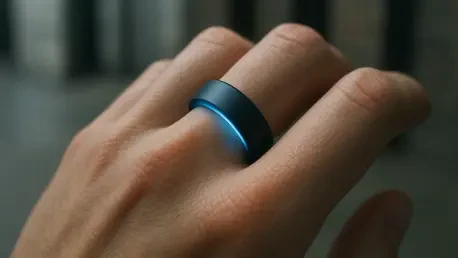

A recent sixty-patient study demonstrated that the Happy Ring maintains a mean difference of less than one millimeter of mercury compared to high-precision medical reference tools. Monitoring blood pressure has traditionally relied on the inflatable arm cuff, a method that provides only a single snapshot in time. This intermittent approach often fails to account for the dynamic nature of cardiovascular health, frequently obscured by the “white coat syndrome” where clinic-induced stress elevates readings. Happy Health, an Austin-based innovator, has officially disrupted this decades-old standard by securing FDA clearance for its calibration-free wearable. Unlike previous attempts at wrist-worn or finger-worn monitors that required periodic synchronization with a traditional cuff, this new device operates independently. It represents a shift toward a truly passive health management system that eliminates the manual burden of traditional diagnostics while providing a continuous stream of data. The technology behind this device aims to bridge the gap between consumer-grade wellness trackers and clinical medical devices, offering a more comprehensive look at long-term heart health.
Technical Architecture: Integration of PPG and Bioimpedance
The core of this innovation lies in the sophisticated integration of photoplethysmography and bioimpedance sensing within a single, compact ring. Photoplethysmography utilizes specific light wavelengths to observe volume changes in blood vessels, while bioimpedance sends low-level signals to analyze tissue density. By synthesizing these signals, the system applies complex physics-based models to calculate how blood vessels expand and contract with every heartbeat. This methodology moves beyond simple pulse transit time, allowing the ring to deliver absolute pressure values in millimeters of mercury. To maintain high data integrity, the ring features an intelligent filtering layer that continuously evaluates the environment. It monitors external variables like temperature and internal factors like hydration levels, choosing to withhold measurements if the physiological conditions are too unstable. This ensures that the health data remains consistently accurate and relevant for medical decision-making without the interference of environmental noise.
Achieving FDA clearance required a level of rigor beyond standard consumer electronics, necessitating highly controlled testing environments. Happy Health opted to compare the ring’s performance against invasive arterial lines, the same high-stakes monitoring used in surgical units, rather than solely relying on manual arm cuffs. This rigorous benchmarking confirmed that the ring could match the precision of hospital-grade equipment in a form factor that fits on a finger. Importantly, the clinical trials intentionally recruited a diverse cohort to address historical biases in optical sensing technology. By including participants with a wide range of body mass indexes and diverse skin pigmentations, the company ensured that the sensors would not lose accuracy on darker skin tones, a frequent shortcoming of earlier wearable generations. This inclusive approach to medical design underscores a commitment to equitable healthcare technology, making the ring a viable diagnostic tool for a broad and diverse global population that has been historically underserved.
Clinical Impact: Redefining Hypertension Management
Dr. Dustin Freckleton, the company’s founder, has likened this development to the introduction of continuous glucose monitors in the management of diabetes. For years, patients with hypertension were required to perform manual checks, a process that is often stressful and easily forgotten. The Happy Ring changes this dynamic by gathering data in the background, transforming a periodic chore into a constant physiological signal. This capability is particularly critical for diagnosing nocturnal hypertension, a condition where blood pressure stays elevated during sleep, which is often a precursor to serious cardiovascular events. By tracking pressure through the night, the device reveals how conditions like sleep apnea exert repetitive stress on the heart. This longitudinal visibility allows physicians to move away from treating isolated symptoms based on a single office visit and instead focus on the systemic root causes of a patient’s hypertension. It transforms the patient-doctor relationship by providing a clear, evidence-based narrative of cardiovascular performance.
The successful clearance of the first calibration-free blood pressure ring established a new benchmark for the intersection of consumer technology and clinical medicine. It proved that complex physiological markers could be tracked with high precision outside of a traditional hospital environment. For healthcare systems, the next logical step involved integrating this continuous data into electronic health records to facilitate more personalized treatment plans. Patients were encouraged to take a more proactive role in their cardiovascular health by monitoring how lifestyle factors like diet and exercise influenced their daily pressure trends. The transition from reactive to proactive care relied on the availability of reliable, friction-free data, and this innovation provided the necessary foundation. Moving forward, the focus remained on ensuring that this data was used not just for observation, but as a catalyst for timely interventions that significantly improved long-term patient outcomes across the globe through automated alerts and virtual care integration.