
The modern obsession with quantifying every aspect of human biology has turned the simple act of wearing a watch into a high-stakes game of digital performance tracking and personal data management. Many people now base their entire self-worth and fitness identity on the colorful rings and fluctuating numbers displayed on their smartwatches, often ignoring their own physical sensations in favor of digital validation. This psychological phenomenon creates a deep-seated reliance on wearable technology, where a high readiness score can spark confidence while a low sleep grade might ruin a person’s morning before they even get out of bed. However, the fundamental question remains whether these devices are providing objective medical-grade data or merely sophisticated, algorithmically driven guesses designed to keep users engaged with their personal wellness journey. While the hardware within these devices has improved remarkably, the gap between consumer electronics and clinical diagnostic equipment remains a significant hurdle for those seeking absolute precision in their health tracking efforts. The transition from simple motion sensing to complex health monitoring has blurred the lines for consumers, who often mistake a calculated estimate for a definitive biological fact, leading to potential mismanagement of their health and fitness goals. This tension between data-driven motivation and scientific accuracy defines the current landscape of wearable technology in 2026.
The Technical Gap: Sensing Versus Predicting
Data Acquisition: How Hardware Captures Raw Signals
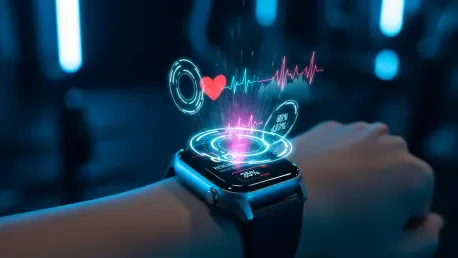
At the core of every modern wearable device is an array of sophisticated hardware components designed to capture physical signals directly from the human body. The most ubiquitous of these is the photoplethysmography (PPG) sensor, which utilizes light-emitting diodes to shine green or infrared light into the skin, measuring the reflected light to determine blood volume changes. This process allows the device to track heart rate and heart rate variability with a surprising degree of accuracy during periods of rest or steady-state activity. Beyond optical sensors, micro-electromechanical systems like tri-axial accelerometers and gyroscopes work in tandem to detect the subtle movements of the wrist in three-dimensional space. These sensors are the primary workers of the device, providing what engineers consider ground truth data regarding movement and basic cardiovascular activity. By recording these physical interactions directly, the watch creates a foundation of raw biological evidence that remains much more reliable than the complex scores derived from it later in the data processing pipeline. This hardware-level sensing represents the most objective part of the wearable experience, as it deals with measurable physical phenomena rather than abstract mathematical interpretations of health.
While basic sensors provide a solid baseline, the emergence of advanced hardware such as skin temperature sensors and bioelectrical impedance analysis has further expanded the scope of what a wrist-worn device can monitor. Skin temperature sensors track fluctuations in surface heat that can indicate changes in the body’s circadian rhythm or the onset of an inflammatory response. Similarly, bioelectrical impedance sensors send a weak electrical current through the body to estimate muscle mass and body fat percentage based on the resistance encountered by the signal. Even with these advancements, there is an inherent limitation to what can be measured from the wrist compared to clinical chest straps or hospital-grade equipment. The signal-to-noise ratio often becomes problematic during high-intensity exercise or when the watch is not fitted perfectly, leading to momentary lapses in data accuracy. Despite these challenges, the direct measurement of physiological signals provides the most concrete evidence available to the user, serving as the essential building blocks for all subsequent health analysis. Recognizing the difference between these raw sensor readings and the processed scores is the first step toward using a smartwatch effectively as a health tool without falling into the trap of over-reliance on estimated metrics.
Algorithmic Modeling: The Science Behind Health Estimations
Beyond the simple capture of raw signals, the true complexity of a smartwatch lies in its ability to translate these electrical pulses and movement patterns into recognizable health metrics like VO2 Max or recovery scores. This process is not a direct measurement but a mathematical prediction based on decades of physiological research distilled into proprietary software code. When a device calculates a user’s cardiovascular fitness, it is looking at the relationship between heart rate and movement speed, then cross-referencing that data with age and weight to place the user on a standardized fitness curve. These models are designed to approximate the results one would receive from a clinical treadmill test involving metabolic carts and gas analysis, yet they must do so without measuring oxygen consumption or carbon dioxide production. Consequently, the score displayed on the screen is an intelligent estimate—a highly educated guess that assumes the user fits the general physiological profile of the population used to train the algorithm. This layer of abstraction is where the most significant discrepancies occur, as individual variations in metabolism or cardiac efficiency can lead the software to over- or under-estimate a person’s true physiological capabilities.
The lack of industry-wide standardization further complicates the landscape, as different manufacturers utilize unique algorithms that can produce wildly different results from the same set of raw data. A user wearing two different brands of smartwatches simultaneously will often find that their readiness or recovery scores vary by significant margins, despite the devices sensing the same physical activity. This variation occurs because each company prioritizes different physiological markers; one might weigh heart rate variability more heavily, while another might focus on the duration of deep sleep or resting heart rate trends. These discrepancies highlight the reality that these metrics are interpretations of health rather than absolute biological truths. While these mathematical models are incredibly useful for identifying relative changes—such as seeing an improvement in fitness over several months—they lack the clinical precision required for medical diagnosis. Understanding that these numbers are essentially high-level summaries of complex biological trends allows users to maintain a healthy perspective, using the data as a guide for lifestyle adjustments rather than an immutable record of their health status.
The Problem: High-Stakes Performance Stats
Calorie Estimation: Why the Numbers Often Miss the Mark
The metric most prone to being misused and misinterpreted by the general public is the calories burned feature, which many experts consider the least reliable stat on the screen. Algorithms estimate energy expenditure by combining heart rate data with personal biological information like height, weight, and age, but they cannot account for individual metabolic efficiency. A seasoned marathon runner and a sedentary individual may have the same heart rate during a light jog, but their actual caloric expenditure will differ significantly due to muscle mass and metabolic adaptation. The danger occurs when users eat back these calories, potentially stalling their weight loss or fitness progress because the watch often provides an inflated estimate of the energy burned during a workout. Because the device is predicting an outcome rather than measuring actual metabolic gas exchange, the margin of error can be as high as forty percent in some scenarios. This makes the calorie counter a helpful tool for comparing the intensity of different workouts, but a poor tool for managing precise nutritional intake or weight loss protocols.
Instead of fixating on the exact number of calories burned during a specific gym session, it is more productive to focus on the broader patterns of daily movement and non-exercise activity. This includes common actions like walking to a car, doing household chores, or taking the stairs, which often have a more substantial cumulative impact on health than a single recorded exercise session. Smartwatches are at their best when they function as a general barometer of activity levels, encouraging users to remain active throughout the day rather than meeting a specific numerical quota for a meal. The shift in focus from micro-managing calorie counts to macro-managing movement consistency helps reduce the anxiety often associated with fitness tracking. By treating the calorie metric as a relative measure of effort rather than a literal count of energy units, users can avoid the frustration of stalled progress and focus on the sustainable habits that lead to long-term health. The goal should be to use the watch as a nudge toward a more active lifestyle rather than a precise accounting tool for every morsel of food consumed during the day.
Mental Wellness Tracking: Interpreting Stress and Sleep Scores
Stress scores are another area where data is frequently misinterpreted, as most devices detect physiological arousal rather than an actual emotional or psychological state. This arousal is typically measured through heart rate variability, which tracks the tiny fluctuations in time between each heartbeat to assess the state of the autonomic nervous system. While a low variability score can indeed indicate high stress, it can also be triggered by physical factors like dehydration, caffeine consumption, a heavy meal, or an oncoming illness. Because the device cannot distinguish between the physiological impact of a stressful work meeting and the impact of an intense weightlifting session, the score must be interpreted within the context of a person’s daily habits. Users who see a high stress score often react with immediate concern, but the data is simply reflecting that the body is working harder to maintain balance, not necessarily that the user is suffering from an emotional crisis. Contextualizing these numbers is essential to prevent the device from becoming a source of stress rather than a tool for managing it.
Similarly, the sleep scores provided by wearables are often treated as medical verdicts despite the hardware’s inability to measure brain waves directly. A watch uses movement and heart rate patterns to guess which sleep stage a user is in, which is a helpful guide but lacks the accuracy of a clinical polysomnography test. Users often react emotionally to a single night’s low sleep score, becoming unnecessarily discouraged and potentially creating a self-fulfilling prophecy of poor sleep through anxiety. The consensus among fitness and medical professionals is that these numbers should be viewed as long-term trends rather than daily report cards. A single night of poor sleep as reported by a watch is far less significant than a downward trend in sleep quality over several weeks, which might actually signal a need for lifestyle changes like reducing evening blue light exposure or adjusting room temperature. By shifting the focus from the daily score to the monthly average, users can gain valuable insights into their recovery patterns without becoming obsessed with the inherent inaccuracies of the nightly measurements.
Future-Proofing Wellness Strategies
Artificial Intelligence: Synthesizing Contextual Health Insights
Modern wearables are increasingly moving away from presenting raw data in favor of providing contextual insights driven by on-device artificial intelligence. This shift allows the technology to look at multiple sensor inputs simultaneously, such as how a decrease in sleep quality might be correlating with an increase in resting heart rate or a decrease in workout performance. By analyzing these relationships, the AI can offer more nuanced advice, such as suggesting a rest day when the data points toward overtraining or an oncoming illness. However, even these advanced AI-driven insights are decision-support tools meant for awareness, not clinical verdicts that replace professional medical advice. The sophistication of these models in 2026 allows for a much more personalized experience than in previous years, yet the fundamental principle of data as an estimate remains unchanged. These devices are increasingly becoming proactive health companions that can identify subtle shifts in a user’s baseline, providing a layer of health surveillance that was previously unavailable to the average consumer outside of a laboratory setting.
The integration of machine learning into the wearable ecosystem has also improved the accuracy of pattern recognition, helping users identify specific triggers for their health metrics. For instance, a device might notice that a user’s recovery score consistently drops on days when they have a late-night meal or an extra cup of coffee in the afternoon. This level of personalized feedback is where the true value of wearable technology lies, as it moves the conversation away from generic goals toward individual lifestyle optimization. By focusing on these trend lines and correlations, users can make small, evidence-based adjustments to their routines that lead to significant improvements in overall well-being. This long-term perspective helps reduce the data-driven anxiety that often accompanies a focus on daily fluctuations, allowing the watch to serve as a guide for gradual and sustainable improvement. The power of the device is found in its ability to provide accountability and help users form better habits through continuous feedback, rather than in the absolute precision of any single data point it produces throughout the day.
Behavioral Integration: Transforming Guesses into Actionable Habits
The most impactful takeaway from the current era of health technology was that the most successful users were those who viewed their smartwatch as a motivational partner rather than a medical authority. This group utilized the data to identify general trends and spark conversations with their healthcare providers, which proved to be a far more effective strategy than chasing perfect daily scores. By prioritizing long-term behavioral changes over short-term numerical fluctuations, individuals turned their wearable devices into meaningful tools for sustainable health improvement. The shift from obsession to observation allowed for a healthier psychological relationship with technology, ensuring that the watch served the user rather than the user serving the data. Ultimately, the industry moved toward a more integrated model where wearables acted as early warning systems rather than final diagnostic verdicts, providing a much-needed layer of context to the modern health journey and encouraging people to listen to their bodies first.
It was discovered that the true utility of these devices lay in their ability to act as a bridge between subjective feeling and objective observation. When a user felt fatigued and their watch confirmed a drop in heart rate variability, it provided the necessary validation to take a much-needed rest day, effectively preventing burnout or injury. This partnership between human intuition and digital estimation created a more balanced approach to fitness that emphasized longevity and consistency over raw performance. The conclusion drawn by many health experts was that a smartwatch is a companion to personal discipline and professional medical care, not a substitute for either. By maintaining a healthy dose of skepticism regarding specific daily digits, especially calorie counts, users derived the maximum benefit from their wearable investments. The smarter approach focused on behavioral patterns and consistent movement, turning what were once considered sophisticated guesses into practical, actionable tools for proactive health management that lasted well beyond the life of the battery.