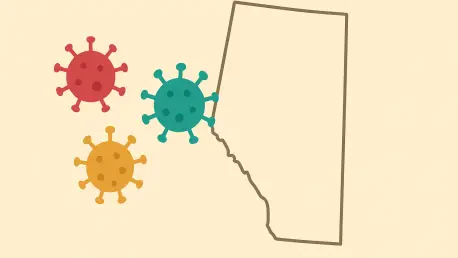

Clinician documentation and diagnostic codes serve as the primary evidence for mapping the intense, multi-pathogen demand currently facing medical staff. The transition from a singular focus on a global health crisis to a more complicated landscape involving various respiratory threats has redefined how Alberta manages its emergency care resources. As the healthcare system navigates the post-pandemic era, researchers from the University of Alberta have conducted a thorough retrospective analysis of respiratory illness presentations. This effort specifically tracks the intersection of COVID-19, influenza, and respiratory syncytial virus across several critical seasons. By mapping these pathogens simultaneously, the study provides a vital framework for understanding the triple threat that now defines the seasonal burden on clinicians. Rather than viewing each virus in a vacuum, the analysis demonstrates how their convergence creates unique pressures on hospital infrastructure. This understanding is essential as clinicians and administrators look to optimize patient flow and resource allocation in an environment where multiple viruses now compete for limited medical attention and equipment.
Methodology: Innovative Approaches to Viral Surveillance
To establish a credible foundation for this analysis, the research team utilized a population-based approach that integrated comprehensive administrative health data from the entire province. By accessing the National Ambulatory Care Reporting System, the study tracked nearly every patient seeking emergency care for specific viral infections between 2021 and 2023. This massive dataset allowed for a near-complete picture of the healthcare burden, moving far beyond the limitations of small sample sizes or voluntary reporting systems. The study identified over 74,000 presentations for COVID-19 alone, contrasting with approximately 2,000 visits each for influenza and respiratory syncytial virus. This vast disparity underscores the overwhelming footprint of the coronavirus during the transition period, even as other seasonal pathogens began to re-emerge. Using standardized diagnostic codes ensured that the data remained consistent across different facilities, providing a reliable baseline for mapping the actual demands placed on frontline medical staff who handle acute respiratory distress cases.
The analytical core of the research involved the application of retrospective space-time scan statistics, a sophisticated tool used to detect geographic and temporal clusters of illness. This method employs a cylindrical window that moves across space and time, allowing researchers to identify specific areas where the number of observed cases significantly exceeds expectations. By adopting a multivariate framework, the study was able to examine the interaction between COVID-19, influenza, and respiratory syncytial virus collectively. This approach is superior to traditional isolationist analysis because it reveals how different viral surges overlap and intensify one another. The researchers divided the province into sub-regional health areas, achieving a level of granularity that standard provincial reports often lack. This focus on local dynamics is crucial for understanding how viral patterns fluctuate between densely populated urban hubs and more isolated rural communities, where healthcare resources and social distancing dynamics differ substantially.
Epidemiological Evolution: Suppression Versus Resurgence
The two-year study period captured a pivotal shift in respiratory disease patterns that coincided with changing public health policies. During the initial phase, which was characterized by strict non-pharmaceutical interventions such as masking, school closures, and travel restrictions, COVID-19 remained the primary driver of emergency department visits. These interventions were remarkably effective at suppressing traditional seasonal viruses, causing influenza and respiratory syncytial virus to virtually disappear from the clinical landscape. This era highlighted how significantly human behavior and policy can disrupt the natural transmission cycles of established pathogens. For over a year, the healthcare system focused almost exclusively on a single threat, while other viruses were kept at bay by the same measures intended to control the coronavirus. This suppression created a unique epidemiological window that allowed researchers to isolate the impact of COVID-19 before the return of a more crowded and competitive viral environment.
As public health restrictions were rolled back during the second year of the study, the environment underwent a dramatic transformation, leading to a significant rebound of seasonal illnesses. Influenza and respiratory syncytial virus did not wait for the coronavirus to vanish before making their return; instead, they began to circulate concurrently, creating intense periods of multi-pathogen demand. This resurgence suggests that the new normal for emergency departments involves managing several concurrent peaks rather than focusing on one virus at a time. The data illustrates that the rollback of interventions provided an opening for traditional viruses to exploit gaps in population immunity. Consequently, healthcare providers had to quickly adapt to a scenario where the total volume of respiratory cases surged due to the combined presence of three distinct viruses. This shift forced a reassessment of seasonal preparedness, as the predictable patterns of the past were replaced by more volatile and overlapping outbreaks that stressed hospital capacity.
Redefining the Twin-demic: The Emergence of RSV
While media narratives frequently warned of a potential twin-demic involving the simultaneous surge of COVID-19 and influenza, the Alberta study revealed a different reality on the ground. The data indicated that the most common statistically significant clusters actually involved the co-circulation of COVID-19 and respiratory syncytial virus. This finding is particularly significant because respiratory syncytial virus has traditionally been categorized as a concern primarily for pediatric patients. However, the study underscores that this virus places a substantial burden on the entire emergency care system, affecting a much broader range of age groups than previously emphasized. The discovery of these specific clusters suggests that COVID-19 and respiratory syncytial virus may share similar transmission windows or environmental triggers in the post-pandemic era. For hospital administrators, this revelation is a critical piece of the puzzle for long-term capacity planning and highlights the need to monitor a wider array of pathogens beyond just the seasonal flu.
The simultaneous surges of these viruses indicate that the healthcare system must prepare for complex interactions that transcend age demographics. By identifying respiratory syncytial virus as a major partner in these viral surges, the research provides a clear directive for hospital resource management. Pediatric units often face the brunt of respiratory syncytial virus, but the data shows that the surge also ripples through adult wards, complicating the management of older patients who may already be vulnerable to COVID-19. Understanding this link allows for better preparation across all hospital departments, ensuring that oxygen supplies, specialized staffing, and isolation protocols are ready for a multi-front viral assault. This discovery refutes the idea that influenza is the only major seasonal threat to watch alongside the coronavirus. Instead, it places respiratory syncytial virus at the forefront of modern surveillance efforts, requiring a more nuanced approach to how hospitals brace for the annual increase in acute respiratory cases.
Regional Hotspots: The Importance of Geographic Granularity
One of the most valuable insights provided by the research is that the respiratory season is not a uniform, province-wide event. Rather, it is a complex mosaic of localized outbreaks that vary significantly by time and location. The researchers identified four major space-time clusters where respiratory activity was particularly high, and these hotspots were not distributed evenly across the map. A hospital in a suburban area might experience a sudden, overwhelming influx of patients while a neighboring facility remains relatively stable. This variation highlights the importance of local data over broad provincial averages. Urban centers, with their high population density and interconnectivity, exhibited different patterns of cluster intensity and duration compared to rural zones. By pinpointing these specific clusters, the research supports the argument for a more flexible and localized surge capacity strategy. Authorities can now visualize how a surge might move through the province, allowing for more precise planning.
The ability to identify localized hotspots allows healthcare authorities to move away from broad mandates in favor of targeted responses. When a specific region is identified as an active cluster, resources such as portable diagnostic tools or additional nursing staff can be redirected to that exact location to alleviate the pressure. This geographic granularity is essential for maintaining the resilience of the healthcare system as a whole. If one region is at the peak of a triple-threat surge, neighboring regions can be put on alert to prepare for patient transfers or to provide mutual aid. This approach transforms respiratory surveillance into a dynamic tool for operational management. By understanding that viral threats are often localized, the healthcare system can avoid the inefficiencies of a one-size-fits-all solution. Instead, it can implement a tiered response that prioritizes areas with the highest documented disease burden, ensuring that every patient receives appropriate care regardless of where the surge originates.
Strategic Pathways: Enhancing Resilience and Response
The core strength of this research lies in its reliance on a province-wide, single-payer health system database, which effectively eliminates the sampling bias that frequently hampers studies focused on individual hospitals or volunteer patient cohorts. By incorporating every recorded emergency department visit for these three specific viruses, the analysis provided an authoritative and comprehensive account of severe respiratory illness across the entire provincial infrastructure. This macroscopic view is essential for policymakers who must understand the true impact of seasonal pathogens on the healthcare system to make informed decisions regarding budget allocations and emergency resource management. However, the researchers also acknowledged specific limitations, noting that the data is contingent upon the accuracy of diagnostic codes entered by clinicians at the point of care. Furthermore, the analysis only captures patients whose symptoms prompted an emergency visit, meaning it does not account for mild infections circulating in the general public.
The findings from Alberta provided a sophisticated blueprint for future healthcare preparedness. The study demonstrated that managing respiratory illness in a post-pandemic world required a shift toward integrated surveillance models that monitor multiple pathogens in real time. This research established that knowing how specific viruses peak together in a given county offers more actionable intelligence than general averages. Consequently, health agencies began to prioritize the development of localized data dashboards to guide staffing and medicine stockpiling. Starting in 2026, healthcare systems should expand these multivariate tracking systems to include emerging variants and other seasonal threats. Furthermore, the data showed that targeted communication strategies were more effective when based on specific cluster information. By intensifying vaccination campaigns and public health advisories in regions experiencing active surges, authorities could effectively blunt the peak of viral waves. These proactive steps ensured that emergency departments remained resilient and capable of handling future multi-pathogen challenges.