
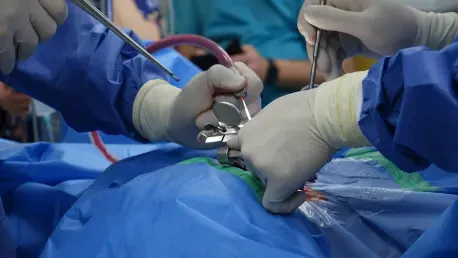
Surgical advancements often hinge on tools that balance innovation with practicality, and one such tool has recently captured the attention of healthcare professionals across Australia and New Zealand. With operating rooms under constant pressure to optimize efficiency while ensuring patient

In a move that has ignited intense scrutiny, the Centers for Medicare & Medicaid Services (CMS) recently put forward a proposal to include vital medical supplies—such as urological, tracheostomy, and ostomy products—within its Competitive Bidding Program (CBP). This initiative, designed to curb

The global respiratory care devices market stands at a pivotal moment, with projections indicating a remarkable climb from $26.40 billion in the current year to an astounding $45.13 billion by 2034, driven by a compound annual growth rate (CAGR) of 6.18%. This growth underscores a pressing need to

The medical technology industry, often a cornerstone of innovation and patient care, finds itself grappling with a renewed specter of uncertainty as a Section 232 investigation, initiated by the Department of Commerce, casts a shadow over the importation of critical medical equipment. Announced on

In a groundbreaking development for the healthtech sector, FluidAI Medical, a company based in Kitchener, Ontario, has recently received FDA 510(k) clearance for its innovative AI-powered postoperative monitoring device, known as Origin. This approval marks a significant step forward in surgical

Introduction to AMTZ and KIHT’s Transformative Role In a nation where over 70% of medical devices are imported, creating a staggering dependency on foreign supply chains, the Andhra Pradesh MedTech Zone (AMTZ) and Kalam Institute of Health Technology (KIHT) emerge as beacons of change in India’s