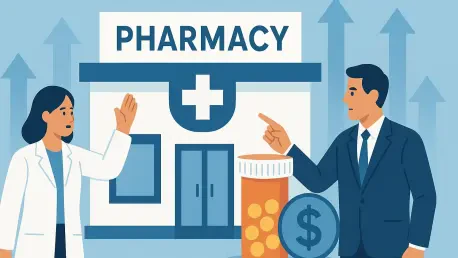

For seven consecutive years, Missouri legislators have failed to pass comprehensive oversight for Pharmacy Benefit Managers, leaving a significant gap in the state’s healthcare regulatory framework. This persistent legislative stalemate occurs as pharmacy benefit managers, or PBMs, continue to exert immense influence over the cost and accessibility of prescription drugs for millions of residents. These powerful entities operate as intermediaries, negotiating prices between pharmaceutical manufacturers and insurance providers while also managing the pharmacy networks that patients rely on daily. While PBMs maintain that their scale allows them to secure deep discounts that ultimately lower premiums, critics argue that their opaque business practices have instead distorted the marketplace. The situation in Missouri has reached a boiling point where the survival of independent community pharmacies is now at stake, as they struggle against a system that many believe favors large-scale vertical integration over local care.
Legislative Obstacles: A Contrast With Neighboring States
While Missouri remains locked in a cycle of failed bills and committee-level delays, its neighboring states have taken decisive action to address the perceived imbalances in the drug supply chain. Both Kansas and Arkansas have successfully navigated the political complexities required to pass laws that curb anti-competitive practices, providing their state insurance departments with greater authority to oversee PBM operations. In contrast, similar efforts in the Missouri Senate have repeatedly faltered, often dying in the final days of the spring session despite broad bipartisan support in the House. State Representative John Hewkin, a pharmacist with nearly four decades of professional experience, has been a leading voice in this fight. He argues that the legislative process is inherently compromised because the very organizations being regulated are the same ones that lobbyists and lawmakers must consult during the drafting of the bills, leading to a watered-down version of reform.
The core of the legislative struggle involves the “unfair” nature of PBM contracts, which many independent pharmacists describe as take-it-or-leave-it agreements. These contracts often feature low reimbursement rates that sometimes fall below the actual acquisition cost of the drugs themselves, placing a significant financial strain on small-business owners. Additionally, the aggressive audit practices employed by PBMs can lead to the clawback of funds months after a prescription has been filled, creating a climate of economic uncertainty. Proponents of the Missouri reform bill sought to establish more transparent reimbursement standards and limit the ability of PBMs to steer patients toward their own corporate-owned mail-order pharmacies. However, these provisions have met stiff resistance from industry representatives who claim that such regulations would interfere with private contract rights and ultimately increase the cost of healthcare for the average Missouri employer.
The Personal Impact: Patient Safety and Choice
The human dimension of this regulatory gridlock is most vividly captured through the experiences of patients who find themselves caught in the middle of corporate mandates. Loretta Boesing, a dedicated Missouri advocate, began her journey into healthcare activism after her son, Wesley, suffered a life-threatening liver transplant rejection. The crisis was traced back to medications delivered by a PBM-owned mail-order pharmacy that were exposed to extreme Missouri summer temperatures during the shipping process. This incident highlights a major point of contention in the reform debate: the mandatory use of mail-order services that strip patients of their right to choose a local pharmacy. Boesing argues that local pharmacies provide a critical chain of custody and climate-controlled storage that mail-order giants simply cannot guarantee. For families dealing with complex medical conditions, the ability to consult a local pharmacist in person is a necessity rather than a luxury.
Beyond the immediate safety concerns regarding medication storage, the current system has led to a feeling among Missourians that they are being treated as profit centers rather than individuals with unique medical needs. The lack of transparency in how rebates are shared and how drug prices are set leaves many families feeling exploited by a system they do not fully understand. When patients are forced by their insurance plans to use specific pharmacies or mail-order programs, the personalized care of a community pharmacist is often replaced by automated phone systems and generic support lines. This shift has broader implications for public health, as independent pharmacists are often the most accessible healthcare providers in rural parts of the state. Without state-level intervention to ensure these pharmacies remain viable, many Missouri communities risk losing their only local source for professional medical advice and essential life-saving prescriptions.
Balancing Costs: Philosophical and Corporate Perspectives
The resistance to PBM reform is not limited to the managers themselves; several influential Missouri business and labor organizations have voiced significant concerns. Groups like the Missouri Chamber of Commerce and the Mid-America Carpenters Regional Council represent a perspective centered on collective cost-sharing. They argue that the current PBM model allows for substantial savings that are funneled back into union health and welfare funds, which in turn helps keep insurance premiums affordable for all members. These organizations fear that specific reform measures, particularly those requiring drug discounts to be passed directly to the individual patient at the pharmacy counter, would destabilize the financial health of the broader group insurance pool. This creates a fundamental philosophical divide between those who believe drug savings should immediately benefit the individual consumer and those who believe they should be used to subsidize the overall costs of the plan.
In an attempt to address the mounting criticism, some of the industry’s largest players have introduced new business models designed to appease local providers. Express Scripts, a major PBM headquartered in Missouri and owned by Cigna, recently launched a pharmacy benefit model that claims to reimburse community pharmacies based on the actual acquisition cost of drugs. While the company presents this as a way to support the viability of independent shops and emphasize clinical services, many local pharmacists remain deeply skeptical of these corporate initiatives. They view these announcements as strategic public relations maneuvers intended to head off more stringent government oversight rather than a genuine shift in behavior. History has shown that when PBMs offer concessions in one area, they often introduce new fees or lower reimbursements in others, a phenomenon commonly referred to as “moving the goalposts” within the healthcare industry’s complex economic landscape.
Federal Scrutiny: National Trends and Local Realities
The struggle in Missouri is unfolding against a backdrop of increasing federal scrutiny of the pharmacy benefit management industry. The Federal Trade Commission has become more aggressive in investigating how the vertical integration of PBMs, insurers, and pharmacies impacts drug prices and competition. Recent reports from the agency suggest that as these massive conglomerates expand, independent pharmacies lose their bargaining power and patients are often left with fewer choices and higher out-of-pocket costs. This federal attention has already resulted in significant legal actions, including settlements regarding the inflation of insulin prices. While the federal government passed certain reform measures two years ago to provide Medicare with better tools for investigating PBM complaints, the actual implementation of these changes is expected to take several years. For many Missouri pharmacy owners who are already operating on razor-thin margins, this timeline is far too slow to prevent potential closures.
The path forward for Missouri required a fundamental reassessment of how pharmaceutical benefits were managed to ensure both economic efficiency and patient safety. Lawmakers eventually recognized that the state’s regulatory inertia had created an environment where corporate profits were often prioritized over the health outcomes of vulnerable citizens. To resolve this, stakeholders recommended a multifaceted approach that included mandatory transparency in rebate reporting and the establishment of a fair reimbursement floor for all pharmacies. These steps were viewed as essential for preserving the community healthcare infrastructure that rural Missourians depend on for their daily needs. By looking toward the successful models implemented by neighboring states, Missouri finally moved toward a system that balanced the interests of group plans with the rights of individual patients to receive safe and accessible care. This shift signaled a new commitment to oversight that aimed to restore trust in the state’s complex healthcare delivery system.