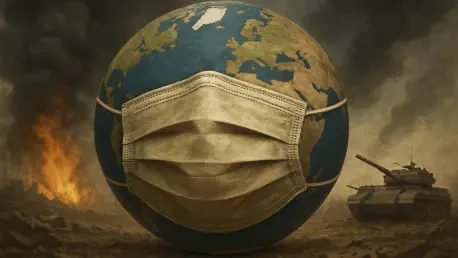

Strategic dependencies on raw materials like solvents and reagents are often buried deep within supply chains, making them difficult to diversify during an active crisis. The traditional definition of national security is undergoing a radical transformation as the world becomes increasingly interconnected through specialized trade networks. While military strength once served as the primary measure of a nation’s safety, modern stability now depends heavily on the integrity of globalized economic corridors. A striking example of this shift occurred following military strikes involving the United States, Israel, and Iran, which culminated in the strategic closure of the Strait of Hormuz. While such events are typically viewed through the lens of energy prices and crude oil markets, they also expose a far more precarious vulnerability: the fragility of the global pharmaceutical supply chain. This recent escalation demonstrates that health security is no longer a localized concern confined to hospital walls or domestic policy. Instead, it has evolved into a systemic geopolitical imperative that requires protecting the intricate corridors through which life-saving medications travel. When regional tensions boil over into maritime blockades, the consequences ripple far beyond the immediate conflict zone. The disruption of critical trade routes serves as a primary case study in how political instability can trigger a cascade of failures across the healthcare sector, threatening the lives of patients thousands of miles away.
The Strategic Importance of Maritime Chokepoints
The Strait of Hormuz stands as one of the most significant geographical bottlenecks in the world, serving as a narrow conduit between Iran and the Arabian Peninsula. It functions as the central artery for global energy trade, facilitating the passage of roughly twenty-five percent of the world’s crude oil along with massive quantities of liquefied natural gas and fertilizers. Because this passage connects the hydrocarbon-rich Gulf region to the Arabian Sea, any closure or threat to its security sends immediate shockwaves through the global economy. The strategic weight of this waterway extends well beyond fuel; it is a vital node for the movement of diverse commodities that underpin modern civilization, including the chemical precursors required for pharmaceutical manufacturing. When a conflict leads to the closure of such a passage, the resulting volatility is not just an energy crisis; it is a logistical breakdown. This disruption illustrates that localized regional friction can effectively sever the supply lines for essential goods, proving that global health is inextricably linked to the stability of the world’s most contested maritime borders.
Beyond the immediate cessation of traffic, the threat of a blockade creates a psychological and economic barrier that lingers even after physical passages are reopened. Freight carriers are forced to consider whether the risk of seizure or attack outweighs the necessity of the route, leading to widespread rerouting and increased transit times. This is particularly problematic for the healthcare sector because medicinal precursors often have limited shelf lives or require specific environmental conditions during transport. The inability to navigate through the Gulf region forces shipments to travel around the Cape of Good Hope, adding weeks to delivery schedules and significantly increasing fuel consumption. This added delay is not merely an inconvenience; it represents a period during which manufacturing facilities remain idle and hospital pharmacies face depleting stocks of essential drugs. The geopolitical instability in these maritime corridors essentially acts as a tax on global health, where the price of political disagreement is paid in the reduced availability of medicine and the increased cost of sustaining human life.
The Geographic Concentration of Drug Production
To understand why pharmaceutical security is so vulnerable to geopolitical strife, one must examine the architecture of modern drug manufacturing. The process is a complex, multi-stage journey that begins with the acquisition of chemical precursors, which are then transformed into Active Pharmaceutical Ingredients, commonly known as APIs. These APIs are the essential biological or chemical components that provide a drug’s therapeutic effect. Because the industry has prioritized cost-efficiency for several years leading up to 2026, the production of these components has become concentrated in a very small number of geographic hubs. This concentration creates a dangerous tiered dependency that leaves no room for error. For example, India remains the world’s leading provider of generic medications, yet it relies on China for seventy percent of its APIs. If a conflict in the Middle East disrupts shipping lanes between these regions, it can halt production in India, which in turn leads to severe drug shortages in the United States or Europe. This model was built for maximum profit and minimum cost, deliberately sacrificing redundancy and resilience.
The vulnerability of this concentrated model is compounded by the fact that many of these manufacturing hubs are themselves located in geopolitically sensitive areas or rely on trade routes that pass through them. When a single point of failure in the network is compromised by war or political tension, the global medical community is left with few alternatives. There is often no immediate way to ramp up production in other regions because the specialized equipment and environmental permits required for chemical synthesis can take years to establish. Furthermore, the lack of transparency in the lower tiers of the supply chain means that many pharmaceutical companies may not even realize their primary API source is dependent on a precursor produced in a conflict zone until the supply actually stops. This lack of geographic diversity has turned the global medicine supply into a house of cards, where a localized dispute over maritime borders can cause the entire structure of international healthcare to collapse, leaving millions of patients without the treatments they need to survive.
The Hidden Link Between Petroleum and Medicine
One of the most overlooked aspects of pharmaceutical manufacturing is its deep and abiding reliance on the petroleum industry. While the public generally associates oil with transportation and heating, it is actually a foundational component of modern medicine. Nearly all pharmaceutical products depend on petroleum-based inputs at some level, from the chemical synthesis of drugs to the packaging used to keep them sterile. Petrochemicals are essential reagents and solvents used to create the molecular structures of most modern drugs, and the vast majority of vials, blister packs, and plastic containers are derived from petroleum byproducts. This inextricable link means that volatility in the energy market, such as that caused by the closure of the Strait of Hormuz, delivers a double blow to the healthcare sector. It simultaneously drives up the cost of manufacturing drugs and the cost of delivering them to hospitals. When energy supplies are threatened by geopolitical conflict, the very chemicals and fuels needed to sustain global health become scarce and expensive, highlighting a massive strategic vulnerability that few nations are prepared to address.
The impact of high energy prices on the pharmaceutical sector is multifaceted, affecting every stage from research and development to the final mile of delivery. High-tech laboratories and climate-controlled manufacturing facilities require massive amounts of electricity, much of which is still generated from fossil fuels in many parts of the world. When the price of natural gas or crude oil spikes due to regional instability, the operational costs for these facilities rise exponentially. These costs are rarely absorbed by the manufacturers; instead, they are passed down the supply chain, eventually resulting in higher prices for patients and insurance providers. Moreover, the distribution of medicine relies on petroleum-fueled transport across air, sea, and land. Specialized “cold-chain” logistics, which keep vaccines and biologics at precise temperatures, are particularly energy-intensive. A disruption in the flow of oil does not just stop the trucks; it risks the integrity of the cargo they carry. In this context, energy security and health security are two sides of the same coin, and a crisis in the former inevitably precipitates a crisis in the latter.
Economic Impacts on Global Logistics and Insurance
Geopolitical instability does not need to result in a total, permanent blockade to cause severe damage to the supply chain; mere uncertainty is enough to drive costs to unsustainable levels. Recent conflicts have caused global container shipment rates to surge by nearly 150%, a trend that has persisted through 2026. These increases are fueled by several factors, including the need for ships to take longer, more circuitous routes to avoid dangerous waters. These detours increase fuel consumption and labor costs, while also creating massive delays in the arrival of raw materials. Furthermore, maritime insurance rates for vessels operating near conflict zones tend to skyrocket as underwriters reassess the risk of hull damage or cargo loss. These “war risk” premiums add millions of dollars to the cost of trade, a burden that is inevitably shared by the healthcare industry. The pharmaceutical sector is uniquely sensitive to these logistical frictions because many medical products are time-sensitive. Any delay caused by rerouting or port congestion can ruin the efficacy of the products, leading to waste and further exacerbating existing shortages.
The logistical strain created by geopolitical conflict also leads to a phenomenon known as “port congestion,” where redirected ships overwhelm the capacity of safe harbors. This creates a bottleneck that slows down the movement of all goods, not just those coming from the conflict zone. For the medical industry, this means that even if the raw materials are successfully sourced from a stable region, they may sit on a ship for weeks waiting for a berth at a major port. This gridlock ripples through the entire economy, but its effects are most acute in healthcare, where the lack of a single chemical component can prevent the completion of thousands of doses of medicine. The economic burden of these delays is felt most heavily by low- and middle-income countries, which often lack the financial reserves to compete for limited shipping capacity or to pay the inflated prices for finished medications. This logistical strain turns a regional political dispute into a global economic burden, making essential healthcare less accessible to the most vulnerable populations while forcing developed nations to reconsider their reliance on globalized trade for survival.
Redefining Medicine as a National Defense Priority
The persistent threat to pharmaceutical availability is shifting the way governments view healthcare, moving it from a commercial sector to a critical component of national defense. This shift is driven by the inelastic nature of medical demand; unlike luxury goods, patients cannot choose to stop taking insulin, heart medication, or chemotherapy because prices have risen or supplies are low. When shortages occur due to foreign conflicts, it constitutes a public health emergency that can lead to the rationing of care and a decline in societal stability. Given that generic medicines account for the vast majority of prescriptions in many nations, any disruption in the flow of ingredients from overseas is a direct threat to domestic peace. To mitigate this risk, there is a growing consensus that governments must treat the pharmaceutical supply chain with the same strategic importance as the food supply or the power grid. Ensuring the steady flow of medicine is no longer just a matter of trade policy; it has become a fundamental requirement for maintaining civil order and protecting the lives of citizens during times of international turmoil.
In response to these challenges, international leaders moved toward a model of “strategic autonomy” by investing in domestic manufacturing capabilities and diversified sourcing. They recognized that relying on a single geographic region for life-saving chemicals was a liability that could no longer be ignored. Governments began providing incentives for the construction of “on-shored” or “near-shored” API production facilities, ensuring that critical drugs could be manufactured closer to the end consumer. They also established national stockpiles of essential chemical precursors, creating a buffer against short-term maritime disruptions. By treating the pharmaceutical supply chain as a matter of national security, policymakers took the necessary steps to decouple public health from the volatility of distant geopolitical conflicts. This transition involved a fundamental restructuring of trade agreements, prioritizing the resilience of supply lines over the absolute lowest cost. These actions ultimately provided a blueprint for a more stable global health architecture, ensuring that the availability of medicine remained insulated from the unpredictable tides of international politics and maritime warfare.