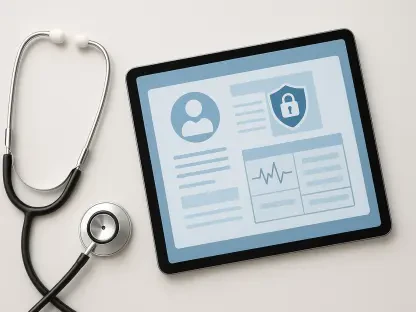

The sudden revelation of a sophisticated cyberattack targeting Craneware, a prominent provider of value cycle solutions, has sent shockwaves through the American healthcare sector, forcing administrators to confront the fragile nature of patient confidentiality. As hospitals increasingly rely on specialized third-party vendors to manage the complex intersections of clinical documentation and financial reimbursement, the surface area for potential exploitation has expanded beyond the traditional hospital firewall. This recent incident highlights a critical paradox where the very systems designed to improve efficiency and accuracy in healthcare billing now serve as primary gateways for malicious actors seeking to harvest high-value data. Unlike standard retail breaches, the information stored within these financial platforms includes a dense combination of social security numbers, medical record indices, and insurance details that cannot be easily replaced or reset. The industry now finds itself at a pivotal crossroads, grappling with the reality that operational interconnectedness, while necessary for modern medicine, remains a profound liability that demands a fundamental shift in how digital trust is maintained across the supply chain.
The Evolving Landscape of Healthcare Cybersecurity
The Strategic Value of Value Cycle Data
The strategic importance of the data managed by Craneware cannot be overstated, as it represents a comprehensive map of patient interactions and institutional financial health. Hackers have pivoted away from targeting isolated medical records to focusing on value cycle platforms because these systems aggregate information from multiple points of care into a single, searchable repository. This centralization makes the billing infrastructure an irresistible target for ransomware groups who recognize that disrupting the cash flow of a health system provides more leverage than simply stealing individual files. By gaining access to these databases, attackers obtain not just names and addresses, but also complex insurance codes and payment histories that are essential for identity theft or insurance fraud. The sophistication of these attacks suggests that threat actors are meticulously studying the proprietary software architectures used by healthcare vendors to find overlooked entry points in the code. Consequently, the industry must recognize that financial data in healthcare is now a matter of national security, requiring the same level of protection as high-frequency trading platforms.
Systematic Weaknesses in Third-Party Integration
Systematic weaknesses often emerge at the boundary where hospital networks interface with external cloud-based services, creating a trust gap that is frequently exploited by modern cybercriminals. Even if a hospital maintains a robust internal security posture, the integration of third-party tools like revenue cycle management software often requires granting broad permissions that can be hijacked if the vendor’s security is compromised. This recent breach serves as a stark reminder that a healthcare provider is only as secure as the weakest link in its professional network, making vendor risk management a top priority for 2026 and 2027. Moving forward, organizations are beginning to require more than just a periodic security audit; they are demanding continuous monitoring and real-time visibility into the security health of their partners. This shift involves moving away from static compliance checklists toward a dynamic model where data access is revoked automatically if a vendor’s security metrics fall below a predetermined threshold. The challenge lies in balancing the need for seamless data exchange with the imperative of protecting the patient, a task that requires a complete overhaul of current technical and legal frameworks governing these partnerships.
Strategies for Strengthening Data Protection
Adoption of Advanced Encryption Standards
Adoption of advanced encryption standards is becoming a non-negotiable requirement for any entity handling sensitive patient information, especially in the wake of high-profile data exfiltration events. Beyond traditional encryption at rest and in transit, innovative organizations are exploring homomorphic encryption, which allows for data processing without ever decrypting the underlying information. This technology ensures that even if a database is breached, the contents remain entirely unintelligible to the intruder, providing a failsafe layer of protection for the most sensitive billing identifiers. Implementation of these protocols requires significant computational resources, yet the investment is increasingly seen as a cost-effective alternative to the catastrophic financial and reputational damage following a breach. From 2026 to 2028, the industry expects a widespread migration toward quantum-resistant algorithms to safeguard against the emerging threat of next-generation decryption tools. This proactive approach to data security signifies a departure from the reactive measures of the past, as healthcare leaders prioritize long-term resilience over short-term operational convenience. By embedding security into the core of the data architecture, providers can significantly mitigate the risk of large-scale leaks while maintaining the integrity of their financial operations.
Proactive Evolution of Incident Response Protocols
Proactive incident response protocols transitioned from a theoretical exercise to a daily operational necessity for healthcare systems and their technology partners following the recent wave of attacks. Modern response strategies no longer focused solely on prevention but assumed that a breach would eventually occur, prioritizing rapid detection and the containment of the blast radius. This involved the deployment of automated systems that used behavioral analytics to identify unusual patterns of data access, such as a sudden surge in outbound traffic or unauthorized attempts to access privileged accounts. When these anomalies were detected, the systems isolated the affected segments of the network, preventing the lateral movement of attackers before they reached the most critical data stores. Comprehensive disaster recovery plans were tested and updated to ensure that core medical services continued even if the primary financial systems were offline. The emphasis was placed on building a culture of transparency where breaches were reported immediately and lessons learned were shared across the industry to bolster collective defenses. By treating cybersecurity as a shared responsibility, the healthcare ecosystem improved its ability to withstand the evolving tactics of sophisticated global hacking syndicates.