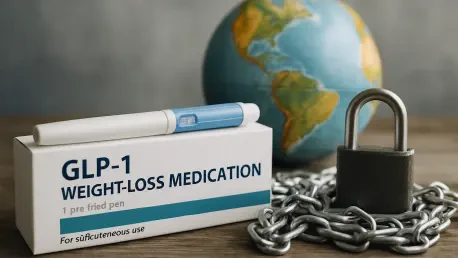

The arrival of GLP-1 receptor agonists has fundamentally altered the medical community’s approach to chronic weight management, yet these pharmaceutical breakthroughs remain tantalizingly out of reach for a vast segment of the American population due to their astronomical monthly costs. This stark disparity between clinical efficacy and financial accessibility has cleared a path for disruptive telehealth startups like Ozari Health, which aims to democratize access to these high-demand treatments. By leveraging the legal landscape of compounded medications, the platform offers semaglutide and tirzepatide at price points that challenge the dominance of pharmaceutical giants. However, as the healthcare sector moves further into a digital-first era, the tension between making medicine affordable and adhering to a tightening regulatory framework creates a volatile environment for patients and providers alike. The question is no longer just whether these drugs work, but whether the infrastructure supporting their distribution can remain both safe and sustainable for the millions seeking a solution to obesity.
The Economic Reality Of Obesity Treatment
The primary driver behind the rise of Ozari Health is the severe contrast between the clinical effectiveness of GLP-1 drugs and the prohibitive financial barriers that currently define the market. Clinical data, such as the SURMOUNT-1 trials, have solidified these medications as revolutionary tools in the fight against metabolic disease, with tirzepatide demonstrating a weight reduction of over 20 percent in long-term studies. Despite these life-changing outcomes, the standard monthly price for brand-name prescriptions often exceeds one thousand dollars for individuals without comprehensive insurance coverage. This financial wall has effectively created a two-tiered healthcare system where medical advancements are reserved for the wealthy, while the average patient is left to navigate a labyrinth of insurance denials and pharmacy shortages. By positioning itself as a bridge over this economic divide, the startup addresses a deep-seated systemic failure in pharmaceutical pricing and distribution.
Ozari Health seeks to rectify this inequality by providing compounded versions of these medications at a fraction of the retail cost found at traditional pharmacies. Offering semaglutide for as low as eighty-six dollars and tirzepatide for one hundred twenty dollars, the company specifically targets a massive and underserved demographic that is medically eligible for treatment but financially excluded from the brand-name market. The philosophy behind this business model is rooted in the idea of simplifying a Byzantine process, moving away from a traditional system that often requires patients to act as their own researchers and auditors to find affordable care. By removing the need for complex insurance negotiations and providing direct pricing, the platform creates a more transparent marketplace. This approach not only provides immediate relief to individual patients but also pressures the broader pharmaceutical industry to reconsider the sustainability of high-margin pricing strategies for chronic conditions.
Streamlining The Patient Experience
The operational core of the Ozari Health platform is designed to function as a seamless digital intermediary, handling every aspect of the medical journey from initial diagnosis to the final delivery of medication. Patients engage in a simplified three-step process that begins with a comprehensive online health assessment, followed by a consultation with a licensed healthcare provider to ensure medical suitability. This digital-first model is built to eliminate the logistical hurdles often associated with traditional weight-loss clinics, such as long wait times and repeated in-person visits. By centralizing the consultation and prescription process, the company provides a high level of convenience that matches the expectations of modern consumers. The efficiency of this system is further enhanced by an emphasis on user autonomy, allowing patients to navigate their treatment plans with a level of control and transparency that is rarely seen in conventional healthcare settings.
A defining feature of this model is the company’s commitment to maintaining a dual-pathway approach for its users. Unlike some competitors that may restrict patients to a single pharmaceutical source, Ozari utilizes a network of partner pharmacies, such as Hallandale Pharmacy and VialsRX, to fulfill orders. This decentralized fulfillment strategy ensures that the platform can provide both low-cost compounded alternatives and standard FDA-approved brand-name drugs for those who have the necessary insurance coverage or a preference for traditional pharmaceuticals. By offering these choices, the startup avoids the pitfalls of a one-size-fits-all solution, instead catering to a wide range of medical needs and financial backgrounds. This level of flexibility is critical in a market where supply chain stability is often unpredictable, as it allows the platform to pivot between different sources to ensure that patient treatments are never interrupted by localized drug shortages or logistics.
Navigating Regulatory And Safety Hurdles
As the Food and Drug Administration begins to resolve the national drug shortages that originally allowed for the mass production of compounded GLP-1s, Ozari Health faces an increasingly complex regulatory landscape. Federal agencies have signaled a more aggressive enforcement posture toward compounded products, which do not undergo the same rigorous approval process as brand-name versions. In April 2026, the agency announced plans to restrict the use of certain active pharmaceutical ingredients and curb advertising that equates compounded alternatives with FDA-approved drugs. This shift puts significant pressure on telehealth providers to justify their manufacturing consistency as the legal shortage loophole begins to close. The transition from a period of relative regulatory flexibility to one of strict oversight requires a high degree of organizational agility, as companies must now prove their long-term compliance with evolving federal standards to avoid potential shutdowns.
Safety remains the most contentious point of debate for both regulators and the medical establishment regarding compounded medications. Concerns about potential contamination and the use of unverified chemical forms, such as salt versions of semaglutide, have led to several public warnings about the risks of non-approved preparations. To counter these concerns and build institutional legitimacy, Ozari Health focus on partnering exclusively with state-licensed pharmacies and maintaining third-party certifications like LegitScript. These certifications are essential for advertising on major technology platforms and serve as a proxy for safety in an industry that lacks the traditional gold seal of FDA approval. Despite these efforts, the inherent risks associated with custom-formulated drugs continue to shadow the industry. The company must constantly balance the need for affordability with the absolute necessity of maintaining sterile manufacturing environments to protect patients from adverse effects.
The Future Of Pharmaceutical Accessibility
Establishing long-term consumer trust is the most significant hurdle for any company operating within the legal gray areas of the pharmaceutical market. Because even established partner pharmacies have faced scrutiny in the past, including warning letters regarding sterile compounding practices, Ozari Health must rely on radical transparency and personalized service to maintain its credibility. The startup’s survival depends on its ability to navigate these reputational risks while the federal government weighs new restrictions on how these medications are marketed. This involves moving beyond simple price competition and focusing on the quality of the patient-provider relationship. By providing continuous clinical support and education, the platform aims to prove that telehealth can offer a standard of care that is comparable to traditional medicine, even when the underlying products are being sourced through non-traditional pharmaceutical channels.
The ultimate success of this business model served as a bellwether for the entire telehealth weight-loss industry and its ability to challenge traditional pharmaceutical pricing. By the time the federal government tightened its grip on compounded GLP-1 accessibility, Ozari Health had already demonstrated that a significant market existed for affordable obesity care. Moving forward, the industry transitioned toward a hybrid model that combined the cost-saving benefits of compounding with the rigorous safety standards of established pharmaceutical manufacturing. Future considerations for the sector involved the development of more robust internal auditing processes and the pursuit of formal drug approvals for proprietary formulations. These steps ensured that the progress made in expanding patient access was not lost to regulatory crackdowns. Stakeholders recognized that while technology could bypass financial barriers, long-term sustainability required a commitment to absolute clinical transparency and safety.