
Vulnerable legacy devices in healthcare settings may require total hardware replacement or rigorous recertification to meet emerging security standards. As these advanced capabilities move closer to mainstream reality, medical organizations must confront the fact that much of their encrypted traffic is already at risk. Unlike financial data, which often has a short shelf life, medical information is a lifelong asset that remains valuable to malicious actors for decades. The current cryptographic standards, while effective against classical computers, offer little defense against the algorithms that quantum systems will utilize. This disparity creates a significant window of exposure for patient privacy, as the encryption used to protect everything from genomic sequences to basic health records is now considered a ticking time bomb. Addressing this gap requires more than simple software updates; it demands a fundamental shift in how medical technology is built and maintained. The rapid progression of quantum computing has placed the healthcare sector at a critical crossroads where traditional data protection methods are becoming increasingly obsolete.
The Impending Quantum Shift in Healthcare
Data Longevity: The Risk of Permanent Exposure
The unique sensitivity of clinical data necessitates a security horizon that spans decades rather than years. In most commercial sectors, a data breach involving credit card numbers or passwords can be mitigated by issuing new credentials or changing security keys. However, the information held by healthcare delivery organizations—such as genetic profiles, chronic illness histories, and diagnostic imagery—is immutable and retains its value for the duration of a patient’s life. This long-term relevance makes medical records an exceptionally attractive target for state-sponsored actors and sophisticated cybercriminals who are playing a long game. If this data is intercepted today, it remains a liability for forty or fifty years, potentially impacting a patient’s future employment, insurance eligibility, or personal reputation. Consequently, the transition to post-quantum cryptography is not merely a technical upgrade but a necessary safeguard for the fundamental privacy rights of individuals whose biological data is now being digitized.
Adversaries are currently employing a “harvest-now, decrypt-later” strategy that directly exploits the limitations of classical encryption protocols. By capturing large volumes of encrypted healthcare traffic today, these actors are essentially building a digital library of sensitive information that they intend to crack once quantum computers achieve sufficient scale. This tactical shift has transformed the concept of a data breach from a near-term crisis into a lingering, long-term threat. Current encryption methods like RSA and Elliptic Curve Cryptography are based on mathematical problems that a quantum computer can solve in a fraction of the time required by classical systems. This means that every packet of data moving across medical networks right now is a potential candidate for future exploitation. The urgency to adopt quantum-resistant algorithms is driven by the realization that once the data is stolen, it is too late to retroactively apply new protections, making current network security a race against the clock.
Readiness Disparities: Bridging the Gap Between IT and Clinical Systems
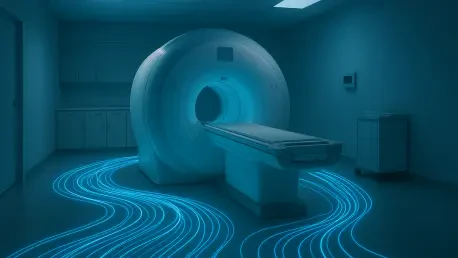
There is a profound disconnect between the quantum readiness of standard IT infrastructure and the specialized equipment used in clinical settings. While approximately 50% of general IT devices like servers and administrative workstations already utilize software capable of supporting post-quantum cryptography, only about 6% of connected medical devices meet this critical standard. This readiness gap is exacerbated by the long operational lifecycles of medical machinery, which can remain in service for over a decade. Unlike a standard laptop that is refreshed every few years, an MRI machine or a fleet of infusion pumps represents a massive capital investment that cannot be easily replaced when security standards evolve. Many of these devices rely on fixed firmware and low-power processors that lack the computational overhead required to execute the more demanding lattice-based algorithms found in quantum-resistant protocols. This leaves hospitals with a vast inventory of vulnerable endpoints that are effectively locked into obsolete security.
Healthcare organizations recognized the need for immediate action by prioritizing the implementation of TLS 1.3 across their internal networks. This protocol provided the necessary framework for facilitating quantum-resistant handshakes, even for systems that were not yet fully upgraded. Administrators also moved toward advanced network segmentation, isolating legacy medical devices behind secure gateways that managed the complex encryption tasks on behalf of older hardware. By 2026, many facilities established rigorous procurement policies that required vendors to provide clear roadmaps for post-quantum agility in all new equipment. These organizations successfully mapped their data flows to identify high-risk transit points for genomic and diagnostic information, ensuring that the most sensitive assets received immediate protection. This proactive infrastructure redesign allowed the sector to maintain patient trust while neutralizing the long-term threat of quantum-enabled data exploitation, ultimately securing the future of digital medicine.