
The traditional playbook for global manufacturing has been fundamentally rewritten as companies face an era defined by rapid environmental shifts and erratic consumer behavior. Reckitt, the powerhouse behind household names such as Mucinex, Lysol, and Biofreeze, is currently navigating this complexity under the guidance of Philip Hampden Smith, the Senior Vice President of Supply for North America. With a background in chemical engineering, Smith is steering the organization away from the rigid, cost-optimized models of the past toward a system defined by its capacity for rapid recovery and adaptation. This shift is not merely a response to recent disruptions but a wholesale reimagining of how a global health and hygiene leader maintains its presence on retail shelves. By focusing on structural resilience rather than simple reactive maneuvers, the company is ensuring that its critical medical and cleaning supplies remain available even when the global logistics landscape undergoes sudden and drastic changes. The objective is to move beyond the traditional supply chain toward a resilient, future-oriented system.
Adapting to Unpredictable Market Shifts
Overcoming the Volatility of Seasonal Illness
The historical predictability that once governed the healthcare market has evaporated, leaving behind a landscape where traditional forecasting methods often fall short of reality. In previous decades, the rise and fall of respiratory illnesses followed a seasonal script that allowed manufacturers to ramp up production with surgical precision. However, the current environment sees spikes in COVID-19, RSV, and influenza occurring at non-traditional times, frequently overlapping in ways that strain even the most robust distribution networks. To manage this volatility, Reckitt has transitioned away from static annual plans in favor of a more dynamic and agile infrastructure. This new approach prioritizes the ability to scale operations almost instantly, ensuring that a sudden surge in demand for Mucinex or Lysol does not lead to empty shelves during a health crisis. The goal is to build a system that views volatility as a constant factor rather than an anomaly to be feared by any modern healthcare organization.
Implementing Dynamic Infrastructure for Health
This fundamental shift in illness patterns requires a departure from the “just-in-time” philosophies that dominated the early part of the century. Instead of relying on historical data sets that no longer reflect contemporary trends, the organization is investing in predictive analytics that can detect early signals of regional health shifts. This allows the supply chain to pivot before a full-blown spike occurs, placing inventory closer to where it will be needed most. By creating a buffer through flexible manufacturing capabilities, the company can absorb the shocks of an unpredictable flu season without compromising the efficiency of its entire operation. The emphasis has moved from trying to predict the exact timing of a pandemic or a seasonal surge to building a framework that is inherently capable of responding to any scenario. This resilience is the bedrock upon which the company’s current strategy is built, ensuring that essential hygiene and health products remain accessible regardless of the season.
Strategic Investments and Proactive Modeling
Regionalization and Localized Production Strategies
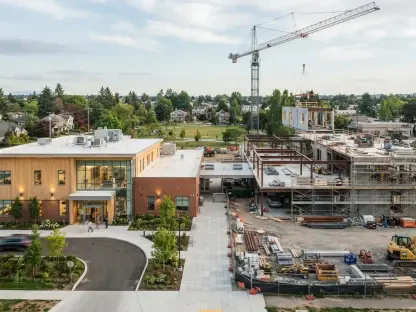
Mitigating the risks inherent in long-distance logistics has become a cornerstone of the current manufacturing philosophy, leading to a significant move toward regionalization. Geopolitical tensions and the inherent fragility of transcontinental shipping lanes have demonstrated that a highly centralized production model is often a liability in the modern age. To address this, Reckitt is funneling approximately $200 million into a state-of-the-art facility located in Wilson, North Carolina. This strategic investment is designed to bring production as close to the North American consumer base as possible, reducing the lead times that once plagued the supply chain. By “near-shoring” critical manufacturing processes, the company effectively shortens the distance between the factory floor and the end user, allowing for a much more rapid response to localized demand spikes. This move not only provides a safeguard against international shipping delays but also enhances the overall sustainability of the logistics network.
Building Sustainable Systems for Long-Term Readiness
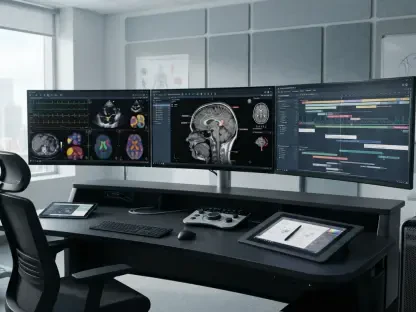
To ensure these facilities maintained high performance, leadership implemented a methodology described as a strategic chess game, involving the intense modeling of various future scenarios. By pulling key tactical leaders away from their daily tasks to focus exclusively on long-term goals, the organization ensured that current capital expenditures aligned with projected demand for the next decade. This rigorous analysis allowed the team to evaluate opportunities for market expansion and third-party partnerships, keeping the infrastructure relevant. Moving forward, the focus was shifted to bridging the gap between high-level planning and the practical realities of the manufacturing floor. Stakeholders prioritized the integration of sophisticated data visualization tools to allow human operators to make better-informed decisions in real-time. This integrated approach established a benchmark for other companies seeking to balance technological innovation with a strong culture.