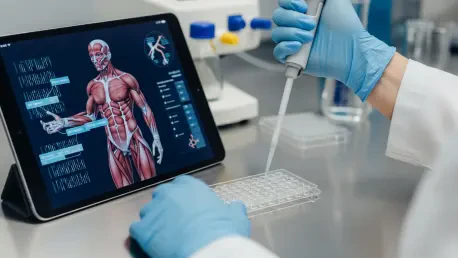

The transition from theoretical laboratory discovery to tangible clinical application for debilitating muscle conditions has long been hindered by the inherent limitations of primary biological models. Scientists frequently encounter a significant bottleneck when attempting to validate experimental therapies, such as CRISPR-mediated gene editing or sophisticated regenerative medicines, because early-stage trials often necessitate direct intervention in live subjects. This creates not only logistical complexities but also deep ethical considerations regarding animal welfare in the preliminary phases of drug development. To address this persistent challenge, researchers at Texas A&M University successfully engineered a stable and robust immortalized canine muscle cell line known as Myok9. This breakthrough provides a consistent, lab-grown environment that mimics live tissue behavior, allowing for rigorous initial testing without the immediate need for animal involvement. By establishing this reliable platform, the team effectively streamlined the foundational stages of therapeutic discovery, ensuring that only the most viable candidates progress toward clinical reality.
The Mechanics: Immortalized Cell Lines in Focus
The fundamental innovation behind Myok9 lies in its ability to overcome the traditional constraints of cellular research, where scientists previously relied on primary cells with very limited lifespans. In standard laboratory environments, primary myoblasts harvested from animal donors would typically undergo a few rounds of division before entering a state of senescence and eventually dying. This forced researchers into a continuous and costly cycle of acquiring new samples, which introduced significant biological variability and made long-term genetic experiments nearly impossible to standardize. By developing a method to bypass this natural decay, the team created a biological resource that functions as a permanent tool for molecular investigation. This development represents a shift from reactive sampling to proactive, scalable modeling, where the cellular environment remains identical across thousands of experiments. Such stability is crucial for isolating the specific effects of a new drug or genetic modification, as it eliminates the noise that naturally occurs in live-tissue samples.
Breaking Biological Boundaries: The Science of Longevity
The specific technical process of immortalization involved modifying canine myoblasts so they could maintain their proliferative capacity indefinitely without losing their core muscle-like characteristics or genetic integrity. This was achieved by ensuring that the telomeres, which typically shorten during each cell division, remained intact, thereby preventing the cellular aging process that would otherwise halt growth. As a result, Myok9 provides scientists with an “off-the-shelf” resource that is both durable and genetically consistent, allowing for massive scaling of experiments that were previously limited by sample size. Laboratories can now maintain these cultures over hundreds of generations, ensuring that every test performed uses a uniform biological template. This consistency is particularly valuable when testing high-precision tools like CRISPR, where the goal is to observe long-term repair and regeneration patterns in muscle fibers. By providing a stable foundation, Myok9 allows for the deep exploration of cellular mechanics that was once confined to the limitations of short-term primary cultures.
Ethical Innovation: Advancing the Three Rs Principles
Integrating this immortalized line into the drug development pipeline has also allowed the scientific community to uphold the highest ethical standards while accelerating the pace of medical discovery. By adhering to the principles of the “3 Rs”—reduction, refinement, and replacement—Myok9 serves as a critical screening mechanism that identifies therapeutic failures or toxic side effects long before animal testing is considered. This “fail-fast” environment ensures that only the most promising and safe candidates move forward into live-subject trials, drastically reducing the total number of animals required for the early trial-and-error phases of research. Furthermore, this approach refines the experimental process by allowing researchers to adjust dosages and delivery methods in a controlled cellular environment where variables are easily managed. The result is a more humane and efficient development cycle that focuses resources on viable treatments rather than unsuccessful animal experiments. This ethical refinement is a cornerstone of modern biomedical practice, ensuring that technological progress is responsible.
Clinical Integration: From Laboratory to Global Application
Beyond its technical and ethical advantages, the Myok9 project highlights the immense value of the “One Health” approach, which recognizes the deep physiological links between canine and human health. Dogs are unique in that they naturally develop many of the same spontaneous muscle diseases that affect humans, such as various forms of muscular dystrophy, with a progression that closely mirrors the human experience. This makes a canine-specific cell line an invaluable surrogate for human research, as the genetic and cellular responses observed in Myok9 are highly predictive of how human muscle tissue might react to similar treatments. By bridging the gap between veterinary medicine and human therapeutics, researchers can develop gene-editing techniques that provide dual benefits, solving medical problems for two different species simultaneously. This synergy ensures that veterinary breakthroughs provide immediate clinical insights for human medicine, creating a feedback loop of innovation that speeds up the delivery of life-saving therapies. The shared biology across species is thus leveraged to find common cures.
Market Democratization: Global Access to Standardized Models
To ensure these benefits reach a global audience, the partnership between Texas A&M and international cell line distributors has successfully democratized access to this high-quality research tool. Previously, many laboratories were forced to spend years and significant capital developing their own internal models, which often lacked the standardization required for international validation. With Myok9 becoming commercially available, research teams in any part of the world can now acquire a uniform, high-fidelity model that is recognized by the global scientific community. This availability levels the playing field, allowing smaller institutions and those in developing regions to contribute to high-level muscle research without the need for prohibitive infrastructure investments. The widespread adoption of a common cellular platform also simplifies the peer-review and replication process, as scientists can be certain they are working with the same biological materials. This move toward open, standardized science has effectively removed geographical barriers, fostering a more inclusive and collaborative environment for the pursuit of medical knowledge.
Forward-Looking Strategies: The Legacy of Myok9
The successful development and distribution of the Myok9 line established a new standard for how the medical community approached the treatment of complex muscle disorders. Stakeholders in both the academic and pharmaceutical sectors recognized that the path to rapid innovation required the abandonment of outdated, resource-heavy modeling in favor of these scalable and ethical alternatives. Actionable mandates were introduced to prioritize the creation of similar immortalized repositories for other vital organs, ensuring that the efficiency gains seen in muscle research were replicated across the entire medical spectrum. Regulatory agencies adapted their frameworks to include data from these advanced cell lines, which ultimately shortened the duration of the pre-clinical approval phase for many breakthrough therapies. Researchers were empowered to focus on the long-term regenerative potential of gene editing, secure in the knowledge that their primary testing was grounded in a reliable and standardized model. This systematic shift in research methodology proved to be a defining moment in modern medicine, accelerating the timeline for delivering cures to those in need.