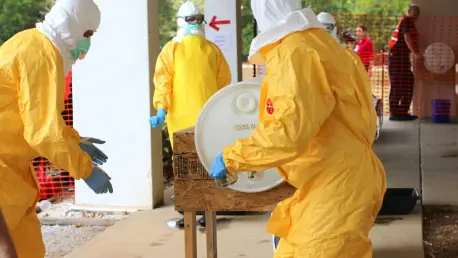

The disparity between the 5,913 cases in Ituri and the 1,402 cases in North Kivu illustrates how the epidemic’s intensity varies significantly across different eastern provinces. As the Democratic Republic of the Congo continues to navigate the complexities of this health crisis, the Bundibugyo virus has demonstrated an aggressive expansion that challenges existing containment frameworks. By late September, the total number of confirmed cases has surged to 7,672, with the death toll reaching 3,699. This period has been characterized by a steady increase in transmission, as evidenced by 58 new cases and 23 deaths recorded within a single twenty-four-hour window. Currently, 886 patients remain in isolation, while the number of recoveries stands at 1,879. The virus has successfully permeated 63 of the 167 health zones, spreading across provinces such as Haut-Uélé, Tshopo, and Bas-Uélé. The scale of the infection necessitates a shift toward more decentralized medical interventions to address the needs of remote health zones effectively.
Scaling Intervention Efforts and Regional Containment Strategies
The geographic distribution of the current outbreak confirms that the province of Ituri remains the primary theater of operation for emergency medical teams, accounting for a vast majority of the documented fatalities. This localized intensity suggests that community-level factors and regional movement patterns are playing a significant role in sustaining the viral cycle. To mitigate this spread, health authorities have prioritized robust contact tracing, successfully placing nearly 80 percent of identified contacts under active surveillance. While the Democratic Republic of the Congo faces these significant hurdles, the successful containment of a smaller cluster in neighboring Uganda provides a degree of optimism. Uganda officially declared the end of its outbreak on August 25 after forty-two consecutive days without a new infection. This success highlights the importance of rapid detection and the isolation of high-risk individuals, even as the Congolese authorities deal with the far more complex logistical challenges of a multi-province epidemic.
International health security has also been a focal point of the response, particularly concerning the medical evacuation of humanitarian workers. During the current year, three specific evacuations involving personnel from the United States and France occurred, with the patients being treated in specialized facilities in Germany and France. These individuals have since recovered, demonstrating that high-level clinical care can significantly alter the prognosis for the Bundibugyo virus. Despite these events, the European Centre for Disease Prevention and Control has maintained that the risk of widespread importation into the European Union remains very low. This risk assessment is supported by predictive modeling that considers current travel volumes and the stringent infection control protocols applied to healthcare professionals. While sporadic cases abroad are possible if regional incidence continues to climb, the probability of multiple independent introduction events into the EU/EEA remains negligible due to the focused surveillance at major international travel hubs.
The containment strategy implemented throughout the region focused on the rapid deployment of mobile laboratory units to the most affected health zones. Authorities recognized that the delay between sample collection and diagnosis was a primary driver of community transmission, so they prioritized local testing capabilities. This shift allowed medical teams to isolate cases much faster than in previous months, effectively narrowing the window of opportunity for the virus to spread. Furthermore, international partners collaborated with local leaders to foster community trust, ensuring that surveillance efforts were met with cooperation rather than resistance. The integration of real-time data sharing between the DRC and its neighboring states also strengthened the regional defense against cross-border infection. By focusing on these actionable improvements in diagnostic infrastructure and community engagement, the public health response sought to transform the containment effort into a more resilient and proactive system.