
Bridging the gap between experimental observation and clinical practice depends on mastering the reliability of microbial nanoparticle production. Modern medicine is increasingly turning toward microscopic “biofactories” as a sustainable alternative to the aggressive chemical reagents traditionally used in nanotechnology. While silver and gold nanoparticles have long been recognized for their potent antimicrobial and diagnostic potential, the conventional methods of synthesizing them often leave behind toxic residues or require extreme temperatures and pressures that limit their direct utility in sensitive biological systems. By contrast, the use of bacteria, fungi, and algae offers a “green” pathway that operates under ambient conditions, utilizing the inherent metabolic pathways of these organisms to create high-quality materials. This biological approach not only reduces the environmental footprint of high-tech manufacturing but also introduces a layer of natural coating that simplifies the integration of these materials into human biology. As the demand for targeted drug delivery and precise imaging grows, researchers are now examining how these tiny organisms can be optimized for mass production without compromising safety or efficacy.
Biological Synthesis and Mechanistic Advantages
The Sophistication: Microbial Biofactories
The process of creating nanoparticles within a living organism is far more complex than simple chemical precipitation. Microbes utilize specific intracellular or extracellular enzymes to reduce metal ions into their solid elemental forms, effectively controlling the size and shape of the resulting particles through natural feedback loops. For instance, species such as Bacillus subtilis or various strains of Aspergillus have demonstrated an uncanny ability to produce uniform silver crystals that are naturally “capped” by proteins and lipids from the host cell. This biological capping is a critical advantage; it prevents the particles from aggregating into useless clumps and provides a stable surface for further functionalization. Because these biomolecules are naturally occurring, they tend to be less cytotoxic than the synthetic surfactants used in industrial labs. This inherent stability suggests that green synthesis is not merely a novelty but a robust method for creating sophisticated materials that are ready for complex biological environments, provided the underlying enzymatic triggers can be precisely controlled.
Therapeutic Potential: Expanding Biocompatibility
Integrating these biogenic nanoparticles into clinical settings offers a pathway to more effective treatments for chronic infections and oncology. Silver nanoparticles synthesized via microbial routes have shown remarkable efficacy against drug-resistant bacteria, as their unique surface chemistry allows them to penetrate biofilms more effectively than traditional antibiotics. Meanwhile, gold nanoparticles are being explored for their photothermal properties, where they can be directed to tumor sites and activated by light to destroy cancerous cells with minimal damage to surrounding tissue. Beyond direct therapy, these particles serve as exceptional contrast agents in medical imaging, providing clearer visualization of vascular structures and metabolic anomalies. The natural origin of these materials often translates to a higher degree of biocompatibility, reducing the likelihood of severe immune responses that frequently plague synthetic metal delivery systems. This synergy between biological origin and high-performance application positions microbial nanotechnology as a primary candidate for the next generation of precision medicine, where the line between natural and synthetic becomes increasingly blurred.
Overcoming Translational Hurdles in Nanomedicine
Technical Obstacles: Addressing Commercial Scalability
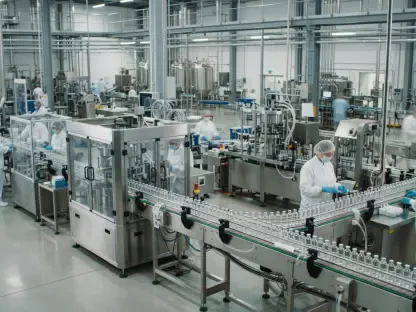
Despite the impressive results observed in controlled laboratory settings, the journey to the clinic is obstructed by significant engineering and standardization hurdles. One of the most persistent issues is the high degree of batch-to-batch variation, as microbial metabolism can shift in response to subtle changes in temperature, nutrient availability, or agitation rates during growth. This inconsistency is a major deterrent for regulatory bodies, which require strict adherence to purity and uniformity standards for all pharmaceutical products. Furthermore, scaling these “biofactories” from small flasks to multi-thousand-liter bioreactors remains a complex puzzle; the logistical demands of maintaining sterile conditions while maximizing yield often lead to prohibitive costs. Researchers are currently investigating automated monitoring systems and genetic engineering to create more predictable microbial strains, but the transition to industrial-scale manufacturing still lacks a standardized framework. Without a reliable way to guarantee that every milligram of a nanoparticle batch possesses identical physicochemical properties, the widespread adoption of these green alternatives will remain a theoretical goal rather than a commercial reality.
Strategic Pathways: Ensuring Regulatory Compliance
The evolution of microbial nanotechnology required a fundamental shift in how researchers approached biosafety and long-term toxicity. In the pursuit of clinical readiness, scientists prioritized the development of rigorous characterization protocols that accounted for the complex interactions between biogenic particles and human cells. This involved establishing clear metrics for quantifying the presence of residual biological matter, which could potentially trigger unwanted inflammatory responses if not properly managed. By focusing on the stabilization of production pipelines and the refinement of purification techniques, the field moved closer to meeting the stringent requirements set by international health authorities. The ultimate success of these materials depended on a multi-disciplinary effort to bridge the gap between microbiology and material science, ensuring that every therapeutic application was backed by comprehensive pharmacokinetic data. Looking forward, the integration of artificial intelligence to predict microbial behavior under stress will likely catalyze the next wave of breakthroughs, turning these natural biofactories into the cornerstone of a more sustainable and effective global healthcare infrastructure that prioritizes both patient safety and ecological health.