
Patients living in remote regions like Northern New England often endure six to eight hours of travel time for a single follow-up appointment with an inflammatory bowel disease specialist. This logistical burden frequently creates a ripple effect of missed appointments and worsening symptoms, as the sheer physical and financial cost of travel discourages consistent care. In the current medical landscape, where advanced treatments for conditions like Crohn’s disease and ulcerative colitis are evolving rapidly, the distance between a patient’s home and a specialized medical center has become a primary determinant of health outcomes. Dr. Corey Siegel and his team at Dartmouth-Hitchcock Medical Center recognized this burgeoning crisis and developed the RADIUS program—Rural APPs Delivering IBD Care throughout the United States—to dismantle these geographical barriers. By integrating telemedicine with a collaborative framework, this initiative seeks to equalize the quality of care regardless of a patient’s proximity to a metropolitan hub. This shift is not merely about convenience; it is a fundamental reconfiguration of how chronic disease management is distributed across the country, ensuring that rural populations are no longer left behind in the era of personalized medicine. As hospital closures continue to threaten the stability of local healthcare systems, the implementation of such innovative models is becoming a necessity for maintaining the public health of underserved regions.
Structural Foundation: The Hub and Spoke Architecture
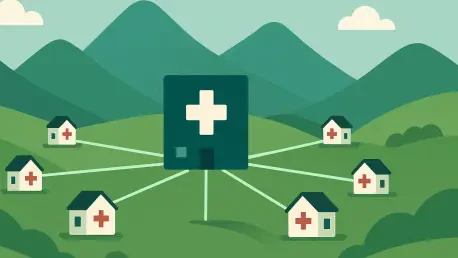
The structural foundation of the RADIUS program relies on a sophisticated “hub and spoke” architecture that leverages the expertise of major academic centers to support smaller community practices. In this arrangement, the Hub is a prominent medical institution, such as Dartmouth-Hitchcock, which possesses a full multidisciplinary team of inflammatory bowel disease (IBD) specialists, including gastroenterologists, dietitians, and pharmacists. The Spokes are the smaller, community-based gastroenterology offices located in rural areas where specialist access is typically scarce. Rather than replacing the local provider, the Hub acts as a supportive extension, providing the high-level diagnostic and therapeutic insights that are often only available in urban centers. This collaborative environment ensures that the patient’s primary medical home remains in their own community while they benefit from the collective knowledge of a national-tier specialty center. By positioning the specialty center as a resource rather than a destination, the program significantly reduces the need for patients to travel long distances, thereby improving adherence to complex treatment regimens and fostering a more equitable healthcare delivery system across wide geographic areas.
Central to the success of this architecture is the strategic empowerment of Advanced Practice Providers (APPs), such as Physician Assistants and Nurse Practitioners, who often serve as the primary point of contact in rural clinics. These professionals are the backbone of rural healthcare, but they frequently face the challenge of being “specialists in everything,” which can make it difficult to stay current on the latest biologics and small-molecule therapies for IBD. The RADIUS program addresses this by integrating these local providers into the specialty care team, giving them direct, consistent access to subspecialty resources and expert consultation. This relationship transforms the traditional referral process from a one-way transfer of a patient into a dynamic, two-way exchange of information and expertise. Consequently, the local provider becomes more confident in managing complex cases, and the patient receives more comprehensive care in a familiar setting. This model not only addresses the immediate needs of the patient but also strengthens the overall healthcare infrastructure in rural areas by preventing the professional isolation that often leads to provider burnout and further healthcare shortages in underserved regions.
Integrated Care: The Virtual Multidisciplinary Patient Journey
A hallmark of the RADIUS program is its commitment to “360-degree” multidisciplinary care, which consolidates what would normally be several separate medical visits into a single, cohesive virtual encounter. In a traditional healthcare setting, a patient diagnosed with IBD might see a gastroenterologist one month, only to wait several more months for an opening with a specialized dietitian or a psychologist familiar with chronic illness. RADIUS eliminates this fragmented experience through a two-hour intensive telemedicine session where the patient remains on a single digital link. This efficiency begins with an expedited referral system designed specifically for rural residents, ensuring that these patients are prioritized and do not get lost in months-long waiting lists. By addressing clinical, nutritional, and psychological needs in one coordinated block of time, the program respects the patient’s time and reduces the cognitive load of managing a complex chronic condition. This streamlined approach ensures that no aspect of the patient’s well-being is overlooked, providing a much higher standard of care than the disjointed appointments common in standard medical practices.
During this comprehensive two-hour telemedicine session, a rotation of specialists provides what is known as a “warm handoff” to one another, ensuring a seamless transition between different aspects of care. The session typically begins with a gastroenterologist discussing clinical diagnoses and advanced therapeutic options, followed by a psychologist who addresses the mental health challenges, such as anxiety or depression, that often accompany chronic gastrointestinal diseases. Simultaneously, a specialized dietitian provides personalized nutritional strategies aimed at managing inflammation, while a clinical pharmacist helps navigate the intricacies of insurance coverage and medication assistance programs. This integrated rotation allows the specialists to communicate with each other in real-time about the patient’s specific needs, leading to a unified treatment plan that is presented to the patient by the end of the call. This level of coordination not only improves the patient experience but also ensures that every recommendation is aligned with the overall clinical strategy, creating a level of therapeutic synergy that is rarely achieved in traditional, siloed healthcare environments.
Knowledge Transfer: Empowering Local Providers through Mentorship
Innovation within the RADIUS program extends beyond direct patient care into the professional development and mentorship of rural healthcare providers. Instead of the Hub specialists simply taking over a case and detaching the patient from their local context, they act as active mentors to the rural Advanced Practice Providers through scheduled one-on-one meetings. During these consultations, the specialists and the local APPs review patient progress, interpret diagnostic tests, and update treatment plans as a collaborative team. This mentorship effectively increases the “clinical IQ” of the local healthcare community, allowing rural providers to gain hands-on expertise in the nuances of managing modern inflammatory bowel disease therapies. Over time, the local providers develop a specialized skill set that they can apply to other patients in their practice, creating a localized center of excellence that benefits the entire community. This educational component ensures that the benefits of the program are not temporary but contribute to the long-term elevation of rural medical standards, making high-quality subspecialty care a permanent fixture in the region.
This sustainable educational model creates a lasting impact that survives long after the initial consultation, fundamentally changing the professional trajectory of the participating rural providers. By fostering a culture of continuous learning and peer support, the RADIUS program helps to mitigate the professional isolation that often plagues rural medicine. Local providers who feel supported by a network of national experts are more likely to stay in their communities, addressing one of the root causes of the rural healthcare crisis. Furthermore, as these rural APPs become more comfortable with advanced biologics and the latest monitoring techniques, the burden on major urban medical centers is reduced, as more care can be safely and effectively managed locally. This shift moves the healthcare system away from a centralized model toward a more distributed network where expertise is cultivated wherever a patient lives. The result is a more resilient healthcare ecosystem that is better equipped to handle the rising prevalence of chronic inflammatory diseases without forcing patients to abandon their local support systems.
Medical Advancement: Clinical Benefits of Early and Aggressive Intervention
The medical community has reached a strong consensus that early and proactive intervention is the most effective strategy for preventing long-term complications in patients with inflammatory bowel disease. The “top-down” approach, which involves the early introduction of advanced therapies like biologics, has been shown to be far more effective at achieving deep mucosal healing than the traditional “step-up” method that escalates treatment only after cheaper, less effective drugs fail. The RADIUS program facilitates this modern standard of care by connecting rural patients to specialists as soon as symptoms arise, bypassing the delays and bureaucratic hurdles that often characterize rural medicine. By providing immediate access to expert guidance, the program ensures that patients receive the most potent treatments during the early window of opportunity before irreversible bowel damage or strictures occur. This proactive strategy is essential for altering the natural history of the disease, moving patients toward long-term remission and significantly improving their overall quality of life by preventing the cycle of flares and hospitalizations.
The proactive nature of this multidisciplinary model significantly reduces the total burden on both the individual patient and the broader healthcare system. When rural patients have access to specialized guidance and advanced medications early in their disease course, the likelihood of emergency room visits and intensive surgical interventions drops precipitously. These emergency events are not only traumatic for the patient but are also the most expensive components of IBD care. By investing in early specialist access and coordinated management, the RADIUS program demonstrates that high-quality, front-end care can lead to significant back-end cost savings for insurance providers and public health systems. This model proves that geography should not be a barrier to receiving the most effective medical protocols, and that by stopping the progression of the disease before it reaches a crisis point, the medical community can save both lives and resources. The success of this approach highlights the importance of moving toward a healthcare model that prioritizes early intervention and specialized support as the primary means of managing complex, chronic inflammatory conditions.
Systemic Growth: Scaling the Model for National Impact
The initial success of the RADIUS pilot at Dartmouth-Hitchcock has provided the evidence needed to facilitate a significant nationwide expansion of the program. This model has proven to be highly scalable, leading to the establishment of new Hubs at prestigious medical institutions across various geographic regions in the United States. For instance, the Pacific Northwest is now served by a Hub in Portland, Oregon, while the Mountain West is supported by the University of Colorado. In the Southeast, Vanderbilt University has adopted the framework, and the University of North Carolina manages the Atlantic region. Each of these sites mirrors the original multidisciplinary structure, establishing their own network of rural spokes and providing the same level of integrated care to their respective populations. This rapid expansion demonstrates that the RADIUS framework is a versatile and adaptable solution that can be implemented in any region where healthcare shortages and rurality intersect, regardless of local economic or demographic differences.
The success of the RADIUS expansion suggests a paradigm shift that could eventually extend far beyond the treatment of inflammatory bowel disease to other complex chronic conditions. The “hub and spoke” multidisciplinary framework provides a viable blueprint for managing rheumatological disorders, oncology, and neurology in rural settings where specialist access is critically limited. As the American healthcare landscape continues to evolve under the pressure of provider shortages and aging populations, programs like RADIUS offer a clear path toward a more equitable and efficient future. By merging advanced telemedicine technology with collaborative human expertise, high-quality specialty care is becoming accessible to all citizens, regardless of their proximity to a major metropolitan center. The legacy of this initiative will likely be defined by its ability to transform the delivery of healthcare from a localized, office-based service into a dynamic, interconnected network that reaches patients wherever they are, ensuring that specialized medicine is a right rather than a privilege tied to geography.
Lasting Transformations: Actionable Insights for Rural Healthcare Equity
The implementation of the RADIUS program across several major medical centers in the United States represented a significant turning point in the battle against rural healthcare disparities. By the conclusion of the initial scaling phase, thousands of patients in previously underserved areas gained access to world-class specialty teams without the need for debilitating travel. This progress demonstrated that the primary obstacle to high-quality care was not a lack of medical knowledge, but a lack of innovative delivery systems. Healthcare administrators and policymakers who witnessed the success of this model recognized that the integration of Advanced Practice Providers into specialty networks was a cost-effective and clinically superior method for managing complex chronic diseases. The data gathered from these initial sites showed a marked decrease in emergency room utilization and a significant improvement in patient-reported quality of life, providing a strong argument for the permanent adoption of multidisciplinary telehealth reimbursement models at the federal level.
Moving forward, healthcare systems should prioritize the establishment of similar multidisciplinary hubs to support their surrounding rural communities across a variety of medical specialties. The most critical step for future success involves the formalization of mentorship programs between academic specialists and community providers, ensuring that local expertise continues to grow alongside technological advancements. Leaders in medical education should also consider incorporating specific training for Advanced Practice Providers that focuses on subspecialty collaboration, preparing the next generation of rural clinicians for this integrated model. Additionally, insurance providers must continue to adapt their policies to support the unique “warm handoff” structure of multidisciplinary virtual visits, recognizing that the efficiency of a single, coordinated session far outweighs the costs of fragmented, traditional care. By continuing to refine and expand these collaborative networks, the medical community can ensure that the progress made by the RADIUS program becomes the standard of care for all Americans, effectively bridging the care gap once and for all.