
The healthcare industry is currently wrestling with a daunting reality where the number of patients requiring intensive management for chronic conditions is far outpacing the available clinical workforce, creating a widening gap that threatens to overwhelm traditional medical practices. Relying solely on intermittent office visits every few months creates dangerous vulnerabilities in patient safety, leading to preventable hospitalizations and profound provider burnout. As the burden of managing hypertension, heart failure, and diabetes increases, the traditional model of human-only care delivery reached a breaking point that necessitated a new technological intervention.
The Inevitable Collision: Chronic Disease Growth and Staffing Shortages
The math governing modern healthcare is increasingly unsustainable as the aging population presents with more complex comorbidities than ever before. This collision between rising patient demand and a dwindling supply of qualified clinicians has forced a reevaluation of how chronic care is administered. Without a radical shift in methodology, the quality of care will continue to decline while the costs associated with reactive treatments and emergency interventions skyrocket.
Moreover, the psychological toll on the existing workforce cannot be ignored, as clinicians are expected to manage hundreds of patients with tools designed for a simpler era. The persistence of this staffing crisis suggests that simply hiring more staff is no longer a viable solution. Instead, the industry has turned toward a future where human expertise is augmented by intelligence systems capable of handling the mundane aspects of patient surveillance and data analysis.
Investment Trends: Why Capital Is Pouring Into AI Clinical Intelligence
Recent financial trends indicate a massive shift in how investors and health systems view the labor crisis, highlighted by Cadence’s recent $100 million Series C funding round. Leading venture firms like Spark Capital and major health systems like Duke Health and Corewell Health are betting on technology that addresses clinical labor constraints directly. This influx of capital signals a move away from simple digital tools toward sophisticated platforms that can handle the heavy lifting of patient monitoring at a scale previously thought impossible for human teams alone.
The successful securing of these funds demonstrates a widespread belief that the mechanics of healthcare delivery must be reshaped through automation. By tripling annual recurring revenue, organizations in this space have proven that there is a significant market appetite for solutions that reduce the administrative and diagnostic burden on clinicians. This financial backing has allowed for the rapid expansion of infrastructure needed to support millions of patients through clinically supervised intelligence.
Bridging the Gap: Supervised AI and Continuous Patient Monitoring
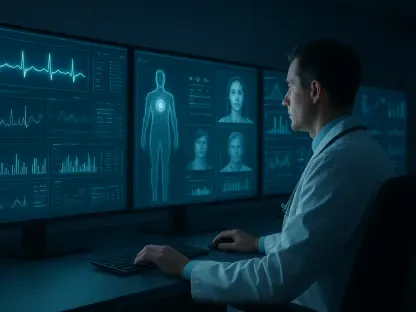
The core of this technological shift involves the use of supervised AI agents that act as a persistent extension of the medical team. These agents provide daily monitoring of patient vitals and deliver personalized lifestyle coaching, ensuring that no patient is left unmanaged between appointments. By integrating directly into existing electronic medical records and clinical workflows, these platforms allow AI to handle routine medication adjustments and data tracking while keeping human clinicians in the loop only when high-level intervention is necessary.
Furthermore, the transition to automated intelligence provides a level of oversight that human teams could never achieve manually. These systems operate around the clock, identifying subtle trends in patient data that might go unnoticed during a standard fifteen-minute office visit. This continuous connection fosters a sense of security for the patient and provides a reliable safety net for the provider, effectively bridging the care gap through constant, data-driven vigilance.
The Evidence: Significant Cost Reductions and Improved Health Outcomes
The transition to AI-managed care is backed by compelling data that goes beyond mere efficiency. Peer-reviewed research, including studies from the Mayo Clinic, showed that continuous monitoring can lead to a 27% reduction in hospital admissions and save Medicare millions of dollars every week. Beyond the financial benefits, the clinical outcomes are stark; platforms utilizing automated intelligence demonstrated a 70% improvement in blood pressure control, proving that automated oversight can often outperform the status quo of sporadic clinical check-ins.
In addition to these clinical victories, the economic impact was substantial, with reports claiming savings of approximately $2.7 million per week for Medicare programs. These figures highlight a rare win-win scenario where the quality of life for the patient improved while the financial strain on the healthcare system decreased. Such results have validated the shift toward technology-enabled management as a primary strategy for long-term clinical success.
Strategic Evolution: Implementing Scalable Home-Based Care Models
To successfully navigate the labor shortage, health systems transitioned from a reactive, office-based strategy to a proactive, home-centered approach. This shift required scaling infrastructure to support thousands of patients through automated, value-based care models that emphasized early intervention. By adopting frameworks that prioritized continuous connection and data-driven insights, providers moved from simply treating illness to managing health in real-time, ensuring sustainability for the workforce.
Strategic implementation focused on the seamless integration of AI agents into the clinician’s daily life, which reduced friction and promoted adoption across large networks. Organizations that embraced this evolution discovered that the future of a sustainable health system relied on reimagining care to be continuous and home-centered rather than tethered to a physical clinic. Ultimately, the focus remained on using these innovations to scale medical support from thousands to millions, ensuring that the labor shortage no longer dictated the quality of patient outcomes.