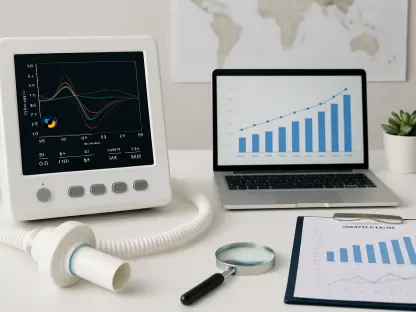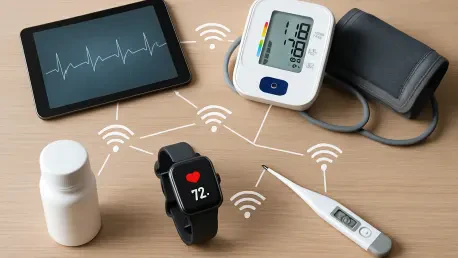

The traditional cadence of healthcare, marked by periodic check-ups and reactive interventions, is being fundamentally rewritten by a continuous and intelligent stream of personal health data. This profound transformation is being driven by connected medical devices, which are seamlessly integrating into our daily lives to create an unprecedented ecosystem of proactive, personalized, and patient-centric care. By merging medical-grade hardware with sophisticated software, the omnipresent connectivity of the Internet of Things (IoT), and powerful data analytics, these innovations are moving beyond the confines of hospitals and clinics. They are empowering individuals and their care teams with real-time insights, shifting the focus from treating illness to maintaining wellness and fundamentally reshaping the relationship between patients and providers for a new era of medicine.
The Driving Forces Behind the Healthcare Revolution
Global Trends and Technological Enablers
A powerful convergence of global demographic shifts and burgeoning health challenges is fueling an urgent demand for smarter healthcare solutions. The world’s rapidly aging population, coupled with a significant increase in the prevalence of chronic diseases such as diabetes, hypertension, and cardiovascular conditions, is placing immense strain on traditional healthcare infrastructures. These long-term conditions necessitate constant management and monitoring, a task that is both costly and logistically challenging within the conventional framework of hospital visits and in-person consultations. Connected medical devices directly address this crisis by enabling continuous, remote patient monitoring. They effectively extend the reach of clinicians into the patient’s home, facilitating a proactive care model that can detect potential health issues before they escalate into emergencies. This shift not only improves patient outcomes and quality of life but also alleviates the immense financial and operational burden on healthcare systems, making sustainable, high-quality care more accessible.
This societal need is met by an equally powerful wave of technological advancement that provides the essential foundation for a connected health ecosystem. The widespread adoption and maturation of the Internet of Things have created a robust infrastructure for devices to communicate seamlessly and securely. Concurrently, the rise of powerful and scalable cloud computing platforms has provided the necessary backbone to store, process, and analyze the massive volumes of data generated by these devices. This capability is critical for deriving meaningful clinical insights from raw data streams. Furthermore, the global ubiquity of smartphones has created a familiar and highly accessible user interface for both patients and clinicians, simplifying engagement with complex health data. The recent and rapid expansion of telehealth and home healthcare models, accelerated by a global shift in patient expectations, has solidified the demand for these technologies. Patients now seek more convenient and empowered ways to manage their health, while providers require reliable, clinically validated tools to deliver effective care remotely, creating a self-reinforcing cycle of innovation and adoption.
From Data Collection to Intelligent Action
The foundational layer of every smart medical device consists of an array of high-fidelity, IoT-enabled sensors designed to capture a vast spectrum of physiological and biological data with clinical-grade accuracy. These miniature marvels can monitor everything from heart rate variability and blood glucose levels to oxygen saturation, body temperature, and physical activity. However, the true innovation lies not just in the data capture but in the secure and reliable transmission of this information. Using wireless protocols such as Bluetooth Low Energy, Wi-Fi, and cellular networks, these devices create a constant, uninterrupted data stream from the patient to a centralized platform. The integrity and precision of this initial step are paramount; the quality of the sensor data and the robustness of its transmission directly determine the validity and utility of all subsequent analyses and clinical decisions. Therefore, ensuring the hardware and firmware are meticulously engineered for accuracy and security is the bedrock upon which the entire connected health paradigm is built.
Once this vital data is captured and transmitted, it finds its home in secure cloud platforms that serve as the central nervous system for the entire connected health ecosystem. These platforms are engineered for massive scalability, capable of ingesting and managing data from millions of devices simultaneously. More importantly, they provide the powerful computational resources needed to transform raw data points into actionable clinical intelligence. Within this cloud environment, sophisticated data analytics and machine learning algorithms are applied to identify trends, detect anomalies, and recognize patterns that would be imperceptible to human observers. This is where Artificial Intelligence (AI) becomes a transformative force. AI models can predict adverse health events, such as a potential hypoglycemic episode in a diabetic patient or an impending cardiac event, allowing for preemptive intervention. In medical imaging, AI can enhance diagnostic accuracy by highlighting subtle irregularities. By automating data interpretation and providing intelligent decision support, these technologies liberate clinicians from the burdensome task of sifting through data, allowing them to focus their expertise on direct patient care and strategic treatment planning.
Ensuring Trust Through Security and Compliance
The constant transmission and aggregation of highly sensitive personal health information (PHI) make cybersecurity an absolute and non-negotiable cornerstone of connected medical device development. The potential consequences of a data breach in this domain are severe, ranging from compromised patient privacy to the risk of malicious manipulation of a device’s function. To build and maintain the essential trust of patients, providers, and regulatory bodies, a multi-layered security strategy is imperative. This begins with end-to-end data encryption, ensuring that information is protected both while in transit from the device to the cloud and while at rest in storage. Secure authentication mechanisms are equally critical, preventing unauthorized access to both the device and its associated data platform. A proactive approach to security also involves continuous vulnerability monitoring and the ability to deploy remote security patches and updates, ensuring that devices remain protected against emerging cyber threats throughout their entire lifecycle.
Beyond robust technical safeguards, strict adherence to a complex and evolving web of regulatory frameworks is essential for any connected medical device seeking market approval and widespread adoption. In the United States, the Health Insurance Portability and Accountability Act (HIPAA) sets the standard for protecting sensitive patient health information, dictating stringent rules for data privacy and security. In Europe, the General Data Protection Regulation (GDPR) imposes similarly rigorous requirements for data handling and user consent. Navigating these regulations, along with specific medical device standards from bodies like the U.S. Food and Drug Administration (FDA), demands deep and specialized expertise. Compliance is not merely a legal hurdle; it is a fundamental component of patient safety and product efficacy. It involves meticulous documentation, comprehensive risk management processes, and rigorous testing and validation to demonstrate that the device is not only effective but also safe and secure for clinical use.
Redefining Care Delivery and Development
The Impact on Patients and Providers
The integration of connected devices into clinical practice has a profound and tangible impact, fundamentally altering the dynamics of healthcare delivery for both patients and providers. For clinicians, the transition from episodic data points gathered during infrequent office visits to a continuous stream of real-time physiological data is revolutionary. This constant flow of information enables a more holistic and accurate understanding of a patient’s health status, facilitating earlier and more precise diagnoses. It supports proactive interventions, allowing care teams to address potential issues before they become critical, thereby reducing hospital readmissions and improving overall outcomes. Furthermore, the automation of data collection and initial analysis frees up valuable clinical time, reducing administrative burden and allowing healthcare professionals to focus on higher-value tasks such as complex decision-making, treatment planning, and direct patient interaction, ultimately combating burnout and enhancing the quality of care delivered.
For patients, particularly those managing chronic conditions, connected devices represent a significant leap towards empowerment and greater autonomy over their own health. These tools provide immediate access to personal health data and actionable feedback, fostering a deeper understanding of their condition and the impact of their lifestyle choices and treatment regimens. This engagement transforms patients from passive recipients of care into active participants in their health journey. The ability to monitor their condition from the comfort of their home improves convenience and quality of life, reducing the need for disruptive and time-consuming visits to a clinic or hospital. This patient-centric model not only enhances satisfaction and adherence to treatment plans but also fosters a stronger, more collaborative relationship between patients and their care teams, built on a foundation of shared data and mutual understanding.
The Strategic Imperative for Specialized Partnership
The journey of bringing a connected medical device from concept to clinical reality is fraught with unique and formidable challenges that extend far beyond standard software or hardware development. This highly specialized field requires a deeply integrated fusion of disparate areas of expertise. A successful product necessitates not only sophisticated engineering for embedded systems, IoT connectivity, and secure cloud architecture but also a nuanced understanding of clinical workflows, medical terminology, and the intricate pathways of patient care. Without this domain-specific knowledge, a device, no matter how technologically advanced, is likely to fail in its primary mission: to integrate seamlessly and effectively into the healthcare environment. This convergence of technology and medicine creates a development landscape where generalist vendors often lack the requisite depth to succeed.
Consequently, the selection of a specialized development partner has become a critical strategic decision for companies innovating in this space. Such partners bring to the table not only proven technical capabilities in hardware-software integration but also invaluable experience in navigating the labyrinthine world of medical device regulations and compliance standards. They understand the rigorous documentation, risk management, and validation processes required for regulatory submissions to bodies like the FDA. This specialized acumen is instrumental in mitigating risks, avoiding costly errors, and significantly reducing the time-to-market. By entrusting the complex development process to a team with a dedicated focus on MedTech, innovators could ensure that their final product was not only technologically sound but also clinically relevant, safe for patients, and positioned for commercial success, confirming that the right partnership was a definitive accelerator of innovation in modern healthcare.