The global healthcare predictive analytics market is undergoing an extraordinary expansion, with industry forecasts projecting a surge from $16.7 billion in 2025 to an estimated $50.4 billion by 2030, representing a compound annual growth rate of 24.7%. This exponential growth signals more than just a lucrative technological trend; it marks a fundamental paradigm shift within the healthcare industry itself. The sector is rapidly moving away from a historically reactive model of care toward a proactive, data-informed approach. This transformation is driven by an urgent need to enhance patient outcomes, streamline operational efficiencies, and manage escalating costs, positioning predictive analytics as a cornerstone of modern medicine and healthcare administration.
The Digital Foundation and Economic Imperatives
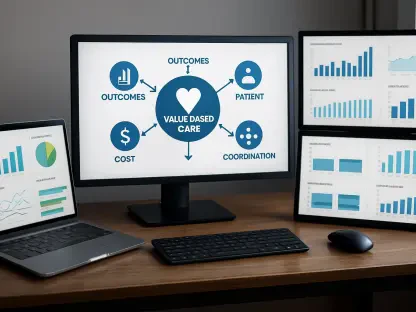
A significant force propelling the analytics market forward is the widespread adoption of Electronic Health Records (EHRs), which have successfully digitized vast quantities of patient information. These digital records are far more than simple replacements for paper charts; they represent rich, complex datasets that are essential for building sophisticated predictive models. Concurrently, the healthcare industry is experiencing a seismic shift in its financial structure, transitioning from traditional fee-for-service reimbursement to value-based care models. This new paradigm rewards providers for the quality and effectiveness of patient outcomes rather than the sheer volume of procedures performed. This economic incentive makes predictive analytics an indispensable tool. By analyzing historical and real-time data, healthcare organizations can identify patients at high risk of developing chronic conditions or requiring readmission, allowing for early and targeted interventions. This proactive approach not only improves patient health but also optimizes the use of resources, prevents unnecessary treatments, and significantly reduces operational costs, aligning perfectly with the core principles of value-based care.
Technological Catalysts and Diverse Applications
The capabilities of predictive analytics are being greatly amplified by the integration of the Internet of Things (IoT) into the healthcare ecosystem. A growing array of wearables, remote monitors, and other connected devices provides a continuous stream of real-time health data, from heart rates and sleep patterns to glucose levels and physical activity. This constant flow of information offers a far more comprehensive and dynamic view of an individual’s health than was ever possible through sporadic clinical visits. Feeding this data into analytical models enhances their accuracy, enabling earlier detection of potential health issues and facilitating highly personalized treatment strategies. The market’s application is remarkably broad, segmented to meet the diverse needs of the industry. Analytics are deployed for critical clinical purposes, such as forecasting disease progression and managing population health, as well as for vital financial and operational functions, like optimizing supply chains and detecting billing fraud. This versatility, serving both healthcare providers and payers through on-premises or cloud-based solutions, underscores how deeply data-driven insights are reshaping every facet of care delivery and management.
A Retrospective on a Data-Driven Transformation
The successful integration of predictive analytics ultimately defined a new era of healthcare. The journey was not merely about adopting new software but about fundamentally re-engineering clinical and administrative workflows to leverage data-driven insights. Organizations that thrived were those that skillfully navigated the complex landscape of evolving regulatory requirements while harnessing the burgeoning power of artificial intelligence. The use of predictive tools moved beyond achieving simple efficiencies; it became the mechanism through which providers delivered tangible improvements in patient outcomes. This strategic shift established a new industry benchmark where proactive, personalized care, underpinned by sophisticated data analysis, became the bedrock of both clinical excellence and long-term financial stability.