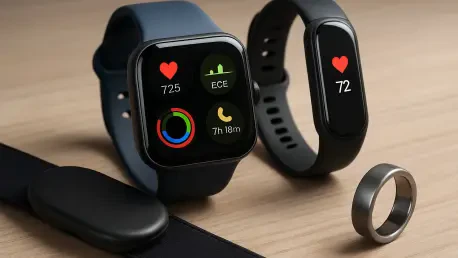

The seamless integration of wearable health technology into daily life, offering real-time insights from continuous glucose monitors to sophisticated ECG patches, represents a monumental leap forward in personalized healthcare. This digital health revolution promises a future of proactive wellness and chronic disease management, empowering millions with data that was once confined to a clinical setting. However, as these devices shrink in size and grow in number, a far larger and more complex issue is emerging from their shadow. The very technology designed to enhance human well-being is on a trajectory to create a significant and potentially unsustainable environmental burden, forcing a critical examination of the hidden ecological price tag attached to every data point and health alert. A comprehensive analysis now projects an astonishing 42-fold increase in the global use of these devices by 2050, raising urgent questions about the long-term consequences of this exponential growth for a planet already grappling with resource depletion and electronic waste.
The Unseen Environmental Footprint
Carbon Emissions and Electronic Waste
A detailed life cycle assessment reveals the substantial environmental impact encapsulated within each small, sophisticated device. From the extraction of raw materials to manufacturing, distribution, use, and eventual disposal, a single wearable health monitor is estimated to generate between 1.1 and 6.1 kilograms of carbon dioxide equivalent. This figure, while seemingly modest for an individual unit, becomes alarming when multiplied by the projected two billion devices expected to be consumed annually by mid-century. The manufacturing phase is particularly intensive, relying on critical metals and complex circuit boards that require significant energy and create byproducts. The accumulation of these devices contributes to the ever-growing mountain of electronic waste, a toxic challenge for global waste management systems. Because of their small size and integrated components, these wearables are difficult to recycle effectively, often leading to their disposal in landfills where harmful materials can leach into the environment—a phenomenon known as ecotoxicity. This hidden toll challenges the purely beneficial narrative of digital health.
A Shifting Global Impact
The environmental burden of this technological boom is not distributed evenly across the globe. Projections indicate that by 2050, China and India will emerge as the primary contributors to the greenhouse gas emissions stemming from the wearable health sector. This shift is driven by the rapid economic development and expanding middle-class populations in these nations, which will fuel unprecedented demand for personal health technology. As a result, the annual global emissions from this industry alone could reach an estimated 3.4 metric tons of carbon dioxide equivalent. This concentration of production and consumption in Asia has profound implications, placing immense pressure on regional energy grids, manufacturing infrastructure, and waste management capabilities. The globalized nature of the supply chain means that the environmental decisions made by manufacturers and the consumption patterns in these key markets will have far-reaching consequences, influencing international climate goals and sustainability efforts for decades to come. The responsibility for mitigating this impact, therefore, becomes a shared international concern.
Charting a Sustainable Future
The Evolving Market and Its Demands
The landscape of the wearable health market is undergoing a dramatic transformation that will directly influence its environmental future. While continuous ECG and blood pressure monitors are the dominant products in the current market, a significant shift is on the horizon. Forecasts predict that by 2050, non-invasive continuous glucose monitors (CGMs) will capture an astounding 72% of global usage. The scale of this single market segment is staggering; sales of CGMs alone are projected to surpass the entire current global market for smartphones. This monumental demand for a specific type of disposable or short-lifespan device presents both a challenge and an opportunity. The sheer volume of production required to meet this need will exacerbate the issues of resource consumption and e-waste unless a fundamental change in design and manufacturing philosophy is adopted. This underscores the urgent need for the industry to innovate not only in function and accuracy but also in sustainability, ensuring that the devices monitoring our health do not inadvertently harm the health of the planet.
Innovations for a Greener Tomorrow
Fortunately, research has illuminated a viable path toward mitigating the environmental fallout of the wearable health explosion. An engineering-based framework developed by leading researchers provides a clear roadmap for manufacturers to innovate more responsibly. The study determined that the most impactful changes can be made at the core of the device’s architecture. Specifically, replacing critical-metal conductors with more sustainable alternatives and optimizing the design of circuit boards to reduce material usage and energy consumption could dramatically lower emissions without compromising performance. Interestingly, the analysis found that strategies such as using recyclable or biodegradable plastics for device casings offer only marginal environmental benefits in comparison. This insight directs the industry’s focus toward deep-level engineering solutions rather than surface-level material swaps. By adopting these targeted innovations, the digital health sector could proactively address its environmental responsibilities, aligning its mission of improving human health with the critical goal of preserving planetary health for future generations.