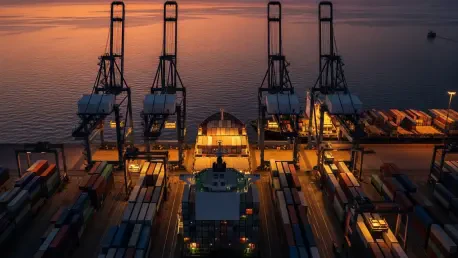

The life-saving potential of a cardiac catheter or a sterile syringe often depends less on the surgeon’s skill and more on the uninterrupted flow of container ships through a narrow, volatile strip of water half a world away. While healthcare is frequently viewed through the lens of clinical breakthroughs, the modern reality is that patient care is inextricably bound to the caprices of maritime logistics and geopolitical stability. A single bottleneck in a global chokepoint can immediately jeopardize the availability of essential consumables, turning a regional conflict into a localized healthcare crisis. This vulnerability highlights a growing fragility in the global medical infrastructure, where the distance between a manufacturing hub and a hospital bed is measured not just in miles, but in political risk and fuel surcharges.
Geopolitics Meets Clinical Stability: The Resilience Factor
The current instability in the Middle East has evolved into a formidable barrier for India’s burgeoning medical manufacturing sector, proving that geographic distance offers no shield against economic shockwaves. As a primary hub for global medical devices, India relies heavily on stable maritime corridors to receive raw materials and export finished goods to international markets. When these corridors are threatened, the ripple effect is felt in every operating room and diagnostic clinic. Resilience is no longer just a corporate buzzword; it has become a prerequisite for clinical survival in an era where supply lines are increasingly weaponized or caught in the crossfire of regional power struggles.
Maintaining a steady supply of medical grade equipment requires a delicate balance of predictable costs and reliable shipping timelines. However, the recent friction in the Strait of Hormuz has disrupted this equilibrium, forcing manufacturers to reconsider their dependency on vulnerable trade routes. This shift is not merely about logistics; it is about the fundamental ability of a nation to provide basic healthcare services without being held hostage by external geopolitical fluctuations. The intersection of foreign policy and public health has never been more visible, as the cost of a surgical procedure in New Delhi is now directly influenced by the security climate of the Persian Gulf.
Navigating the “Perfect Storm”: Logistics and Fiscal Hurdles
The medical device industry is currently weathering a “perfect storm” characterized by the simultaneous rise of input costs, prolonged logistical bottlenecks, and domestic fiscal challenges. Manufacturers are facing a landscape where every component of production—from the raw polymer beads to the electricity powering the cleanrooms—is becoming significantly more expensive. This convergence of pressures threatens to stall the momentum of self-reliant healthcare manufacturing, as the financial burden of these disruptions becomes too heavy for many small and medium-sized enterprises to bear alone.
Geopolitical Instability and the Surge in Manufacturing Costs
Market DatQuantifying the Impact of Regional Conflict
Recent data from industry bodies like the Association of Indian Medical Device Industry (AiMeD) paints a sobering picture of the economic fallout from Middle Eastern tensions. The cost of essential plastic polymers, including polypropylene (PP) and PVC—the literal building blocks of syringes, tubing, and IV sets—has surged by 50 percent. This spike is not an isolated incident but a direct consequence of the increased risk premiums and fluctuating oil prices associated with the Strait of Hormuz. For an industry that operates on high volumes and razor-thin margins, such a drastic increase in material costs is catastrophic for long-term pricing stability.
Beyond raw materials, the manufacturing process itself has become a financial liability due to a 100 percent surge in energy and gas prices. These utilities are indispensable for the sterilization and molding processes required to produce medical-grade equipment. Since early March, domestic raw material suppliers have implemented sharp price revisions, often cited as a response to the logistical nightmare of the maritime corridor. These revisions have added tens of thousands of rupees to the cost per metric tonne, creating a scenario where the cost of production is rising much faster than the ability of healthcare providers to pay for the finished products.
Real-World Applications: Navigating Material Volatility and Shipping Delays
In response to these volatile conditions, major players like HMD have been forced to deploy sophisticated inventory management strategies to protect the healthcare ecosystem. By utilizing pre-hike inventory buffers, these companies have managed to shield hospitals and clinics from immediate, jarring price increases. This “cushioning” effect is a temporary measure, intended to provide a window of stability while the industry seeks more permanent solutions. However, these buffers are finite, and the continued depletion of lower-cost stock without replenishment at sustainable rates poses a looming threat to future affordability.
Logistical strategies have also shifted, as firms now account for one-to-three-week delays for shipments passing through the Middle Eastern corridor. This has a particularly acute impact on high-volume, low-margin products such as catheters and needles, where even minor delays can disrupt the “just-in-time” delivery models that many modern hospitals rely on. Manufacturers are increasingly looking at air freight for critical components, though the exorbitant cost of such transport often makes it unfeasible for bulk consumables. The result is a strained supply chain that is constantly reacting to the latest maritime update rather than following a predictable schedule.
Expert Perspectives on Supply Chain Resilience and Fiscal Hurdles
Industry leaders, including Rajiv Nath, have been vocal about the unsustainability of the current trajectory, warning that prolonged disruptions could lead to widespread production halts. The concern is that if the financial pressure continues to mount without relief, manufacturers may find it more viable to pause operations rather than produce goods at a loss. Such a move would be devastating for a sector that has worked tirelessly to position India as a global alternative to traditional manufacturing giants. The risk of losing market share to international competitors is high, especially if domestic manufacturers cannot guarantee a steady and affordable supply.
Furthermore, the industry is grappling with a domestic fiscal crisis known as the “inverted GST structure.” Currently, manufacturers pay an 18 percent tax on raw materials but can only recoup 5 percent on the finished goods. This creates a liquidity trap, where vast amounts of working capital are stuck in the government’s tax system. Experts argue that the government must mandate a seven-day GST refund window to provide the immediate liquidity needed to offset inflationary pressures. Without this financial agility, even the most resilient manufacturers will struggle to navigate the rising costs of energy and polymers while maintaining their workforce and production schedules.
Future Outlook: The Evolution of Global Medical Manufacturing
The long-term viability of the “Atmanirbhar Bharat” initiative is being tested by these global trade frictions. To survive, the sector must undergo a structural evolution, moving toward the diversification of raw material sourcing to bypass volatile zones. Relying on a single maritime path or a handful of domestic material suppliers has proven to be a strategic weakness. The potential shift toward alternative shipping routes and the development of local, sustainable polymer production facilities could be the key to ensuring that the 500,000 jobs within the sector remain secure. If stability is not restored, the general population will inevitably face rising healthcare costs, undoing years of progress in making medical care accessible.
Public-private collaboration will be the deciding factor in whether this crisis results in “opportunistic pricing” or a more robust, crisis-resistant manufacturing model. If raw material suppliers and the government work in tandem with device manufacturers, the industry can emerge stronger and more self-sufficient. However, if the current trend of passing on costs without systemic reform continues, the ambition of becoming a global healthcare hub may be deferred. The focus must now shift toward creating a manufacturing ecosystem that is not only cost-effective but also geographically and fiscally resilient against the next inevitable global disruption.
Securing the Future of Healthcare Delivery
The recent challenges within the medical device supply chain demonstrated that clinical stability is fundamentally a financial and logistical issue. It was observed that the intersection of maritime security and tax policy created a bottleneck that transcended simple economics, directly impacting the availability of patient care. Addressing these vulnerabilities required more than just reactionary pricing; it demanded a fundamental rethink of how raw materials were sourced and how tax structures supported manufacturing liquidity. Policymakers and industry leaders recognized that protecting the patient ultimately meant protecting the manufacturer from external shocks that they had no power to control.
Moving forward, the focus turned toward strategic diversification and the implementation of rapid fiscal interventions to maintain the agility of the healthcare supply. The industry moved to reduce its reliance on volatile trade corridors, while the government prioritized the release of trapped capital to ensure that production lines remained active during periods of high inflation. These steps were essential in safeguarding the progress made toward healthcare self-sufficiency. By treating the supply chain as a critical component of national security, stakeholders ensured that the next global maritime crisis would not translate into a shortage at the hospital bedside.