
Introducing Swaasa AI: Revolutionizing Respiratory Diagnosis
Imagine a world where a simple cough could reveal life-saving information about your lung health, even in the most remote corners of the globe. This vision is becoming reality thanks to Swaasa AI, an innovative tool developed by Salcit Technologies. This cutting-edge platform harnesses artificial intelligence to analyze cough sounds, offering a non-invasive way to detect respiratory conditions such as asthma, COPD, and tuberculosis. At its core, the research focuses on transforming how respiratory diseases are diagnosed, particularly in areas where traditional medical resources are scarce.
The global burden of respiratory illnesses is staggering, with millions affected by conditions that often go undiagnosed until it’s too late. Many rural and underserved regions lack access to specialized equipment or trained professionals, leaving communities vulnerable. Swaasa AI addresses this critical gap by providing a scalable, accessible diagnostic solution that requires nothing more than a smartphone or basic recording device. The aim of this study was to demonstrate how such technology can enable early detection, paving the way for timely interventions.
This breakthrough isn’t just about technology; it’s about equity in healthcare. By focusing on a universal human sound— the cough— Swaasa AI offers hope for millions who might otherwise slip through the cracks of overburdened systems. The potential to revolutionize respiratory diagnosis lies in its simplicity and reach, making it a game-changer for both patients and providers.
Background and Importance of AI in Respiratory Healthcare
Respiratory diseases are on the rise worldwide, placing immense pressure on already strained healthcare infrastructures. From urban hospitals to rural clinics, the demand for effective diagnostics outstrips supply, particularly as conditions like COPD and asthma become more prevalent due to pollution and aging populations. This growing crisis underscores the urgent need for innovative solutions that can keep pace with the scale of the problem.
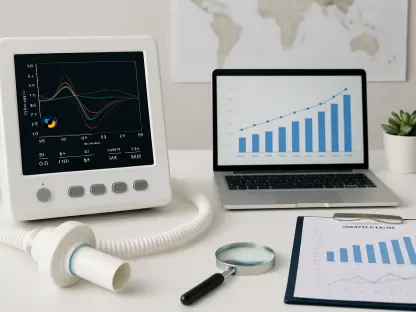
Traditional diagnostic methods, such as spirometry and imaging, while effective, come with significant barriers. They often require expensive equipment, trained personnel, and physical access to medical facilities— luxuries not always available in remote areas. Moreover, these methods can be invasive or time-consuming, delaying critical interventions. The limitations of these approaches highlight a pressing gap that technology can help bridge.
Enter AI-driven tools like Swaasa, which promise to democratize healthcare by making early diagnosis accessible to all. By leveraging sound analysis and machine learning, this platform reduces reliance on specialized infrastructure, offering a portable alternative that can be deployed anywhere. Its broader societal impact lies in alleviating pressure on medical systems and improving health outcomes through early detection, proving that technology can be a powerful equalizer in the fight against respiratory illness.
Research Methodology, Findings, and Implications
Methodology
The development and testing of Swaasa AI involved a collaborative effort across multiple countries, bringing together expertise from institutions in India, the United States, and the United Kingdom, including Andhra Medical College and Salcit Technologies. This global partnership ensured a diverse perspective, blending clinical insights with cutting-edge tech innovation. The study was conducted with meticulous attention to real-world applicability, focusing on communities often overlooked by advanced diagnostics.
At the heart of the research was a patented AI technology designed to analyze cough sounds. Using sophisticated machine learning models trained on extensive datasets, the platform identifies distinct sound patterns associated with various respiratory conditions. The study took place in settings like the Simhachalam rural healthcare center, testing the tool on a sample of 355 participants after accounting for exclusions, ensuring the results reflected practical challenges faced in resource-limited environments.
Findings
The results of the study were nothing short of remarkable. Swaasa AI demonstrated a sensitivity of 97.27% in detecting respiratory disorders, meaning it rarely missed identifying individuals at risk. Additionally, it achieved an accuracy of 87.32% in risk classification, distinguishing between those with and without respiratory issues with impressive precision. These metrics position the tool as a reliable first step in identifying potential health concerns.
Beyond simple detection, the platform showed an ability to categorize respiratory patterns into specific types— normal, obstructive, restrictive, and mixed. This nuanced classification aids in pinpointing conditions like asthma or pulmonary fibrosis, providing valuable insights for further medical evaluation. Importantly, the assessments by Swaasa AI aligned closely with evaluations from pulmonologists, reinforcing its credibility as a pre-screening mechanism.
Implications
The implications of this technology are far-reaching, particularly for regions with limited healthcare access. By integrating Swaasa AI into portable apps or devices, screening for respiratory diseases can extend into the most isolated communities, offering a lifeline where traditional diagnostics are out of reach. This accessibility could fundamentally change how respiratory care is approached on a global scale.
Moreover, early detection facilitated by this tool can lead to quicker interventions, significantly improving patient outcomes while curbing healthcare costs. Timely identification of conditions like tuberculosis or COPD often means the difference between manageable treatment and severe complications. The societal impact is equally profound, as bridging access gaps supports global efforts to manage the escalating burden of respiratory illnesses, ensuring no one is left behind.
Reflection and Future Directions
Reflection
Looking back on the research journey, several challenges emerged, particularly in ensuring data accuracy across diverse participant coughs. Some results were inconclusive, posing hurdles in analysis, yet the team navigated these issues through rigorous validation against pulmonologist assessments. This commitment to precision helped build trust in the tool’s capabilities, even in complex scenarios.
Collaboration proved to be a cornerstone of success, with diverse expertise from clinical and technological fields strengthening the study’s foundation. However, there remains room for growth. Expanding the scope to include a wider demographic or additional respiratory conditions could have provided deeper insights, highlighting the need for ongoing refinement in future iterations.
Future Directions
Looking ahead, there’s immense potential to adapt Swaasa AI for detecting emerging respiratory threats, ensuring it remains relevant amid evolving health challenges. Monitoring disease progression over time could also be a valuable application, providing continuous insights for chronic conditions. These possibilities open new avenues for enhancing the tool’s utility in dynamic healthcare landscapes.
Additionally, validating the platform across varied global settings is essential to confirm its effectiveness among different populations and environments. Integrating Swaasa AI with other health monitoring systems could further create a comprehensive diagnostic ecosystem, amplifying its impact. These steps would solidify its role as a versatile tool in modern medicine.
Concluding Insights on Swaasa AI’s Impact
Reflecting on the journey, the achievements of Swaasa AI stood out with its remarkable sensitivity of 97.27% and accuracy of 87.32% in detecting lung diseases through cough sounds. This innovation tackled healthcare disparities head-on, offering early diagnosis to underserved communities and reshaping respiratory care. The collaboration across borders underscored a shared commitment to accessible health solutions.
As a next step, scaling this technology through partnerships with healthcare providers and governments could ensure wider reach, especially in low-resource areas. Exploring integrations with telemedicine platforms might also enhance remote patient support, blending diagnosis with follow-up care. Ultimately, Swaasa AI carved a path for future medical technologies to prioritize inclusivity, urging stakeholders to invest in solutions that empower every corner of society with better health prospects.