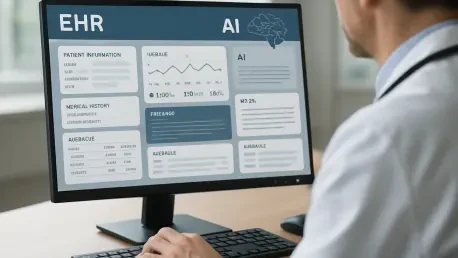

The relentless flood of new medical research and evolving clinical guidelines presents a formidable challenge for physicians striving to apply the most current, evidence-based practices directly at the bedside. In a significant move to address this information overload, Sutter Health is embedding an advanced artificial intelligence-powered clinical decision support platform from the vendor OpenEvidence directly into its Epic electronic health record (EHR) workflows. This pioneering initiative is engineered to provide the healthcare system’s physicians with immediate, point-of-care access to the most up-to-date care guidelines, pivotal clinical studies, and a vast repository of other evidence-based data. By empowering clinicians to pose complex questions using natural language from within the EHR environment, the system effectively eliminates the need to switch between applications or conduct time-consuming external searches. The core ambition of this integration is to fundamentally streamline the process of accessing critical information, which in turn is expected to drive substantial improvements in the quality, consistency, and safety of patient care across the organization.
A New Era of Clinical Support
A Vision for Proactive Healthcare
This integration represents a cornerstone of Sutter Health’s expansive digital innovation strategy, reflecting a deliberate shift towards creating a more interconnected, proactive, and sustainable healthcare ecosystem. According to the organization’s leadership, including Chief Digital Officer Laura Wilt and Chief AI Officer Dr. Ashley Beecy, the overarching goal extends beyond mere technological adoption. It is about fundamentally transforming how the organization serves its communities by equipping care teams with the most powerful tools available. By placing the latest evidence for clinical decision-making at physicians’ fingertips, Sutter aims to directly support its providers, foster superior patient outcomes, and enhance the overall efficiency of its operations. This initiative is viewed not as an isolated project but as a critical enabler of a healthcare model that anticipates patient needs and empowers clinicians to act on the most current medical knowledge, thereby promoting a higher standard of care and reinforcing the system’s commitment to clinical excellence and innovation.
The strategic deployment of this new AI platform builds upon Sutter Health’s established experience with advanced artificial intelligence, which began two years ago with the implementation of generative AI tools designed to alleviate administrative burdens and reduce clinician burnout. That initial foray demonstrated the tangible benefits of AI in streamlining documentation and other non-clinical tasks, freeing up valuable time for physicians to focus on patient interaction and complex medical decision-making. The current integration of the OpenEvidence platform is a logical and sophisticated evolution of this strategy. It moves AI’s application from the administrative sphere directly into the clinical core, targeting the cognitive load associated with evidence-based practice. By complementing tools that reduce burnout with a system that enhances clinical efficacy, Sutter is creating a synergistic environment where technology serves as a comprehensive support structure for its care teams, ultimately enabling them to deliver more effective and personalized care to every patient.
The Evolving Landscape of Clinical Decision Support
Sutter Health’s collaboration aligns perfectly with a broader, industry-wide trend that sees healthcare organizations increasingly leveraging advanced AI to augment and enhance the performance of traditional clinical decision support (CDS) systems. For decades, CDS tools have been a feature of EHRs, but they have often been characterized by rigid, rule-based logic that can lead to alert fatigue and may not always accommodate the nuances of complex clinical scenarios. The advent of sophisticated large language models (LLMs) and other AI technologies offers a paradigm shift, enabling the development of more dynamic, context-aware, and user-friendly support systems. These next-generation platforms can interpret natural language, synthesize information from vast and disparate sources, and present findings in a manner that is intuitive for the busy clinician. This evolution is crucial for moving beyond simple alerts and reminders to providing genuine, actionable insights that can meaningfully influence clinical judgment at the point of care.
This forward-thinking approach is strongly supported by recent academic research, including a notable study from Mass General Brigham researchers that meticulously explored the potential of a hybrid model. In their analysis, a long-standing, internally developed CDS platform named DXplain demonstrated higher diagnostic accuracy when compared to standalone large language models like GPT-4. However, the researchers’ ultimate conclusion was not that one system was simply better than the other, but that the most powerful and clinically effective tools of the future would likely emerge from a hybrid approach. They proposed a synergistic combination, one that merges the sophisticated linguistic and data synthesis capabilities of LLMs with the deterministic, transparent, and evidence-grounded strengths of traditional CDS. This model promises to harness the best of both worlds, creating a new class of decision support tools that are not only more powerful and accurate but also more trustworthy and explainable to clinicians.
Charting a New Course for Evidence-Based Medicine
The integration of this AI-powered platform into Sutter Health’s core clinical workflow marked a pivotal moment in the practical application of artificial intelligence in everyday medicine. This initiative established a new benchmark for how large healthcare systems could effectively manage the overwhelming volume of medical information while simultaneously providing robust support to their frontline clinicians. The project moved beyond a theoretical discussion of AI’s potential and provided a tangible solution to a persistent, real-world challenge. In doing so, it created a blueprint for other organizations seeking to leverage technology to enhance evidence-based practice. The successful deployment signified a crucial cultural shift within healthcare, one that championed the empowerment of physicians with intelligent tools designed to seamlessly augment their expertise. It reframed the relationship between clinician and technology as a collaborative partnership, fostering an environment where data-driven insights could be accessed and applied with unprecedented speed and precision, ultimately elevating the standard of care.