
In the global pursuit of more resilient and accessible healthcare systems, nations are increasingly looking beyond their borders for proven models of technological integration. A significant delegation from South Korea’s National Health Insurance Service (NHIS) recently traveled to Washington D.C., focusing their attention on MedStar Health, a recognized leader in telehealth innovation. The officials embarked on this mission to gain firsthand insights into the practical application and operational strategies behind MedStar’s sophisticated telehealth infrastructure, with the goal of informing the development of similar systems within South Korea’s national healthcare framework. Their visit included an in-depth tour of the MedStar Washington Hospital Center, where they observed how these advanced digital health tools are seamlessly woven into the fabric of daily clinical operations, from emergency response to specialized patient care. This international exchange highlights a growing trend of cross-border collaboration aimed at leveraging technology to solve universal healthcare challenges.
Pioneering Telehealth Applications in Action
During the tour, MedStar Health leaders showcased several groundbreaking telehealth solutions that have transformed patient care and provider safety. A central point of interest was the MedStar Acute Care Coordinating Center (MAC3), a command center that utilizes tele-triage video units directly within the Emergency Department. This system allows providers to remotely connect with patients upon their arrival, facilitating quicker initial evaluations and streamlining the triage process, which is critical in a high-pressure environment. Another powerful demonstration involved the telehealth capabilities integrated into the hospital’s high-level Biocontainment Unit (BCU). This specialized system enables medical staff to deliver comprehensive care via secure video connections to patients isolated with highly infectious diseases such as Ebola, Marburg, and smallpox. By minimizing direct physical contact, the technology drastically enhances the safety of the clinical teams. The BCU at MedStar Washington Hospital Center is not just a local asset; it is one of only 13 nationally designated Regional Emerging Special Pathogen Treatment Centers in the United States, underscoring its critical role in national biopreparedness.
A Pre-Pandemic Foundation for Modern Healthcare
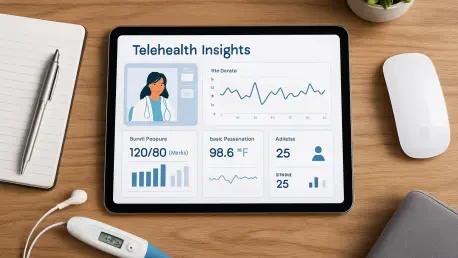
The successful integration observed by the South Korean delegation was not a recent development but the result of a long-term strategic vision. MedStar Health began building its robust telehealth infrastructure well before the COVID-19 pandemic compelled a worldwide shift to virtual care, positioning the organization as a proactive pioneer rather than a reactive adopter. Dr. Ethan Booker, the chief medical officer of Telehealth for MedStar Health, noted the organization’s pride in how these established technologies have fundamentally improved the connection between patients and providers, expanded access to medical services, and provided vital support to clinical teams. The sheer scale of this integration was made evident by the more than 520,000 telehealth encounters conducted in the last fiscal year alone. This figure included a significant 37% year-over-year usage increase for the MedStar eVisit platform, a 24/7 virtual urgent care service available to patients across Maryland, Virginia, and Washington D.C. The visit ultimately showcased a mature and scalable telehealth model that offered valuable, real-world lessons for South Korea’s healthcare ambitions.