
The Looming Crisis in India’s Healthcare Infrastructure
The silent machinery of India’s medical ecosystem is currently stalling as a convergence of geopolitical friction and resource scarcity drives essential production costs to unsustainable levels. This burgeoning crisis affects the very foundation of patient care, from the simplest consumables to high-tech surgical tools. As inflationary pressures mount, the stability of hospitals and clinics nationwide hinges on the ability of manufacturers to absorb or bypass these surging expenses. This investigation delves into how external conflicts and internal energy limits have combined to push a vital industry toward a potential breaking point. From the perspective of healthcare infrastructure, the rising cost of production is creating a dangerous ripple effect that threatens the availability of essential medical supplies.
Historical Context and the Evolution of India’s Medical Manufacturing
India’s journey toward medical self-reliance has seen the rise of a massive network of small and medium enterprises that now define the domestic landscape. These entities produce the vast majority of medical disposables, relying on a model of high volume and thin profit margins to keep healthcare affordable for a large population. While the sector demonstrated remarkable adaptability during previous global health emergencies, the current environment presents a more structural and multifaceted threat. The stability once provided by local manufacturing is now undermined by deep-seated dependencies on international petrochemical markets and volatile energy grids that highlight the fragile nature of modern manufacturing.
Navigating the Volatility of Raw Materials and Energy
The Polypropylene Price Surge and Its Impact on Disposables
Polypropylene serves as the lifeblood of medical plastic production, but its market value has recently experienced a dramatic and destabilizing surge. Prices for this essential polymer have jumped by more than 55 rupees per kilogram, creating a financial burden that exceeds even the most volatile periods of the recent past. For manufacturers of syringes and blood bags, these costs represent a massive portion of total expenditures, making a 25% to 35% price hike nearly impossible to manage within existing contracts. Much of this volatility stems from regional instability in the Middle East, particularly involving Iran, which has choked the supply of raw petrochemical inputs and destabilized international logistics corridors.
Domestic Gas Rationing and the Shift to High-Emission Alternatives
The struggle is further intensified by a domestic energy landscape that is increasingly restrictive for industrial players. Recent mandates have slashed gas allocations for many factories, often limiting them to only 40% of their previously contracted daily quantities. Such rationing forces facilities to either pay exorbitant penalties for “excess” usage or pivot to expensive, carbon-heavy fuels like diesel to maintain their operations. This shift not only destroys the economic viability of producing low-cost medical goods but also introduces environmental risks that complicate the long-term sustainability of the manufacturing sector.
Logistical Bottlenecks and Freight Cost Inflation
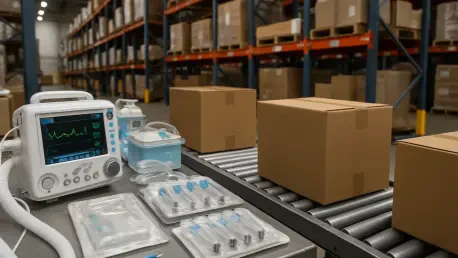
Disrupted shipping lanes and limited air cargo capacity have introduced a new layer of complexity to the procurement of advanced medical components. The landed cost of diagnostic equipment is rising steadily as freight rates fluctuate wildly in response to maritime security concerns in the Middle East. Lead times for critical parts are stretching, leaving hospitals in a precarious position regarding equipment maintenance and inventory management. These bottlenecks act as a multiplier for existing costs, ensuring that even when raw materials are secured, the expense of moving them across borders remains at record highs.
Future Trends and the Evolution of Healthcare Logistics
The path forward likely involves a radical restructuring of how medical supplies are sourced and monitored within the region. Diversification strategies, such as the “China Plus One” model, are becoming a necessity for firms looking to insulate themselves from specific regional shocks and volatile trade routes. Additionally, the integration of digital supply chain monitoring and AI-driven predictive analytics will likely become standard for larger firms seeking to anticipate price fluctuations before they impact the bottom line. As the market consolidates, the survival of smaller manufacturers will depend heavily on the development of localized, energy-independent industrial hubs that can withstand global turbulence.
Strategic Recommendations for Industry Resilience
Policymakers and industry leaders must coordinate on a series of immediate interventions to stabilize the medical device market. Implementing price stabilization mechanisms for essential polymers and capping freight costs for medical-grade cargo are critical steps toward protecting small-scale producers from insolvency. Furthermore, the government can provide relief by expediting customs processes and offering subsidies for manufacturers forced to deal with severe energy rationing. Long-term resilience will also require a shift toward more efficient resource management and the establishment of strategic reserves for critical raw materials to prevent total supply chain breakdowns.
Conclusion: Securing the Future of Indian Healthcare
The rising costs within the medical device supply chain represent a fundamental challenge to the integrity of national healthcare delivery. Geopolitical tensions and energy shortages continue to expose the vulnerabilities of existing manufacturing frameworks, demanding a shift toward more robust and diversified systems. Securing the future of this industry requires a proactive blend of government support, technological innovation, and strategic foresight to ensure stability. Ultimately, maintaining the affordability and availability of medical supplies remains a non-negotiable priority for safeguarding public health in an increasingly volatile world.