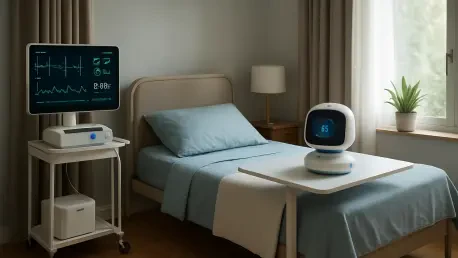

The traditional concept of a hospital as a fixed, physical institution is rapidly evolving into a more fluid and patient-centric service, one that can extend far beyond the building’s walls and directly into the community. In a significant step toward this future, the Southern New South Wales Local Health District (SNSWLHD) has pioneered a ‘Hospital in the Home’ (HITH) program, a transformative initiative that leverages artificial intelligence and wearable technology to deliver acute medical care to patients in the comfort and familiarity of their own homes. Initially launched in the Bega Valley, Eurobodalla, Goulburn, and Queanbeyan regions, this service is staffed by a dedicated multidisciplinary team capable of managing a wide range of clinical conditions that would otherwise require an inpatient stay. By blending advanced remote monitoring with hands-on clinical expertise, the program represents a major shift in healthcare delivery, aiming to improve patient outcomes while simultaneously alleviating critical pressures on the hospital system.
The Technological Leap in At-Home Care
From Intermittent Checks to Continuous Monitoring
A fundamental innovation of the HITH program lies in its departure from the traditional remote care model, which relied heavily on intermittent spot-checking and periodic visits. This older approach often left significant gaps in data, potentially delaying the detection of a patient’s deteriorating condition. The new system introduces a paradigm of continuous, near-real-time monitoring through a sophisticated wearable cardio-respiratory device. Patients are equipped with this non-invasive technology, which tirelessly tracks a suite of vital signs, including breathing rate, oxygen saturation levels, heart rate, and blood pressure. The technological infrastructure, implemented by Philips Australia using a system developed by Respiree, forms the backbone of the service. This constant stream of physiological data provides clinicians with an unprecedentedly detailed and dynamic view of a patient’s health status, enabling a proactive rather than reactive approach to care for conditions ranging from cellulitis and pneumonia to deep vein thrombosis.
The true power of this continuous monitoring is unlocked by its underlying software and artificial intelligence engine. The system is an integrated ecosystem comprising the Internet of Things (IoT)-powered wearable device, a centralized clinical command center dashboard for staff, and intuitive mobile applications for both clinicians and patients. At its core, AI algorithms analyze the incoming data streams to identify subtle patterns and trends that may indicate the onset of patient deterioration long before it becomes clinically apparent. A critical feature of this AI is its clinical validation to reduce false alarms by a factor of ten, a significant advancement that builds clinician trust and prevents alert fatigue. When a potential issue is flagged, the system generates customizable alerts that are sent to the clinical team’s triage dashboard and can also notify the patient directly. This process is further enhanced by embedded decision support tools that guide clinicians in managing escalations, ensuring that interventions are not only earlier but also more precise and appropriate for the situation.
Redefining the Patient and Clinician Experience
The HITH program is built upon the widely accepted principle that patients often experience better health outcomes when they can recover in a familiar and comfortable environment, surrounded by their support network. This model is designed to cater to a diverse range of patient cohorts, including pediatric, chronic and complex, palliative, and aged care patients, for whom the stress and disruption of a hospital stay can be particularly challenging. By bringing hospital-level care home, the initiative mitigates the risks of hospital-acquired infections, reduces patient anxiety, and promotes a faster return to normalcy. To ensure a holistic care experience, the service extends beyond digital monitoring to include supplementary support, such as the provision of home oxygen and arranging transport for any necessary hospital-related appointments. This comprehensive approach ensures that patients receive seamless, high-quality care that is tailored to their individual needs and circumstances, fostering a sense of security and well-being throughout their recovery journey.
For the healthcare system and its professionals, the benefits are equally profound. The continuous access to high-fidelity vital sign data empowers clinicians to make more informed and timely decisions, transforming patient management from a series of static assessments into a dynamic, ongoing process. This capability allows for earlier and more targeted medical interventions, which can prevent complications and reduce the likelihood of readmission. Furthermore, the program directly addresses administrative inefficiencies that consume valuable clinical time. By consolidating patient data into a single, accessible platform, the system significantly reduces the burden of manual charting and record-keeping. This optimization of workflows allows doctors and nurses to focus more of their energy on direct patient care. On a systemic level, the initiative is designed to shorten the average length of hospital stays, prevent avoidable admissions, and, most critically, free up inpatient beds for patients with more acute and complex medical needs.
A Strategic Shift Towards Virtual Health
Aligning with a Broader State Vision
The implementation of the HITH program is not an isolated experiment but a key component of a much larger, strategic vision for healthcare in the state. It directly aligns with the ambitious goals of the five-year NSW Virtual Care Strategy, which champions the expansion of at-home and digitally-enabled services as a core solution to systemic challenges. This statewide strategy recognizes that virtual care is an essential tool for managing pressures like chronic emergency department overcrowding and ambulance ramping, issues that impact patient flow and access to timely care. By enabling more patients to be treated safely and effectively outside of the traditional hospital setting, initiatives like HITH help to build a more resilient and flexible healthcare system. This program serves as a tangible manifestation of the state’s commitment to leveraging technology to create a more integrated, efficient, and patient-centered model of health service delivery, with plans for future expansion to areas like Snowy Monaro and Yass Valley already in motion.
This strategic pivot towards virtual care has been gaining momentum for several years, reflecting a deliberate and sustained effort to modernize healthcare delivery across NSW. The state has been actively scaling its virtual capabilities since the early 2020s, with a series of initiatives that demonstrate a clear and consistent policy direction. Recent examples of this trend include the significant expansion of telehealth services into correctional settings, ensuring that incarcerated individuals have improved access to medical consultations without the logistical and security challenges of off-site transport. Another key development is the introduction of the Virtual Rural Generalist Service to southern NSW, which connects regional patients and clinicians with specialist expertise remotely, overcoming the geographic barriers that have long been a challenge in rural healthcare. The HITH program, therefore, fits seamlessly into this broader landscape of innovation, acting as a flagship model for how advanced technology can be deployed to deliver acute care in new and more effective ways.
A New Paradigm for Regional Healthcare
The successful rollout of the Hospital in the Home program established a new benchmark for delivering acute medical services in regional communities. It moved beyond a simple pilot project and demonstrated a viable, scalable model that effectively integrated advanced AI-driven technology with compassionate, hands-on clinical care. This initiative directly addressed long-standing disparities in healthcare access for residents outside of major metropolitan centers, proving that high-acuity monitoring and treatment could be delivered safely and effectively in a patient’s own residence. The program’s design, which incorporated a dedicated medical officer, nurse practitioners, and a full multidisciplinary team, ensured that the technological sophistication was matched by robust clinical governance. The lessons learned from this initial implementation provided a powerful blueprint for how to bridge the gap between hospital-based services and community care, ultimately creating a more resilient and responsive regional health ecosystem that influenced subsequent healthcare planning across the state.