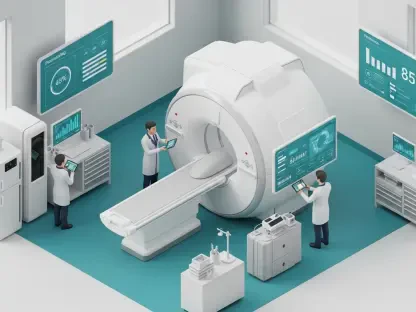

Cardiovascular diseases continue to represent one of the most significant global health challenges, standing as the leading cause of death and disability across the European Union and beyond. In a groundbreaking effort to confront this crisis, scientists from Imperial College London have developed a sophisticated artificial intelligence tool known as CardioKG, designed to dramatically accelerate the discovery of new treatments for these pervasive conditions. This innovative system operates as a “knowledge graph,” a complex network that synthesizes immense and varied datasets to uncover previously hidden connections between genetics, existing drugs, and heart function. By analyzing information on an unprecedented scale, the tool aims to redefine the landscape of cardiac medicine, moving beyond conventional research methods to offer a more nuanced and powerful approach to drug discovery and patient care for a range of heart ailments. Its development marks a pivotal moment in the fight against heart disease, promising to streamline the lengthy and often costly process of identifying effective therapeutic interventions.
Unlocking New Insights From Diverse Data
The true power of CardioKG lies in its novel methodology for integrating disparate sources of medical information into a single, cohesive analytical framework. Unlike traditional models that might focus on one type of data, this knowledge graph combines detailed heart imaging scans from thousands of individuals in the UK Biobank with vast, publicly available medical databases. These databases contain a wealth of information on genes, pharmaceuticals, and known disease pathways. The research team discovered that the inclusion of these rich, visual heart scans was the transformative element, fundamentally enhancing the model’s ability to make accurate predictions. This integration allows the AI to not only identify statistical correlations but also to understand the physiological context behind them. As a result, CardioKG can pinpoint potential new drug targets and uncover subtle genetic links to cardiovascular diseases with a level of precision and speed that was previously unattainable, opening new avenues for both research and clinical application.
Pioneering Personalized Medicine and Future Applications
The initial analyses performed by CardioKG have already yielded several promising and actionable insights, highlighting the platform’s potential to repurpose existing medications for new cardiac applications. For instance, the model suggested that methotrexate, a drug commonly prescribed for rheumatoid arthritis, could be a viable treatment for heart failure. It also identified that gliptins, a class of medications used to manage diabetes, might offer therapeutic benefits for patients suffering from atrial fibrillation. In a more preliminary but intriguing finding, the tool pointed to a possible protective effect of caffeine for some individuals with the same arrhythmia. These discoveries underscored a significant shift toward a more personalized approach to medicine. By analyzing an individual’s specific heart function through imaging, CardioKG paved the way for matching patients with the most effective treatments for their unique physiology. The researchers concluded that this technology’s framework was not limited to cardiology and could be adapted to advance the study of other conditions that rely heavily on medical imaging, such as various brain disorders and obesity, promising a future of proactive and highly individualized healthcare.