
A ransomware attack on a hospital is no longer a distant headline; it is a direct and immediate threat that can grind patient care to a halt, forcing emergency rooms to divert ambulances, postponing critical surgeries, and severing access to vital medical records. The conversation surrounding healthcare cybersecurity has undergone a profound transformation, evolving from a technical IT problem centered on data protection to a fundamental issue of patient safety and core business operations. This critical shift is the central focus of the upcoming Healthcare Cybersecurity Forum at HIMSS26, where industry leaders will confront the reality that cyberattacks are now more targeted, automated, and disruptive than ever before. The days of viewing cybersecurity as a siloed function are over. Today, the integrity of a healthcare organization’s digital infrastructure is inextricably linked to its ability to deliver safe and effective care, making the defense against cyberthreats a shared responsibility from the server room to the C-suite and the operating room.
From Prevention to Resilience
The modern threat landscape has forced a strategic pivot in healthcare cybersecurity, moving beyond the traditional fortress mentality of prevention toward a more pragmatic and robust model of resilience and rapid recovery. As cyberthreats grow in sophistication and the interdependencies within healthcare systems become more complex, the operational impact of any disruption is magnified. The industry is now redefining cyber resilience, shifting the focus from simply blocking attacks to ensuring the organization can withstand an incident and restore critical functions swiftly. This approach acknowledges that a breach is not a matter of if, but when. Consequently, recovery readiness has become the new benchmark for a strong security posture, with multiple sessions at the forum dedicated to designing and implementing recovery strategies that are deeply integrated with clinical and operational priorities to guarantee the continuity of patient care, even in the face of a successful attack.
Redefining Cyber Resilience
Achieving true cyber resilience requires a fundamental reimagining of an organization’s defense strategy, where the primary goal is to minimize the impact on patient care during and after an incident. This involves a holistic integration of backup systems, endpoint security, and network defenses into a single, coordinated posture designed for rapid response. It’s no longer sufficient to have these technologies operating in isolation; they must work in concert to detect, contain, and remediate threats before they can cause widespread disruption. A critical component of this redefined approach is the rigorous and repeated validation of these systems through practical, real-world testing. Tabletop exercises, penetration testing, and full-scale recovery drills are essential to uncover weaknesses and ensure that, when a real attack occurs, the recovery plan is not just a document on a shelf but a well-rehearsed process that can be executed flawlessly under pressure. This proactive validation is what transforms a theoretical defense into a reliable safeguard for patient safety.
The alignment of recovery strategies with clinical priorities is a non-negotiable aspect of modern healthcare cybersecurity. This means that IT and security leaders must work hand-in-hand with clinicians and hospital administrators to identify the most critical systems and data required to maintain patient care. For instance, restoring access to electronic health records (EHRs), medical imaging archives, and life-support device networks must take precedence. This clinically informed approach ensures that recovery efforts are focused on the services that directly impact patient outcomes. By mapping out these dependencies and building redundancy and failover capabilities around them, healthcare organizations can create a tiered recovery plan that prioritizes the restoration of essential clinical functions. This strategic alignment ensures that even during a significant cyber event, the core mission of delivering safe and effective patient care is never compromised, turning the concept of resilience from an IT objective into a cornerstone of clinical excellence.
The Power of Collaborative Defense
The stark reality of the healthcare sector is that not all organizations possess the same resources to combat the escalating cyberthreats. Rural hospitals, community clinics, and smaller health systems often operate with constrained budgets, persistent staffing shortages, and aging technological infrastructure, leaving them disproportionately vulnerable to attack. Recognizing this disparity, the industry is increasingly turning to collaboration as a force multiplier. The development of shared services, mutual aid networks, and common risk frameworks offers a pathway to level the playing field, allowing under-resourced organizations to benefit from the expertise, technology, and threat intelligence of their larger counterparts. This cooperative model moves away from an individualistic defense posture toward a collective, sector-wide strategy, acknowledging that an attack on one provider is a threat to the entire healthcare ecosystem. By pooling resources and knowledge, the industry can build a more sustainable and equitable defense that protects all patients, regardless of where they receive care.
Effective collaboration extends beyond simply sharing resources; it involves building a structured ecosystem for real-time intelligence sharing and mutual support. This can take the form of regional healthcare information sharing and analysis centers (ISACs), where organizations can anonymously report threats and receive actionable intelligence on emerging attack vectors. Furthermore, mutual aid agreements can formalize a process for providers to assist one another during a crisis, offering temporary IT staff, secure backup facilities, or guidance on incident response. By establishing these formal and informal networks, the healthcare sector can create a unified front against adversaries. This approach not only strengthens the defenses of individual organizations but also enhances the overall resilience of the healthcare system, ensuring that even the most vulnerable providers are not left to fight these sophisticated threats alone. Ultimately, this collaborative spirit fosters a culture of shared responsibility for protecting patient data and, more importantly, patient lives.
The New Frontiers of Cyber Warfare
The battlefield for healthcare cybersecurity is rapidly evolving, driven by the dual-edged nature of artificial intelligence. On one side, attackers are harnessing AI to craft highly sophisticated and evasive threats capable of targeting connected medical devices and exploiting vulnerabilities in patient data systems with unprecedented speed and precision. On the other, health systems are “fighting fire with fire,” deploying their own AI-enabled defensive tools to counter these advanced attacks. This has ignited a new front in the cybersecurity arms race, one where automated systems duel in real-time to gain control of critical healthcare infrastructure. The challenge for providers is to leverage defensive AI to manage and neutralize these AI-driven attacks without disrupting the complex, fast-paced delivery of patient care, marking a pivotal moment in the ongoing struggle to secure modern medicine.
The AI Arms Race
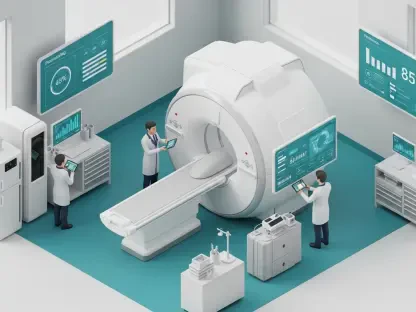
The weaponization of artificial intelligence by malicious actors represents a paradigm shift in the threats facing healthcare organizations. Attackers are now employing AI and machine learning algorithms to automate reconnaissance, identify high-value targets, and craft spear-phishing campaigns that are virtually indistinguishable from legitimate communications. These AI-driven attacks can adapt in real time, bypassing traditional signature-based security tools and exploiting zero-day vulnerabilities with terrifying efficiency. The primary targets are often the vast and growing networks of connected medical devices—the Internet of Medical Things (IoMT)—which includes everything from infusion pumps and patient monitors to MRI machines. A successful breach of these devices could not only compromise sensitive patient data but also directly interfere with medical treatments, posing a direct and life-threatening risk. This offensive use of AI has dramatically raised the stakes, demanding a more intelligent and adaptive defensive strategy from the healthcare sector.
In response to this escalating threat, healthcare organizations are increasingly integrating AI into their own cybersecurity frameworks to create a proactive and intelligent defense. AI-powered security platforms can analyze massive volumes of network traffic, user behavior, and system logs in real time to identify anomalous patterns that may indicate a sophisticated attack in progress. Unlike traditional security measures, these systems can learn and adapt, recognizing novel attack techniques without prior knowledge. This enables security teams to detect and neutralize threats at machine speed, often before a human analyst is even aware of the incident. By automating threat detection, response, and even remediation, AI-enabled tools free up cybersecurity professionals to focus on more strategic initiatives, such as threat hunting and vulnerability management. This defensive application of AI is no longer a luxury but a necessity for protecting complex clinical environments and ensuring that patient care can continue uninterrupted.
A Proactive Stance Against Ransomware
The persistent and devastating threat of ransomware has long plagued the healthcare industry, often forcing organizations into a reactive cycle of damage control and recovery. However, a forward-looking shift is underway, moving the focus from merely managing the aftermath to developing proactive, early-warning, and rapid-response technologies. This innovative approach, drawing on insights from real-world clinical experiences during major incidents, aims to transform ransomware from a system-wide crisis into a more manageable operational disruption. The goal is ambitious: to find a “cure” for this digital plague by creating systems that can detect the earliest signs of a ransomware infection—such as unusual file encryption activity or network communications—and automatically isolate affected systems before the malware can propagate across the network. This proactive stance is critical to minimizing downtime, protecting data integrity, and, most importantly, ensuring that patient care is not held hostage.
This evolution in cybersecurity strategy underscored that a multifaceted approach had become essential for safeguarding modern healthcare. Protecting both patient data and patient lives demanded more than just advanced technology; it required a deep integration of executive leadership, cross-functional strategy bridging clinical and IT domains, and robust industry-wide cooperation. The insights gained from confronting sophisticated threats like AI-driven attacks and persistent ransomware demonstrated that resilience was built on a foundation of shared intelligence and collaborative defense. Moving forward, the organizations that succeeded were those that treated cybersecurity not as a cost center but as an indispensable component of their core mission to deliver safe, effective, and uninterrupted patient care. The journey had made it clear that a proactive, unified, and technologically innovative posture was the only viable path to securing the future of medicine.