
James Maitland is a pioneering figure in the world of medical robotics and Internet of Things (IoT) applications, where he has dedicated his career to the high-stakes intersection of surgical precision and digital resilience. With a background that spans both the development of autonomous medical hardware and the architecture of secure healthcare networks, he brings a unique perspective to the mounting cyber threats facing the medtech industry. His work focuses on ensuring that when a corporate network falls victim to an attack, the life-saving tools in the operating room remain untouched and operational.
Our discussion centers on the evolving landscape of healthcare cybersecurity, specifically focusing on how major players handle the aftermath of phishing incidents and large-scale data exfiltration. We explore the strategic importance of network segmentation, the protocols necessary to maintain hospital-vendor trust during a crisis, and the technical hurdles of protecting global supply chains from sophisticated threat actors.
Phishing remains a primary vector for gaining unauthorized access to internal business administrative networks and corporate contact data. How do these entry points typically escalate into broader breaches of employee files, and what specific training protocols are most effective at changing human behavior in high-stakes environments?
A single misplaced click on a deceptive email can feel like a small tremor, but in a global medtech firm, it often signals the start of a massive landslide. Once an attacker gains entry into an administrative network, they aren’t just looking for contact lists; they are searching for the “keys to the kingdom”—the privileged credentials that allow them to move laterally into employee databases and corporate repositories. To stop this, we have to move beyond dry, annual PowerPoint presentations and implement “live-fire” phishing simulations that mimic the actual psychological triggers—like urgency or fear—that hackers use. Effective training must be visceral, making every staff member feel the weight of their digital access, followed by immediate, constructive feedback loops that reinforce the “think before you click” instinct. We saw this urgency in recent incidents where firms had to immediately remind employees of security protocols to prevent a localized breach from swallowing the entire corporate directory.
Organizations often segment network infrastructure to keep internal IT applications separate from manufacturing operations and specialized surgical platforms. What are the technical challenges of maintaining these partitions during a live crisis, and how do you ensure that robotic systems remain safe and operational when the corporate network is compromised?
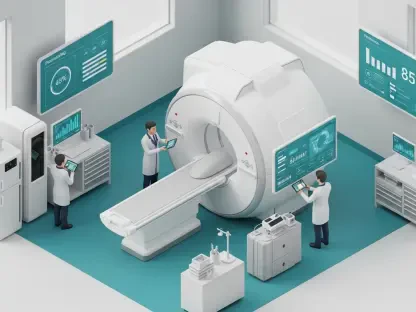
The ultimate goal is to ensure that while the corporate office might be dealing with a digital fire, the operating room remains a sanctuary of stability. The technical challenge lies in the “connective tissue”—those few points where the administrative side must talk to the production side for things like software updates or telemetry. During a live crisis, maintaining these partitions requires a “fail-closed” architecture where surgical platforms like the da Vinci or Ion systems can operate in total isolation, completely independent of the internal business network. It is a relief for surgical teams to know that even if an unauthorized third party is poking around in corporate emails, the robotic arms and digital imaging systems are governed by their own distinct security protocols. We rely on physical and logical air-gaps to ensure that a breach of a Microsoft environment at the headquarters never translates into a malfunction of a robotic instrument during a procedure.
When a medical technology vendor experiences a breach, hospital IT teams must verify that their own managed networks remain unaffected. What specific steps should a healthcare facility take to audit their connection to a compromised partner, and how does this dynamic impact the long-term trust between equipment providers and surgical teams?
The moment a vendor announces a breach, a hospital’s IT department must move into a defensive crouch, immediately auditing every VPN tunnel and API connection that links their facility to the provider. This involves a meticulous sweep for any unusual outbound traffic and a temporary suspension of non-essential data syncs until the vendor can prove the “all-clear.” Trust in this sector is fragile; it is built over decades of successful surgeries but can be rattled by a single headline about compromised employee data. When a vendor can transparently state that their robotic systems are safe and that the hospital’s own networks—secured by their own dedicated IT teams—are untouched, it preserves that vital partnership. Long-term trust isn’t just about avoiding attacks; it’s about the speed and honesty of the response when the inevitable occurs.
Recent sophisticated attacks in the medtech sector have led to global network disruptions, affecting order processing and shipping. How are modern threat actors evolving their tactics to exfiltrate massive volumes of data, such as 50 terabytes, and what are the primary indicators of compromise that security teams should prioritize to prevent such scale?
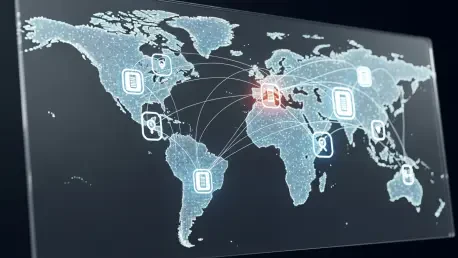
We are seeing a shift from simple data theft to what I call “digital scorched-earth” tactics, where groups like Handala not only steal data but attempt to wipe thousands of servers and mobile devices to mask their tracks. Exfiltrating 50 terabytes of data—a truly astronomical volume—is not a quiet event; it involves the slow, methodical syphoning of critical information over days or weeks. Security teams must prioritize monitoring for “large-scale data egress,” which is basically the digital equivalent of seeing a fleet of moving trucks parked at the warehouse in the middle of the night. Other red flags include a sudden spike in encrypted traffic from the Microsoft environment or unauthorized administrative logins at odd hours, which often serve as the first tremors before a global network disruption.
Activating incident response protocols involves immediate containment and a thorough review of security processes. What metrics define a successful containment effort in a global corporate environment, and how should a company balance the need for transparent communication with customers against the technical requirements of an ongoing forensic investigation?
A successful containment is measured by the “dwell time”—the number of minutes or hours between the first sign of intrusion and the moment the affected applications are secured and isolated. In a global environment, we look for zero lateral movement; if the attacker entered through a business app and stayed there without jumping to manufacturing or surgical platforms, the containment is a success. Balancing transparency is the hardest part because you want to reassure your customers that their da Vinci robots are still “safe and operational” without accidentally tipping off the hackers about what your forensic team has discovered. The best approach is to communicate in layers: provide immediate safety assurances to the surgical teams while keeping the technical details of the investigation in a “need-to-know” circle until the perimeter is fully reinforced.
What is your forecast for the security of surgical robotics and medtech infrastructure?
I foresee a move toward “zero-trust” hardware, where surgical robots will no longer rely on the perimeter security of the hospital or the vendor, but will instead verify every single command and data packet internally. As threat actors become more aggressive, medtech firms will likely invest heavily in “digital twins” to simulate attacks on their manufacturing and shipping lines, ensuring that even a 50-terabyte breach cannot stop the physical delivery of life-saving equipment. We are entering an era where cybersecurity will be as fundamental to patient safety as the sterilization of surgical tools, and the companies that thrive will be those that treat their network architecture with the same rigorous precision as their robotic engineering.