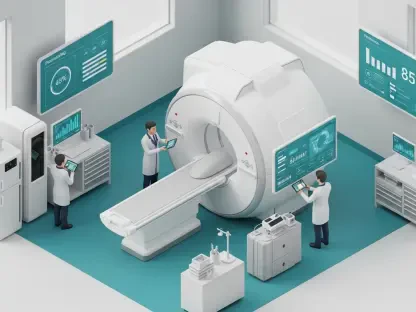

The global medical imaging market is currently witnessing a monumental shift as healthcare providers move away from experimental AI pilot programs toward fully integrated, enterprise-grade diagnostic ecosystems. RadNet’s definitive agreement to acquire the Paris-based AI pioneer Gleamer for 230 million euros ($245 million) serves as a bold declaration that the era of fragmented software tools is ending. By folding Gleamer into its DeepHealth subsidiary, RadNet is not merely adding another line of code to its stack; it is constructing a massive bridge between European technological ingenuity and American clinical scale. This analysis explores how this merger is poised to dismantle traditional bottlenecks in radiology and set a new benchmark for the future of digital health.
The Strategic Union of Clinical Scale and Artificial Intelligence
The decision to acquire Gleamer represents a calculated response to the persistent pressures of rising scan volumes and a chronic global shortage of qualified radiologists. RadNet is leveraging its position as an industry giant to transition from a traditional service provider into a technology-centric powerhouse. The deal, which includes an upfront payment of 215 million euros and 15 million euros in milestone-based incentives, provides RadNet with a sophisticated platform capable of processing diverse imaging data at an unprecedented speed.
Instead of following the path of hardware manufacturers who focus on the physical machinery of imaging, RadNet is prioritizing the digital “brain” that interprets the data. This strategy focuses on the entire imaging lifecycle, ensuring that every touchpoint—from the patient’s arrival at an urgent care center to the final diagnostic report—is optimized by machine learning. By absorbing a company with a proven international track record, RadNet secures a competitive advantage that is difficult for smaller, localized firms to replicate.
The Evolution of AI in Medical Imaging Workflows
Historically, the implementation of artificial intelligence in clinical settings was marred by the “silo” problem, where radiologists had to jump between different interfaces to use specific algorithms. Over the last decade, the industry has migrated toward platform-based solutions that embed AI directly into the picture archiving and communication systems (PACS). RadNet has consistently led this charge, recognizing that for AI to be truly effective, it must be invisible and seamlessly integrated into the practitioner’s daily workflow.
The current landscape demands more than just occasional assistance; it requires a unified, AI-native environment. This evolution reflects a broader trend of consolidation where the most successful organizations are those that can harmonize disparate data streams into a single, cohesive interface. RadNet’s acquisition of Gleamer is the culmination of this trend, effectively ending the era of modular add-ons and ushering in a period of comprehensive digital infrastructure.
Expanding the Clinical Toolkit Across Diverse Indications
Advanced Diagnostic Precision: From Bone to Brain
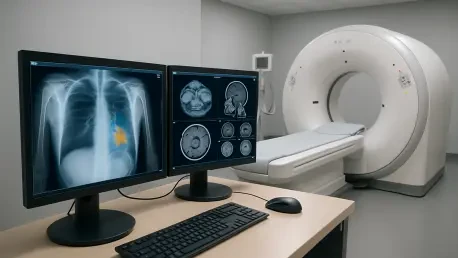
The immediate clinical benefit of this acquisition lies in the breadth of Gleamer’s existing portfolio, which covers more than 25 clinical indications. With four FDA clearances and six CE marks, tools like BoneView have already demonstrated their ability to reduce missed fractures and decrease turnaround times in high-stress environments. Integrating these capabilities into the DeepHealth suite allows RadNet to offer a full-spectrum solution that manages everything from routine orthopedic X-rays to the complex tracking of multiple sclerosis lesions in brain MRIs.
Global Market Expansion: Commercial Synergy and Reach
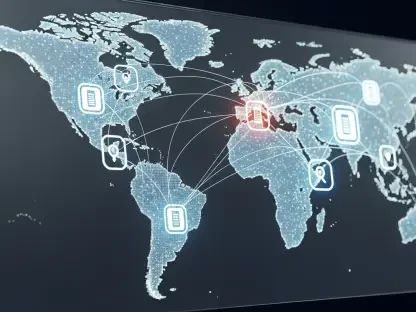
Beyond the clinical aspects, this merger acts as a strategic bridgehead for RadNet’s international growth. While RadNet maintains a dominant presence in the United States, Gleamer provides an established European footprint and a deep understanding of diverse regulatory landscapes. Financed by a projected $30 million in annualized recurring revenue, the combined entity is positioned to reinvest heavily in research. Furthermore, the expected $7 million in cost synergies will allow the organization to streamline its global sales forces and operational overhead.
Integrating the Fragmented Healthcare Ecosystem: A Unified Vision
One of the most significant challenges in modern medicine is the isolation of data within specific departments like emergency rooms or private physician groups. RadNet’s vision involves a single digital infrastructure that dissolves these barriers, providing hospital partners with a transparent and connected platform. By focusing on the “imaging lifecycle” rather than just the hardware, RadNet distinguishes itself from traditional competitors, offering a comprehensive service that improves patient throughput across entire healthcare networks.
The Future of AI-Driven Radiological Productivity
The roadmap for the coming years is defined by a shift toward autonomous pre-reading and intelligent triaging. As RadNet fully integrates Gleamer’s technology, the industry can expect AI to flag urgent findings before a human even opens the file, which will drastically reduce wait times in emergency departments. With the DeepHealth division forecasting sales growth between 45% and 55%, the economic viability of these high-tech platforms is becoming a blueprint for the rest of the industry.
We are moving toward a future where the physician’s role is elevated rather than replaced. AI will likely take over the administrative and logistical burdens of the department, such as scheduling and preliminary screening, allowing radiologists to focus entirely on the most complex and nuanced clinical decision-making. This shift represents a fundamental change in the productivity model of diagnostic medicine, moving from manual labor to high-level oversight.
Navigating the Path to Enhanced Patient Outcomes
For practitioners and healthcare administrators, the primary takeaway from this merger was the absolute necessity of scale. To leverage AI effectively, organizations had to move away from patchwork systems and adopt end-to-end platforms that offered consistent performance across all imaging modalities. Best practices evolved to dictate that AI should be a quiet partner, working in the background to ensure accuracy without adding to the cognitive load of the physician.
The RadNet-Gleamer model demonstrated that technology investments were most successful when directly tied to measurable improvements in departmental throughput. For the average patient, these advancements translated into faster results and fewer diagnostic errors. By observing how these two entities merged their clinical and technical expertise, other providers learned how to navigate the complex transition from traditional film-based legacies to a future of intelligently connected care.
A New Era for Diagnostic Intelligence
The acquisition of Gleamer by RadNet signaled a definitive turning point in the commercialization of medical AI. By synthesizing advanced engineering with a massive clinical network, the deal created a powerhouse capable of transforming global standards of care. As AI became deeply woven into every facet of the radiology workflow, the industry focus shifted from basic functionality to the challenges of global scalability and integration. This merger reinforced the reality that the future of medical imaging was not merely digital, but intelligently connected, ensuring that every scan provided the most accurate insights possible for patient recovery. Moving forward, stakeholders should have prioritized the adoption of unified platforms that supported cross-border collaboration and real-time data sharing. Strategic focus shifted toward refining the “human-in-the-loop” model, where the precision of AI was balanced by the nuanced judgment of experienced clinicians. Organizations that embraced this hybrid approach found themselves better equipped to handle the rising demands of a modern, data-driven healthcare environment.