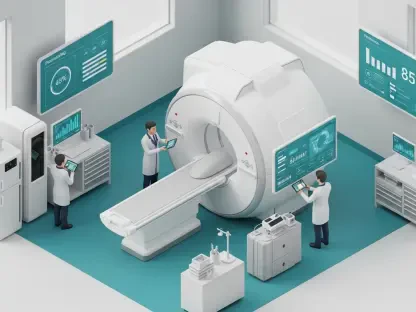

The traditional landscape of American medical centers is currently undergoing a massive transformation as health systems move away from small-scale experimental pilots toward deep integration of enterprise-wide artificial intelligence. This systemic shift is being driven by the realization that isolated digital tools often fail to provide the cohesive support required by large-scale medical operations. Instead of treating technology as a series of disconnected software patches, modern institutions are now viewing it as a foundational layer that dictates the efficiency of both clinical care and administrative logistics. This movement toward robust infrastructure is exemplified by the rise of public benefit corporations like Qualified Health, which act as a centralized nervous system for hospital data. By providing a secure and scalable environment, these platforms empower healthcare leaders to deploy advanced agents that can manage thousands of patient interactions and workflows simultaneously without compromising safety.
The Evolution of Healthcare Systems
Moving Beyond Pilot Purgatory
The primary challenge for hospitals over the last few years has been a phenomenon known as pilot purgatory, a state where promising AI solutions are tested in disconnected silos without a clear path to system-wide implementation. In this environment, individual departments might adopt specific tools for imaging or scheduling, but these systems rarely communicate with the broader hospital network. This fragmentation creates significant friction, as data remains trapped in legacy silos, preventing the hospital from realizing the full potential of its digital investments. Modern AI infrastructure addresses this bottleneck by acting as the primary connective tissue for the entire enterprise. By unifying these disparate systems, a centralized platform allows medical leadership to govern, monitor, and evaluate hundreds of automated workflows from a single location. This approach ensures that technology is not merely a vendor product but a permanent, embedded partner in the delivery of healthcare services.
Building on this foundational shift, the transition toward platform-first logic represents a fundamental change in how health systems interact with emerging technologies. Rather than reactive adoption based on the latest trends, institutions are now building long-term strategies that prioritize architectural stability and data integrity. This involves creating a standard environment where new AI agents can be introduced, tested, and scaled across multiple locations with minimal disruption to existing clinical workflows. By establishing a unified governing layer, hospitals can ensure that every automated process adheres to the same rigorous standards of performance and security. This centralized oversight is essential for maintaining operational consistency, especially as the number of AI-driven tasks continues to expand. The goal is to create a resilient digital ecosystem that can adapt to the evolving needs of patients and providers while providing a reliable framework for future innovation and growth within the health system.
Establishing Financial Sustainability and ROI
In the current economic climate, healthcare executives are increasingly demanding tangible evidence of impact rather than the mere promise of future innovation. The era of speculative investment in technology has given way to a period of rigorous financial scrutiny, where every new deployment must demonstrate a clear return on investment. Infrastructure providers have responded by focusing on the operationalization of data to drive measurable improvements in both revenue and patient care. By establishing a secure and integrated data foundation, these platforms can deploy automated workflows that target high-impact areas such as billing, patient scheduling, and resource allocation. This strategic focus ensures that AI is not just a clinical experiment but a vital tool for ensuring the long-term financial sustainability of the institution. As hospitals face rising costs and labor shortages, the ability to automate complex administrative tasks has become a critical factor for survival.
The effectiveness of this infrastructure-led approach is already visible through large-scale collaborations that have yielded significant financial returns within a short timeframe. For instance, the partnership between Qualified Health and the University of Texas Medical Branch demonstrated how a secure data foundation could support automated workflows that generated over $15 million in measurable run-rate impact in just six months. This success was achieved by identifying specific inefficiencies in the healthcare delivery chain and applying targeted AI solutions to streamline those processes. By linking technological advancement directly to the bottom line, infrastructure providers are proving that sophisticated AI can be a powerful engine for economic growth. This results-oriented model provides a blueprint for other health systems looking to navigate the complexities of digital transformation. It demonstrates that with the right underlying architecture, institutions can achieve both clinical excellence and financial stability.
Ethics and Operational Control
Implementing Responsible AI Frameworks
In a clinical setting where the stakes for error are exceptionally high, the concept of responsible AI has become a cornerstone of modern healthcare infrastructure. The deployment of advanced algorithms in medicine requires a level of oversight and governance that far exceeds standard commercial applications. To address this, current infrastructure platforms prioritize several core pillars of responsibility, ensuring that technology serves to augment rather than replace the expertise of medical professionals. By keeping humans in the loop for critical decision-making, these systems provide a safety net that catches potential errors and ensures that clinical judgment remains the final authority. This collaborative model is designed to enhance the capabilities of doctors and nurses, allowing them to focus on complex patient care while the AI handles data-intensive monitoring and analysis. This approach mitigates risk while maximizing the benefits of automation in a medical environment.
Furthermore, the implementation of these frameworks involves a continuous process of evaluation and refinement to ensure that AI models remain accurate and ethical over time. Unlike static software, AI models are susceptible to performance changes as they encounter new data, a phenomenon known as model drift. Responsible infrastructure platforms include built-in monitoring tools that track the performance of every algorithm in real-time, alerting administrators to any deviations from established benchmarks. This proactive governance ensures that the technology remains a reliable tool for clinicians, providing them with accurate information to support patient outcomes. By embedding ethics directly into the technical architecture, health systems can build a culture of trust around AI adoption. This ensures that as the technology becomes more pervasive, it continues to align with the fundamental values of patient safety and high-quality care that define the medical profession today.
Ensuring Transparency and Traceability
Trust among medical staff is built on the foundation of evidence-based justifications and clear source attribution for every piece of information provided by a system. In the past, many AI tools operated as black boxes, providing suggestions or predictions without explaining how the system reached those conclusions. Modern healthcare infrastructure has moved away from this opaque model by providing full auditability and traceability for every action taken by an automated agent. This transparency allows clinicians to see exactly which data points were used to generate a specific recommendation, providing them with the necessary context to validate the output. When a doctor can verify the source of a suggestion, they are much more likely to trust the technology and incorporate it into their clinical workflow. This level of detail is essential for maintaining the high standards of accountability required in the medical field.
Beyond clinical trust, these transparency features are vital for regulatory compliance and safety reviews within the health system. If a medical error occurs, the ability to trace the history of an AI-driven decision is critical for conducting a thorough root-cause analysis and preventing future incidents. Advanced platforms maintain a comprehensive audit trail that documents every interaction between the AI and the user, providing a clear record for hospital administrators and legal teams. This documentation not only helps in identifying technical failures but also serves as a valuable tool for clinician education and process improvement. By understanding how the AI interacts with human staff, leadership can refine workflows and training programs to optimize the partnership between people and technology. This commitment to openness ensures that the integration of AI into medicine is conducted with the highest degree of professionalism and care for patient well-being.
Scaling Strategic Growth
Expanding Reach Across Complex Systems
The rapid scaling of AI infrastructure is evidenced by its adoption across some of the most prestigious and complex medical institutions in the United States. Current platforms now support hundreds of thousands of users across major networks such as Emory Healthcare and the University of Texas System. This broad footprint covers a significant portion of domestic hospital revenue, turning these institutions into massive laboratories for large-scale digital deployment. By working with systems that span multiple locations and diverse patient populations, infrastructure providers can test and refine their tools in real-world environments that demand high levels of reliability. These partnerships are not focused on a single application but rather on a comprehensive strategy that addresses everything from administrative efficiency to specialized clinical workflows in oncology and cardiology. This massive scale allows for the collection of insights that drive further innovation.
The success of these large-scale implementations is largely due to the ability of the infrastructure to adapt to the unique needs of different departments within a single health system. For example, while one institution might use the platform to streamline patient discharge processes, another might focus on enhancing the accuracy of medical coding or improving patient communication. This flexibility is a hallmark of modern enterprise AI, which seeks to provide a versatile foundation that can be customized for various use cases without compromising the integrity of the underlying system. By supporting a wide range of administrative and clinical goals, these platforms help hospitals achieve a more cohesive and efficient operational model. The widespread adoption of these systems suggests that they are becoming a fundamental component of the modern healthcare economy, providing the necessary tools for institutions to thrive in an increasingly digital and data-driven medical landscape.
Leveraging Multidisciplinary Leadership
The successful integration of AI into the healthcare sector often depends on a leadership team that can effectively bridge the gap between Silicon Valley innovation and clinical reality. By combining expertise from the fields of medicine, technical engineering, and healthcare policy, infrastructure providers are able to navigate the complex regulatory and cultural landscape of the industry. This multidisciplinary approach is essential because technology that works in a standard enterprise environment often fails when subjected to the unique demands of a hospital. Leaders who have experience in both clinical practice and high-level software development understand the nuances of medical workflows and the critical importance of patient safety. This specialized knowledge allows them to build products that are not only technically advanced but also practical and intuitive for the healthcare professionals who will use them every day.
This leadership model also plays a crucial role in building the institutional trust necessary for wide-scale technology adoption. When medical staff see that the tools they are asked to use have been developed by peers who understand their challenges, they are more willing to engage with the transformation process. This credibility is vital for overcoming the cultural resistance that often accompanies the introduction of new technology in traditional fields. By prioritizing the human element of healthcare, multidisciplinary teams can ensure that AI serves as a supportive tool that respects the expertise of clinicians. This focus on empathy and professional alignment is a significant departure from the tech-first approach of the past, which often ignored the practical realities of the clinical environment. By fostering a collaborative relationship between developers and providers, these leaders are paving the way for a more integrated and effective future for the entire medical industry.
Pursuing Long-term Independence
There is a growing consensus among industry experts that the organizations shaping the future of healthcare must remain independent rather than seeking quick acquisitions by large technology conglomerates. By positioning themselves as permanent, standalone partners to health systems, AI infrastructure providers aim to build long-term relationships based on mutual trust and shared goals. This independence is seen as vital for maintaining the confidence of hospitals that are wary of being locked into the closed ecosystems of giant tech firms. When an infrastructure provider remains independent, it can offer a more open and flexible platform that integrates with a wide variety of third-party tools and legacy systems. This approach prevents vendor lock-in and ensures that the health system maintains control over its own data and strategic direction. The goal is to create an open and competitive market where the best solutions can thrive.
This commitment to long-term independence is often signaled through aspirations for public offerings and a focus on building a sustainable business model from the outset. By prioritizing growth and stability over a quick exit, these companies demonstrate their dedication to becoming foundational pillars of the healthcare economy. This strategy aligns the interests of the technology provider with those of the medical institution, as both parties are invested in the long-term success and reliability of the platform. The transition toward this model proved to be a defining moment for the industry, as it established a new standard for how technology companies should interact with the healthcare sector. The industry recognized that the organizations most likely to succeed were those that fundamentally transformed workflows from the inside out. This approach ultimately provided the blueprint for a future where AI infrastructure serves as the essential operating system for modern medicine, ensuring that innovation remains accessible and secure for all.