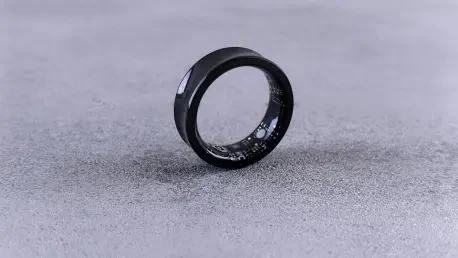

The titanium band resting against your skin might look like a simple piece of minimalist jewelry, but it functions more like a sophisticated biometric fortress constructed from hundreds of patented ideas. While the average user interacts with the Oura Ring to check their readiness score or monitor sleep cycles, a high-stakes legal chess match is unfolding in courtrooms and trade commissions across the globe. Oura Health Oy has effectively moved beyond the role of a hardware manufacturer, transforming itself into a legal powerhouse that uses intellectual property as a tactical weapon to neutralize rivals before they can even reach a retail shelf.
The Invisible Fortress Around Your Finger
As wearable technology transitions from basic fitness trackers to medical-grade health monitors, the competition for the “prime real estate” of the human body has reached a fever pitch. The smart ring market, currently valued at hundreds of millions of dollars, is projected to explode toward a multi-billion-dollar valuation by the early 2030s. For Oura, maintaining a lead in this burgeoning niche is not just about out-innovating the competition through better sensors or sleeker finishes. Instead, it is about navigating a landscape where product designs are naturally converging and innovation cycles are shrinking, making a robust patent portfolio the ultimate differentiator between a market leader and a legal casualty.
The sheer density of technology packed into such a small form factor creates a unique challenge for newcomers. Every millimeter of the ring is contested space, from the arrangement of the sensors to the way the battery is nested within the circular frame. Oura recognized early on that being the first to market was not enough to ensure long-term survival. To truly dominate, they had to build a defensive moat that was as much about legal filings as it was about electronic engineering, ensuring that any competitor attempting to enter the space would inevitably trip over a proprietary wire.
Engineering Dominance Through Acquisition and Enforcement
Oura’s dominance is not merely the byproduct of original research conducted in a Finnish lab; it is the result of a savvy, aggressive acquisition strategy. By purchasing foundational patents like US ‘178—a broad claim originally developed by Motiv and later held by Proxy—Oura gained control over the fundamental “sandwich” architecture of the smart ring. This specific patent covers the essential integration of batteries, printed circuit boards, and sensors within a ring-shaped casing. By owning the rights to the very form factor that any functional smart ring must adopt, Oura positioned itself as the gatekeeper of the entire category.
Beyond simply owning these assets, Oura has mastered the art of choosing the right venue to strike at its enemies. While domestic district courts are effective for seeking monetary damages, Oura has increasingly turned to the U.S. International Trade Commission (USITC) to deliver decisive knockout blows. By targeting international rivals like UltraHuman and RingConn at the border, the company has successfully secured exclusion orders. These legal mandates physically prevent infringing products from entering the American market, effectively turning the national border into a corporate moat that halts competition at the port of entry.
The ultimate goal of this aggressive litigation is often more nuanced than simply putting a competitor out of business. In many cases, the strategy is designed to force rivals into submission and convert them into long-term revenue streams. The recent resolution with RingConn serves as a perfect example of this transition. After facing a significant defeat at the USITC, the company opted to enter into a licensing agreement. This shift transforms a former threat into a source of passive income, further solidifying Oura’s financial grip on the industry while reinforcing its status as the technological standard-setter.
Insights from the Front Lines of Patent Litigation
When Oura moved to challenge global technology giants like Samsung, the nature of the conflict shifted from a standard offense to a high-stakes defensive struggle. Samsung’s retaliatory strikes through the Patent Trial and Appeal Board (PTAB) highlight a critical reality of the tech world: the more dominant an intellectual property portfolio becomes, the more it invites scrutiny and systematic dismantling. Even though Oura has successfully defended the majority of its claims thus far, the ongoing appeals process demonstrates that staying at the top requires a deep war chest and a legal department that never sleeps.
This “patent war” has long since spilled over the borders of the United States, creating a global ripple effect that impacts markets from Europe to Asia. With companies like UltraHuman filing retaliatory suits in the Delhi High Court, the battle for the finger has become a truly international affair. Expert analysis suggests that Oura’s “first-mover” legal strategy has set a profound precedent for the entire wearables sector. It has proven that in a modern, high-tech economy, a company’s legal department is just as vital to growth and market share as its engineering team or its marketing department.
Strategies for Building a Defensive IP Moat
For organizations looking to replicate Oura’s success or survive in its shadow, the first priority must be the strategic acquisition of external assets. Companies should look beyond their own research and development labs to identify third-party patents that cover fundamental industry standards. Acquiring “foundational” patents allows a firm to control the “must-have” features of a product category. This control provides leverage in negotiations and can prevent competitors from using the most efficient designs, forcing them to adopt inferior or more expensive workarounds.
Furthermore, businesses facing international competition should prioritize trade commissions like the USITC for faster, more decisive results. Traditional litigation can drag on for years, allowing a competitor to gain a foothold and build a customer base while the case meanders through the courts. In contrast, the ability to stop the physical importation of goods provides immediate market protection that is often far more valuable than a hypothetical check for damages awarded years down the line. A swift exclusion order can preserve market share during a product’s most critical growth phase.
Finally, a sophisticated strategy requires a tiered enforcement framework that treats different classes of competitors with different tactics. Aggressive exclusion and litigation are often most effective against smaller startups to prevent them from scaling and becoming legitimate threats. However, when dealing with established global titans, the strategy should pivot toward long-term licensing or cross-licensing negotiations. This balanced approach ensures that the company remains protected from disruption while simultaneously building a network of industry partners that contribute to its bottom line.
The landscape of the smart ring industry served as a masterclass in how intellectual property transitioned from a passive shield into an active instrument of market control. By identifying high-value patents for acquisition and selecting the most impactful legal venues, Oura effectively sidelined its rivals and established a framework for sustainable dominance. Moving forward, companies in the wearable space must treat IP as a core pillar of their business model, recognizing that the ability to exclude others is just as valuable as the ability to invent. The focus shifted toward creating diverse IP portfolios that included not only hardware but also software algorithms and data processing methods to ensure a holistic defense. In this environment, the most successful firms were those that viewed every technological advancement through a legal lens, ensuring that their innovations were both revolutionary and unassailable.