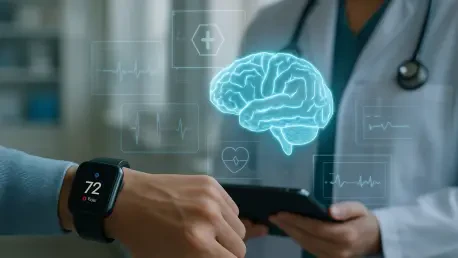

The 2026 Healthcare Information and Management Systems Society Global Health Conference and Exhibition in Las Vegas serves as a definitive turning point for the practical application of high-level medical technology. While previous years focused on the theoretical potential of digital transformation, this year’s gathering underscores a shift toward the seamless integration of artificial intelligence, wearable data analytics, and refined communication platforms into daily clinical workflows. Industry giants such as Samsung and Verily, alongside software leaders like Meditech and CoverMyMeds, have aligned around a singular objective: leveraging automation and “ambient” intelligence to boost administrative efficiency and alleviate the persistent issue of clinician burnout. This event moves beyond simple product reveals to demonstrate how technology is becoming an invisible but essential partner in the delivery of modern medicine, ensuring that clinicians can focus on human interaction rather than data entry.
Advancing Clinical Research Through Wearable Partnerships
A standout highlight of the exhibition involves the expanded collaboration between Samsung Electronics and Verily Life Sciences, which signals a significant trend where consumer-grade hardware meets rigorous clinical research requirements. By pairing the sophisticated sensor capabilities of the Samsung Galaxy Watch 8 with Verily’s precision health platform, these companies intend to transform how real-world evidence is collected and monitored over long periods. This integration is technically demanding, as it involves incorporating Galaxy Watch sensor data into the Viewpoint Evidence solution to facilitate continuous longitudinal studies. Such a move allows research sponsors, including government bodies and life sciences firms, to maintain contact with participants and gather high-quality data without requiring frequent, inconvenient in-person clinic visits. The focus is on creating a stream of reliable information that mirrors a patient’s true daily life.
Utilizing sophisticated tools for data harmonization and modeling, researchers are now moving toward a form of evidence-based medicine that relies on constant patient monitoring rather than occasional office visits. This shift addresses major logistical hurdles in clinical trials by merging wearable data with traditional medical records to explore health outcomes like sleep patterns and physical activity with unprecedented granularity. For example, Verily’s use of its “Refinery” and “Workbench” solutions allows for the analysis of complex datasets that were previously too fragmented to be useful. By recruiting Samsung users directly into these studies, the partnership ensures a steady flow of participants who are already comfortable with the technology. This strategy effectively bridges the gap between daily consumer habits and formal medical analysis, providing a more holistic view of human health that persists well beyond the four walls of a traditional hospital or research facility.
Reducing Burnout via Ambient Intelligence in EHR Systems
Meditech introduced significant updates to its “Expanse AI” portfolio at the conference, focusing heavily on the deployment of ambient intelligence to solve the documentation crisis. This technology is designed to listen to interactions between clinicians and patients and automatically generate necessary medical notes, eliminating the need for manual typing during or after an exam. By integrating this capability directly into mobile applications for doctors and nurses, the system allows healthcare providers to maintain eye contact and focus on the human side of care rather than being tethered to a computer screen or a mobile device. This is a direct response to the documentation burden, which is frequently cited as a primary cause of professional burnout. When the technology handles the administrative heavy lifting in the background, the clinical environment becomes more efficient and significantly less stressful for the staff.
Beyond the realm of clinical documentation, Meditech is utilizing artificial intelligence to resolve financial and operational friction through specialized “claim denials agents.” These AI tools are programmed to extract clinical data from the electronic health record to draft evidence-based appeals, helping hospitals recover millions in lost revenue from insurance companies that might otherwise be abandoned due to administrative complexity. Furthermore, the introduction of patient portals and clinician chatbots demonstrates a broader trend toward making health data more interactive and accessible for everyone involved in the care process. The “MyHealth Assistant” portal, for instance, allows patients to engage with their own medical information using natural language, while clinicians can use “Ask Expanse” to quickly retrieve specific data points. This creates a more transparent ecosystem where data serves as a bridge rather than a barrier between the provider and the patient.
Optimizing Access to Specialty Medications and Therapies
CoverMyMeds addressed the intense administrative burden associated with specialty therapies by introducing unified access and affordability solutions designed to streamline the patient journey. Traditionally, these complex medications required labor-intensive manual processes for benefits investigation and prior authorization, often resulting in significant delays for patients with serious conditions. The new system automates these workflows by using intelligent eligibility checks to route requests through the correct medical or pharmacy channels without manual intervention from office staff. This is particularly vital for specialty drugs that do not follow standard prescription pathways. By unifying these disparate processes into a single automated workflow, the platform reduces the time it takes for a patient to move from a diagnosis to the actual initiation of a life-changing or life-saving therapeutic regimen.
By pulling data directly from electronic health records to populate enrollment forms, the system significantly lightens the workload for care teams who previously spent hours on the phone or faxing documents. For biopharmaceutical companies, this level of automation provides a clearer view of the patient’s progress and helps accelerate the start of therapy by removing the “black box” of the prior authorization process. This ensures that patients facing complex health issues receive their medications faster and encounter fewer logistical roadblocks that could otherwise lead to treatment abandonment. The focus here is on removing the friction that exists at the intersection of clinical intent and financial approval. When the administrative path is cleared through smart automation, the clinical outcomes for patients on specialty tiers improve because the barriers to adherence and access are systematically dismantled by the underlying software.
Modernizing Communication and Patient Engagement
Communication giants Zoom and RingCentral showcased new omnichannel approaches to healthcare interactions at the conference, emphasizing the need for a “digital front door.” Zoom has strengthened its presence in hospital infrastructure by integrating its contact center and AI-generated clinical notes directly into the Epic EHR environment, specifically within the Haiku and Hyperspace modules. These tools are designed to improve operational coordination during shift changes and allow clinicians to manage patient communications without ever switching between different software programs. This reduction in “toggle tax”—the time and cognitive energy lost moving between applications—is a critical component of modernizing the workplace for frontline staff. By keeping all relevant communication and documentation tools in one place, hospitals can ensure that no critical information is lost during the high-pressure handoffs that occur between clinical teams.
RingCentral debuted a voice-first AI agent platform known as “AIR Pro for Healthcare,” which serves as an automated administrative assistant for medical facilities of all sizes. This platform automates high-volume, repetitive tasks such as identity verification, appointment scheduling, and insurance checks through natural language processing. Because it integrates deeply with major EHR systems like Oracle Health and athenahealth, the AI can update patient records in real-time, handling complex scheduling changes and confirmation messages without requiring any human staff involvement. For instance, if a patient calls to reschedule a follow-up, the AI agent can evaluate provider availability, update the calendar, and send a confirmation text simultaneously. This level of automation allows human receptionists and medical assistants to focus on more complex patient needs that require empathy and nuanced judgment, effectively raising the standard of service for the entire clinic.
Synthesizing the Future: Strategic Next Steps for Health Systems
The innovations presented at the conference reveal an industry-wide push to make technology “ambient” or invisible within the clinical environment. The goal is no longer just to provide digital tools, but to facilitate natural interactions where artificial intelligence handles the data processing in the background while humans interact. Healthcare executives should now prioritize the adoption of “native” integrations rather than siloed third-party applications to further reduce the cognitive load on their staff. By ensuring that communication and documentation tools live directly within the primary software used every day, organizations can realize the full potential of their existing technology investments. The move toward invisibility is not just a stylistic choice; it is a functional necessity for a healthcare system that is currently struggling with labor shortages and an aging population that requires more frequent and complex care.
Ultimately, the event highlighted that consumer devices have matured into reliable clinical tools, and AI is now a foundational element of the “back office,” handling insurance and bureaucratic hurdles. These advancements collectively aim to resolve long-standing inefficiencies, promising a world where healthcare is more precise and less administratively heavy. For the future, stakeholders must focus on data ethics and the security of the vast amounts of wearable information now entering the clinical stream. As these technologies become more ingrained in daily practice, the focus will likely shift toward refining the algorithms to be even more predictive and proactive. Organizations that embrace these integrated ecosystems today will be better positioned to provide high-quality, patient-centered care in a landscape that demands both clinical excellence and operational agility. The transition from reactive data entry to proactive ambient intelligence is no longer a goal; it is the new standard of medical practice.