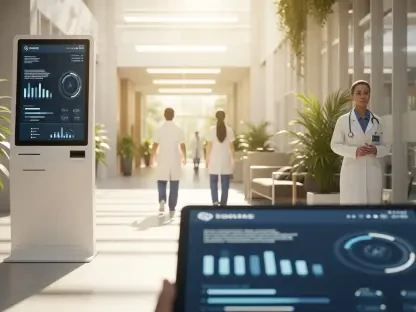

The efficiency of a modern medical facility often depends less on the precision of its surgical robots and more on the invisible digital conduits that manage its capital. For decades, the back-office operations of healthcare have been a source of systemic friction, characterized by a dizzying array of paper checks, inconsistent data formats, and manual reconciliations. This review examines the shift toward a unified payment infrastructure, exploring how digitized “plumbing” is moving the industry away from fragmented workflows toward a model of integrated financial transparency.
The Evolution of Healthcare Financial Exchange
The transition from manual to digitized financial exchange marks a departure from the historical “silo” mentality that has plagued the medical sector. Traditionally, insurance payers and clinical providers operated in a state of mutual opacity, leading to high administrative costs and delayed care. Modern infrastructure acts as a bridge, utilizing interoperability protocols to ensure that clinical data and financial remuneration are no longer treated as unrelated entities.
By establishing a common language for data, these platforms have turned what was once a burdensome administrative task into a strategic asset. The move toward transparency allows for a more stable financial environment, where providers can predict cash flow with higher accuracy. This evolution is not merely a technical upgrade; it represents a fundamental change in the relationship between those who provide care and those who fund it, fostering a more collaborative ecosystem.
Core Components of Modern Payment Platforms
Unified Remittance and Data Standardization
One of the most impactful features of current payment platforms is the ability to consolidate diverse payer relationships into a single, standardized stream. Rather than managing hundreds of unique portals and remittance formats, providers can now utilize a unified dashboard that normalizes data from various sources. This standardization eliminates the “noise” of administrative friction, significantly reducing the frequency of manual errors that occur during the posting process.
The performance impact of this consolidation is measurable in the reduction of exception management. When data is pre-validated and mapped to a provider’s existing management system, the need for human intervention drops precipitously. This allows administrative staff to shift their focus from tedious data entry to high-value tasks, such as resolving complex clinical denials or improving the patient financial experience.
Real-Time Financial Analytics and Insights
Modern platforms have introduced “edge” extensions that offer real-time visibility into the revenue cycle. Unlike retrospective reporting, which only identifies problems weeks after a claim is submitted, these tools provide immediate feedback on denial trends and performance metrics. This technical shift allows organizations to identify systemic issues—such as recurring coding errors or eligibility discrepancies—before they result in a significant loss of revenue.
The real-world application of these insights empowers organizations to move toward proactive revenue cycle management. By analyzing patterns across thousands of transactions, the software can predict which claims are likely to be contested. This predictive capability transforms the payment process from a defensive reaction into a calculated business strategy, ensuring that financial resources are managed with the same level of precision as clinical protocols.
Emerging Trends in Healthcare Fintech
The industry is currently witnessing a move toward “payments as a shared infrastructure,” where financial operations are centralized to drive mutual accountability. This trend reflects a broader shift in perspective: payments are no longer a back-office burden but a tool for organizational health. Digitized environments allow for a “single version of truth” that both payers and providers can access, reducing the combative nature of traditional claim adjudication.
Furthermore, network-scale consolidation is becoming a dominant force in the market. Large-scale platforms that connect hundreds of thousands of stakeholders are creating a network effect that benefits all participants. As more entities join these unified systems, the industry-wide efficiency increases, setting a new standard for how money and data should move through the global healthcare system.
Real-World Applications and Industry Impact
Large hospital networks and independent clinics alike have seen substantial gains from implementing automated payment systems. By accelerating the “time to payment,” these facilities can maintain higher liquidity, which is essential for expanding services or investing in new medical technologies. Some organizations have reported a 50% reduction in payment posting time, a statistic that highlights the scalability of modern automation.
Beyond simple efficiency, these platforms enable the adoption of complex clinical models, such as value-based care and risk-sharing arrangements. These models require a high degree of financial coordination and data sharing that legacy systems simply cannot support. By providing a stable financial foundation, modern infrastructure allows providers to take on the financial risks associated with outcomes-based medicine without jeopardizing their operational stability.
Challenges and Barriers to Adoption
Despite the clear benefits, technical hurdles remain, particularly regarding the persistence of legacy systems. Many older institutions still rely on “mainframes” that are difficult to integrate with modern API-driven platforms. Additionally, the lack of a universal data standard across every single insurance carrier creates patches of inefficiency that require custom solutions, driving up the initial cost of implementation.
Beyond the technical issues, there is a significant cultural resistance to changing established administrative habits. The high upfront costs and the perceived complexity of transitioning to a digitized environment can deter smaller practices. However, ongoing efforts to push for universal API integration are slowly mitigating these limitations, making the technology more accessible and user-friendly for organizations of all sizes.
The Future of Payer-Provider Connectivity
The trajectory of this technology points toward a “frictionless” payment future where artificial intelligence and machine learning handle the bulk of administrative decisions. Future systems will likely automate denial predictions with even higher accuracy, allowing for instant, transparent claim adjudication. This could lead to a world where cash flow forecasting is no longer a best guess but a mathematical certainty.
There is also potential for blockchain or decentralized ledgers to play a role in creating immutable records of medical transactions. Such breakthroughs would provide a level of security and transparency that is currently difficult to achieve. The long-term impact of a predictable financial environment will be a more sustainable healthcare delivery system, where administrative waste is minimized and clinical quality remains the primary focus.
Final Assessment of Payment Infrastructure
The modernization of healthcare financial exchange has proven that financial stability is a mandatory prerequisite for clinical innovation. The current state of payment infrastructure successfully addressed the inefficiencies of fragmented workflows, reducing waste and enhancing predictability across the board. The technology demonstrated a remarkable ability to bridge the gap between disparate stakeholders, turning a historically defensive relationship into a proactive partnership.
Looking forward, the success of healthcare delivery will likely hinge on the continued integration of these financial tools into the clinical workflow. As systems become more autonomous, the administrative burden will continue to lift, allowing the industry to reinvest those savings into patient care. The verdict was clear: a robust payment infrastructure is not just a back-office luxury but the very engine that will drive the next generation of medical advancement.