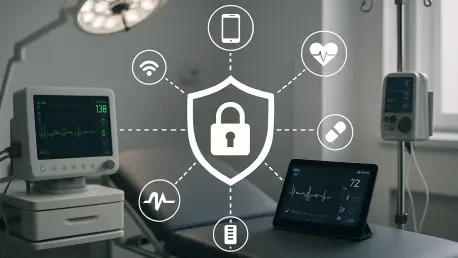

The rapid proliferation of connected medical devices within healthcare environments has fundamentally transformed the cybersecurity landscape, shifting the conversation from a passive inventory of assets to an active demand for demonstrable risk reduction. As financial pressures mount and cyber threats grow in sophistication, healthcare delivery organizations are moving past the initial phase of simply identifying the devices on their networks. The market has entered a decisive “prove it” era where the true measure of a security platform is no longer its ability to provide visibility, but its capacity to deliver tangible outcomes, accelerate remediation, and show a clear return on investment. This pivot is forcing a market-wide reevaluation, separating solutions that merely identify problems from those that actively help solve them without adding to the already significant burden on security and IT staff.
The New Proving Ground for Security Platforms
Leading with Value and Healthcare Specificity
In a market increasingly defined by the need for measurable results, Asimily has distinguished itself as a premier performer, earning an overall score of 96.6 by directly addressing the core challenges of modern healthcare systems. Organizations prioritizing value and solutions tailored specifically for the clinical environment have found its platform to be a pragmatic and powerful choice, reflected in its top rating for “Money’s Worth.” This is not merely about a lower price point but about a higher return on effort. Customers consistently praise the platform’s advanced risk intelligence, which moves beyond simple vulnerability scanning. It passively identifies device weaknesses and, more importantly, automates the complex task of triaging remediation efforts. By intelligently routing security tasks to the appropriate teams, whether clinical engineering or IT, the solution significantly reduces the manual workload, freeing highly skilled security personnel to focus on strategic threat mitigation rather than administrative routing and follow-up.
The true innovation lies in how this automated triage translates into operational efficiency and a more cohesive security posture across the organization. This capability effectively bridges the historical gap between IT security and clinical operations, ensuring that the right expert addresses the right problem at the right time. This automated workflow is a critical outcome for resource-strapped hospitals, where every saved hour of manual labor translates into direct cost savings and faster risk reduction. By focusing on healthcare-specific alignment and delivering a tool that actively lessens the operational burden, Asimily demonstrates a keen understanding that the ultimate goal is not just to secure devices, but to do so in a way that is sustainable and financially viable for the healthcare organizations it serves. This focus on practical, demonstrable value is what positions it as a leader in an industry that can no longer afford solutions that demand more than they give.
Delivering Mature and Integrated Solutions
Claroty has solidified its position as a mature and polished powerhouse within the healthcare IoT security space, earning a strong score of 92.1 by delivering on the foundational promises of reliability and deep integration. Its core strength is its dependable visibility, which serves as the essential bedrock for any effective security program. However, it builds upon this foundation with highly effective risk-scoring mechanisms that empower security teams to move from detection to action with confidence. By providing clear, context-aware prioritization of threats, Claroty enables organizations to focus their limited resources on the most critical vulnerabilities first, ensuring that remediation efforts have the greatest possible impact on reducing the overall attack surface. Clients frequently cite this capability, along with the platform’s seamless integration into existing medical device ecosystems, as key differentiators, viewing Claroty as a strong and transparent partner in their security journey.
This emphasis on seamless integration is a crucial factor in its success, as it allows the platform to become a natural extension of an organization’s existing security and operational toolkit rather than a disjointed add-on. Another vendor delivering tangible outcomes is Armis, with a score of 91.1, which has been recognized for its straightforward reporting that enables faster risk reduction. Its clear and concise dashboards help translate complex security data into actionable intelligence for various stakeholders. However, some Armis users have noted a distinct learning curve and expressed a need for more simplified patch orchestration workflows, highlighting an industry-wide demand for solutions that are not only powerful but also intuitive to manage. This feedback underscores the market’s insistence on platforms that can deliver sophisticated results without imposing an undue burden of complexity on the teams responsible for their day-to-day operation.
The Complexity Trap for Legacy Platforms
When Power Becomes a Barrier
While a rich feature set was once the hallmark of a leading security platform, some established industry players are now discovering that excessive complexity can be a significant headwind. Legacy vendors such as Palo Alto Networks and Forescout Technologies, despite offering powerful and comprehensive solutions, are facing challenges in meeting the new market demand for operational simplicity and rapid value. Customer feedback indicates that the steep learning curve associated with these platforms often acts as a barrier to effective implementation and utilization. Organizations report that the necessary training is frequently costly, difficult to access, or too generic to be applied effectively within the unique context of a healthcare environment. This creates a critical disconnect: the very tools designed to reduce risk become a source of operational friction and a drain on resources.
The consensus emerging from the market is clear and unforgiving: a sophisticated tool is a liability if it requires a prohibitive level of expertise to operate. Hospitals and health systems simply lack the dedicated resources and specialized personnel to engage in extensive, time-consuming training programs for every piece of their security stack. The value proposition of an advanced security platform diminishes rapidly if its most powerful features remain inaccessible to the teams on the ground. This trend signals a fundamental shift in purchasing criteria, where ease of use, intuitive workflows, and healthcare-specific context are becoming just as important as the breadth of technical capabilities. Vendors that fail to adapt to this reality risk being perceived as out of touch with the practical constraints and urgent needs of the healthcare industry.
The Road Ahead for IoT Security Evolution
Looking toward the immediate future, the roadmap for healthcare IoT security is being paved by three key technological advancements designed to deliver greater efficiency and deeper protection. The first of these is the continued integration of AI-driven automation. Far more than a buzzword, AI is being practically applied to enhance the speed and accuracy of device fingerprinting, allowing for more precise identification and classification of every connected asset on the network. Furthermore, AI algorithms are being leveraged to intelligently prioritize security tasks, automatically sifting through thousands of alerts to highlight the most critical threats that require immediate human intervention. The second major advancement is a decisive move toward microsegmentation. This represents a significant evolution from basic network separation, enabling organizations to implement granular, device-level security policies that can isolate a compromised device and prevent lateral movement, thereby containing a potential breach before it can spread across the network.
The most transformative development, however, is the push toward unified vulnerability management, a strategy focused on breaking down the persistent silo between IT security and clinical operations. This holistic approach involves integrating IoT security data and workflows directly into the tools and processes used by clinical engineering teams, such as computerized maintenance management systems. In this integrated model, a vulnerability alert is no longer just an abstract IT ticket; it is directly linked to a specific medical device, its physical location, and its maintenance schedule. This convergence ensures that security becomes a shared, proactive responsibility embedded within routine clinical operations rather than a reactive, isolated IT function. By aligning security with clinical workflows, healthcare organizations can achieve a more resilient and efficient approach to managing the lifecycle of their connected medical devices, from procurement to decommissioning.
From Visibility to Verifiable Protection
The fundamental question for healthcare leaders had shifted decisively. It was no longer a matter of asking, “Can we see all of our devices?” but rather, “Can we effectively protect them without increasing our headcount?” The market responded to this imperative, and vendors that provided clear, measurable outcomes rose to prominence. Asimily and Claroty distinguished themselves as the leading choices by developing mature remediation capabilities that directly addressed this core challenge, proving their value through reduced manual effort and accelerated risk mitigation. Their success underscored a broader industry truth: in an environment of finite resources and infinite threats, the most valuable solutions were those that empowered existing teams to do more with less. Even with these advanced tools, however, it remained clear that organizations still had to be prepared to manage the technical complexity inherent in deploying any high-performance security solution, affirming that technology was a powerful enabler, but not a replacement for strategic oversight and skilled management.