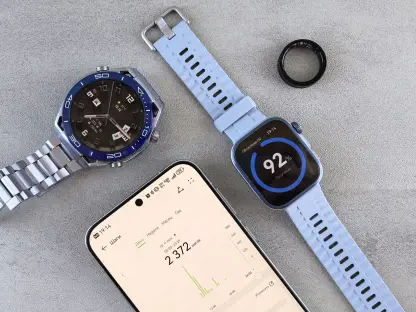

Securing patient records in the age of digital health requires a shift from transmitting raw data to transmitting only the mathematical gradients necessary for improving predictive healthcare algorithms. This transition is becoming increasingly urgent as the Internet of Medical Things (IoMT) transforms the medical landscape into a hyper-connected web of sensors and wearables. From wrist-worn pulse oximeters to implanted glucose monitors, the sheer volume of physiological data generated is staggering, yet the traditional method of funneling this information into a centralized cloud server has become a glaring liability. In this current 2026 environment, centralizing sensitive data creates massive “honeypots” for sophisticated cyber-attacks and increases the risk of accidental de-anonymization, which can lead to severe violations of privacy mandates like HIPAA and GDPR. Furthermore, the constant stream of high-resolution data often causes debilitating network congestion, delaying the very diagnostics these systems were designed to accelerate. By moving the intelligence to the edge of the network, healthcare providers can finally reconcile the need for high-fidelity data with the absolute necessity of patient confidentiality, ensuring that the future of remote care is as secure as it is effective.
The Methodological Framework: Validating Decentralized Intelligence
The shift toward federated learning is supported by a robust foundation of recent research, most notably a systematic review of 69 peer-reviewed studies conducted between 2020 and 2026. This extensive analysis followed the PRISMA 2020 guidelines to ensure that only the most rigorous and reproducible studies were included in the evaluation of remote healthcare technologies. By querying major databases like IEEE Xplore and PubMed, researchers filtered through thousands of records to identify frameworks that successfully balance model accuracy with privacy. The methodology employed independent reviewers to maintain a high standard of reliability, resulting in high inter-rater scores that underscore the validity of the findings. This structured approach confirms that decentralized learning is no longer a theoretical pursuit but a high-quality framework that has undergone intense scrutiny regarding its experimental validation and scalability. Because the majority of the literature was classified as high quality, the medical community can now view these decentralized architectures as a stable alternative to centralized infrastructures.
Building on this methodological rigor, the quality assessment phase of recent research focused on the practical viability of these systems in clinical settings. Each study was scored based on its ability to handle diverse datasets and its success in maintaining high security during the model aggregation phase. The findings revealed that over 60% of the research met the highest standards for reproducibility, which is a critical factor for hospital systems looking to implement these technologies on a large scale. This level of validation is essential because it addresses the skepticism often associated with new artificial intelligence implementations in healthcare. By establishing a clear set of criteria for dataset validity and experimental validation, the research community has provided a roadmap for healthcare administrators to evaluate which federated models are truly ready for deployment. This careful vetting process ensures that as medical institutions adopt these systems, they are doing so based on evidence-backed protocols that prioritize both diagnostic precision and the safety of the patient information being processed.
Predictive Accuracy: Maintaining Clinical Standards Without Centralization
A persistent concern in the healthcare industry is whether decentralized systems can match the diagnostic precision of traditional centralized machine learning. Recent data from 2026 indicates that federated learning systems not only meet but often exceed the benchmarks required for clinical use, frequently achieving predictive accuracies above 95%. This high level of performance is particularly evident in specialized diagnostics, such as cardiac arrhythmia detection and glucose level forecasting, where local training on diverse patient data allows the global model to learn from a wider variety of physiological patterns. For instance, edge-assisted systems using secure multi-party computation have demonstrated accuracy rates as high as 99%, proving that the absence of a central data repository does not hinder the algorithm’s ability to identify critical health trends. This suggests that the collective intelligence gained through federated updates is more than sufficient to replace the outdated “all-in-one” data storage model.
Beyond general predictive diagnostics, federated learning has shown remarkable success in more complex classification tasks, such as monitoring patient activity and detecting early signs of neurodegenerative diseases. Specialized frameworks combining deep reinforcement learning with advanced neural networks have reached accuracy scores of 99.67% for classifying wearable sensor data, a feat that is difficult to achieve when data is siloed or heavily anonymized for central transit. Similarly, detection models for conditions like Alzheimer’s, which rely on subtle acoustic voice signals, have maintained their high performance even when trained across multiple hospital nodes. These results reinforce the consensus that decentralization does not necessitate a compromise in the accuracy of medical evaluations. Instead, the ability to train on raw, high-resolution data at the source provides a richer learning environment for the models, leading to more refined and reliable outcomes that can be used directly by physicians to make life-saving decisions.
Efficiency and Optimization: Overcoming Resource Constraints in the IoMT
Modern IoMT devices often operate in environments where network bandwidth is a precious commodity and data transmission costs are prohibitively high. Traditional machine learning models are inherently difficult to manage in these scenarios because they require the transfer of massive raw datasets, which can lead to severe network bottlenecks. Federated learning addresses this logistical hurdle by implementing specialized mechanisms such as gradient compression and parameter quantization. These techniques allow devices to transmit only the most significant changes to the model, reducing the overall size of the updates by an average of 31%. In low-bandwidth settings, such as those utilizing LoRaWAN technology for rural healthcare monitoring, these optimizations have proven vital, as they allow for continuous model improvement without overwhelming the local network infrastructure. This ensures that even the most remote patients can benefit from high-level predictive diagnostics without needing an industrial-grade internet connection.
Energy management is another critical factor in the widespread adoption of decentralized healthcare, as many medical sensors are battery-powered and must remain operational for extended periods. While the addition of local processing and encryption does introduce some computational overhead, the emergence of “TinyML” and lightweight neural architectures has mitigated these concerns. Recent implementations show that sustainable architectures can limit energy overhead to as little as 5% compared to non-federated local processing. This is achieved through energy-aware scheduling, where training cycles are adjusted based on the current battery status of the device, ensuring that predictive monitoring does not lead to premature device failure. By utilizing models specifically designed for edge hardware, such as MobileNet or pruned versions of traditional networks, healthcare systems can deploy intelligent monitoring tools that are both effective and energy-efficient. This balance is essential for maintaining the longevity of implanted or wearable devices that patients rely on for daily health management.
Architectural Robustness: Scaling Secure Healthcare Networks
The structural design of a federated learning system is the primary factor determining its resilience and its ability to scale across large populations. While simple centralized aggregators are easier to manage from a coordination standpoint, they represent a significant single point of failure that can disrupt entire healthcare networks if compromised. To combat this, the industry is shifting toward hierarchical and decentralized topologies that distribute the aggregation task across multiple “fog” nodes or hospital servers. These advanced structures enhance the system’s fault tolerance, allowing it to continue functioning even if specific nodes lose connectivity or experience technical failures. For example, the “FedSensor” architecture has demonstrated superior coordination in highly constrained edge settings, proving that federated systems can handle thousands of concurrent devices without a loss in performance. This scalability is crucial for city-wide health initiatives where diverse sensors must work in harmony to provide a comprehensive view of public health.
Privacy protections within these architectures are further bolstered by the integration of sophisticated encryption and auditing protocols. Techniques like Differential Privacy add a layer of mathematical “noise” to the model updates, which prevents any malicious actor from reverse-engineering the data to identify an individual patient. Although this can cause a minor reduction in accuracy, the trade-off is often deemed necessary for the formal privacy guarantees it provides. Furthermore, the use of blockchain technology as a decentralized ledger has introduced a new level of transparency and security to the process. By recording every model update on an immutable blockchain, healthcare providers can verify the authenticity of every participating device and protect the global model from “poisoning” attacks. This combination of decentralized structure and cryptographic auditing creates a robust defense against both internal and external threats, ensuring that the integrity of the medical model remains intact even as it scales to millions of users.
The Path Forward: Integrating Federated Systems Into Clinical Practice
Despite the significant advancements recorded in recent years, the full integration of federated learning into daily clinical workflows faced several operational bottlenecks that required careful consideration. Most research conducted between 2020 and 2026 focused on relatively small device clusters, leaving the challenges of massive, nation-wide deployments as an area for immediate development. Healthcare data remained inherently inconsistent, with variations in patient demographics and sensor types creating statistical hurdles that occasionally slowed down algorithm convergence. To overcome these issues, the medical community began shifting toward more personalized versions of federated learning. This approach used clustering and meta-learning to tailor a global model to the specific physiological needs of an individual patient, rather than relying on a one-size-fits-all solution. These adjustments ensured that the unique patterns of a patient’s health were prioritized, leading to more accurate alerts and fewer false positives in emergency monitoring scenarios.
The conclusion of the systematic review established that federated learning was a highly effective and secure framework for the next generation of IoMT-enabled healthcare. By achieving accuracies over 95% while simultaneously reducing network overhead and maintaining strict data privacy, these systems addressed the most critical vulnerabilities of the digital health era. Future efforts were directed toward stream-based, continual learning protocols that allowed models to adapt to changes in a patient’s condition in real-time, such as aging or the progression of a chronic illness. The transition from experimental laboratory settings to the patient’s bedside was facilitated by the adoption of lightweight AI and blockchain auditing, which provided the necessary trust for medical professionals to rely on decentralized predictions. Ultimately, the successful deployment of these technologies proved that it was possible to provide proactive, high-performance medical care without ever compromising the fundamental right to patient confidentiality.