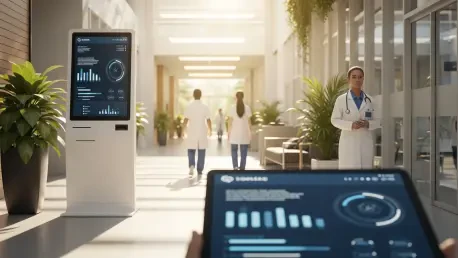

The traditional model of digital health where software acts merely as a communication bridge between patients and human providers is undergoing a radical transformation as autonomous clinical intelligence begins to take the lead in primary care delivery. New York-based Doctronic is at the forefront of this shift, recently securing forty million dollars in Series B funding led by Abstract and Lightspeed Venture Partners to scale its operations. This infusion of capital brings the company’s total funding to over sixty-five million dollars, a milestone achieved after a period of intense commercial scaling that saw revenue increase fifteen-fold over the past year. With a weekly user base now exceeding three hundred thousand individuals, the platform has demonstrated that patients are increasingly comfortable with artificial intelligence managing routine medical tasks. By moving beyond simple data interpretation, the organization provides a licensed clinical practice that operates across all fifty states, ensuring that patients receive 24/7 care through a system that is fully HIPAA-compliant.
The Evolution of Autonomous Clinical Reasoning
At the heart of this technological leap is a multi-agent AI architecture designed to replicate the structured clinical reasoning of a human physician rather than just mimicking conversational patterns. This system achieved a historic milestone late in the previous year when it became the first artificial intelligence platform authorized to autonomously renew prescriptions within the regulatory sandbox in Utah. Currently managing nearly two hundred different types of medications, the platform integrates a sophisticated safety protocol that conducts dozens of individual checks for every single renewal request processed. This level of scrutiny ensures that every decision remains grounded in established medical guidelines and historical patient data. Furthermore, the company has pioneered a specialized medical malpractice insurance program specifically for AI, providing a legal and financial safety net that allows the system to function as an independent practitioner. This foundation allows the platform to move from being an information resource to a responsible clinician.
Maintaining high clinical standards is paramount when removing the human-in-the-loop requirement, and data indicates that the system currently achieves a ninety-nine point two percent treatment alignment rate with traditional medical standards. Dr. Adam Oskowitz, one of the co-founders, has emphasized that the AI performs a level of due diligence that would be physically and mentally exhausting for a human doctor to replicate in a high-volume setting. While a typical physician might spend mere minutes reviewing a renewal, the autonomous agent analyzes comprehensive patient records, identifies potential drug interactions, and cross-references historical lab results in seconds. This consistency has directly contributed to a significant increase in patient retention, as evidenced by the fact that repeat visits have nearly tripled since the earlier funding rounds. By standardizing these rigorous safety protocols, the platform effectively eliminates the variability and fatigue-related errors that often plague traditional primary care environments, offering a reliable alternative for patients.
Scaling the Digital Front Door of Medicine
With the new capital, the strategic focus is shifting toward the implementation of these autonomous services within broader institutional frameworks, including hospital systems and academic medical centers. The goal is to position the platform as a digital front door that can streamline the intake and management process for primary care before a patient ever sets foot in a physical clinic. Part of this expansion includes moving into specialized fields such as pediatrics, where the complexity of dosage and developmental considerations requires even more precise algorithmic oversight. By partnering with insurance payers and large-scale healthcare networks, the organization seeks to integrate its autonomous renewal and screening services directly into existing electronic health record systems. This integration creates a seamless experience where medication histories and interaction screenings are handled automatically, reducing the administrative burden on nursing staff and general practitioners. This expansion is not just about growth but about embedding AI as a foundational layer.
The successful deployment of autonomous clinical intelligence necessitated a shift in how regulatory bodies and healthcare executives viewed the role of non-human practitioners in daily medical workflows. Stakeholders realized that the path forward required a commitment to transparent safety data and the establishment of clear liability frameworks, similar to the malpractice insurance pioneered here. Future implementations within hospital environments prioritized the offloading of routine pharmaceutical management to these systems, thereby allowing human specialists to focus on complex diagnostic cases that required nuanced emotional intelligence. Industry leaders moved toward adopting standardized AI-powered prescription services as a cost-effective method to bridge the gap in primary care access, particularly in underserved regions. The focus remained on developing interoperable data pipelines that allowed autonomous agents to access real-time patient information across different provider networks. By focusing on these integration strategies, the sector accelerated the transition toward a more efficient healthcare model.