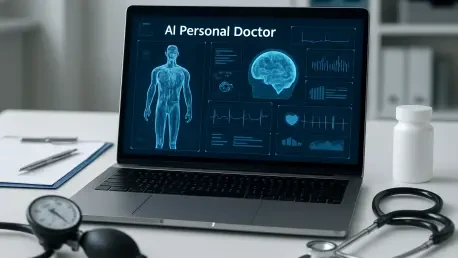

The familiar ritual of sifting through disjointed lab reports, deciphering medical jargon, and navigating complex appointment systems has defined the modern patient experience for decades, leaving many feeling like managers of their own care rather than recipients. This fragmentation has created a significant gap between health information and actionable care, a void that technology giants are now racing to fill with sophisticated artificial intelligence. Amazon One Medical’s introduction of an agentic AI assistant directly within its app signals a pivotal move toward a more cohesive and personalized healthcare journey, aiming to transform the smartphone from a simple communication device into a primary health management tool.
Beyond Symptom Searches to a Smarter Health Hub
The era of typing symptoms into a generic search engine and wading through pages of conflicting, often alarming, information is rapidly evolving. While a significant portion of the public already turns to consumer AI like ChatGPT for health-related questions, these tools lack the personal context necessary for reliable guidance. They operate on vast but impersonal datasets and are unable to account for an individual’s unique medical history, allergies, or ongoing treatments. This creates a risk of receiving advice that is, at best, generic and, at worst, dangerously inaccurate.
In contrast, the new generation of healthcare AI operates from within the clinical ecosystem. By integrating directly with a patient’s secure medical records—including lab results, prescriptions, and visit summaries—an assistant like the one from One Medical can offer deeply contextualized support. The conversation shifts from a hypothetical query to a personal consultation, allowing users to ask specific questions like, “Given my recent blood work, what dietary changes should I consider?” This level of personalization represents a fundamental leap from passive information retrieval to active health management.
Solving the Fragmented Healthcare Experience
The U.S. healthcare system is notoriously disjointed, with patient information often scattered across various specialists, labs, and clinics. This forces individuals to become the primary integrators of their own health data, which is a burdensome and inefficient process. The challenge lies not just in accessing care but in understanding the complete picture of one’s health, a task made difficult when records are not centralized or easily interpretable. This fragmentation can lead to delayed diagnoses, redundant tests, and a general lack of continuity in care.
An integrated AI assistant offers a potential solution by creating a single, intelligent interface for a patient’s entire health profile. By having a comprehensive view, the tool can connect the dots between a new symptom, a recent medication change, and a past condition. It serves as a constant, knowledgeable resource that helps patients make sense of their health journey in its entirety. This approach streamlines communication and empowers individuals with a holistic understanding of their wellness, reducing the administrative load that often accompanies managing one’s health.
Amazon’s Prescription for Proactive Care
What sets Amazon’s tool apart is its “agentic” capability, a term that signifies its ability to move beyond providing information to taking direct, helpful action. This AI is not just a chatbot; it is designed to be a functional assistant. After analyzing a user’s symptoms and health history, it can determine the most appropriate level of care needed—whether a virtual consultation, an in-person visit, or urgent care—and then proceed to schedule the appointment on the user’s behalf.
This proactive functionality extends to other areas of health management. For instance, the assistant can help manage medications by providing reminders and answering questions about potential side effects based on a user’s specific prescriptions. It can also interpret complex lab results, translating clinical data into understandable language and offering relevant context. These capabilities aim to close the loop between inquiry and action, making healthcare more efficient and accessible for the patient.
The Human Element in an AI-Driven System
Despite the sophistication of AI, the human element remains central to healthcare. Amazon One Medical has emphasized that its AI assistant is designed to augment, not replace, its team of human clinicians. The tool functions as a first line of support, handling administrative tasks and answering initial questions, which frees up physicians to focus on more complex diagnostic and treatment challenges. It acts as an intelligent intermediary that enhances the patient-provider relationship by ensuring patients are better informed and prepared for their appointments.
However, the integration of AI into personal health data raises valid concerns about trust and privacy. To address this, the company has built the assistant to be HIPAA-compliant, with robust data protection protocols in place. It has clarified that conversations with the AI are not automatically saved to a patient’s permanent medical record and that personal health data is not sold to third parties. Building and maintaining patient trust is paramount for the successful adoption of such a deeply personal technology.
A Typical Day with Your Digital Health Assistant
The practical application of this technology fundamentally alters a patient’s interaction with the healthcare system. An individual waking up with an unfamiliar rash could use the app to describe the symptoms. The AI, accessing their medical history, might cross-reference this with known allergies or recent prescriptions before recommending a virtual visit with a dermatologist and scheduling it for later that day.
Later, when lab results from a recent check-up become available, the user receives a notification. Instead of a confusing PDF of clinical data, the AI provides a clear summary, highlighting key metrics and explaining what they mean in the context of their overall health. If a follow-up is needed, the assistant can schedule it. This vision of a seamless, responsive, and integrated healthcare experience is what this technology promises, transforming a reactive process into a proactive partnership. The implementation of such AI tools ultimately signals a move toward a more patient-centric model, where technology works to simplify access and improve understanding of personal health.