
The race to merge human consciousness with digital computing has shifted from a speculative science fiction trope to a high-stakes geopolitical contest where the prize is nothing less than the future of human evolution. While American enterprises like Neuralink have long dominated the headlines, the Chinese neurotechnology ecosystem has quietly transformed into a formidable rival, driven by a state-orchestrated mission to achieve neural sovereignty. This evolution is not merely about medical breakthroughs; it is a calculated effort to integrate high-density neural arrays into the national infrastructure, positioning the brain-computer interface (BCI) as a critical pillar of economic and technological security.
This technological push is no longer confined to academic laboratories or small-scale pilot studies. Beijing has officially elevated BCI development to the same strategic level as artificial intelligence and nuclear fusion, signaling that neural connectivity is now a non-negotiable component of China’s long-term competitive strategy. By providing massive state subsidies and streamlined regulatory pathways, the government is fostering an environment where clinical implementation can move at a pace that often outstrips Western counterparts. This unique top-down approach ensures that resources are concentrated on overcoming the biological and electrical barriers that currently limit human-machine interaction.
Core Technological Components and Innovations
Invasive and Semi-Invasive Neural Implants
The technical landscape in China is currently defined by a dual-track development strategy that balances safety with raw data throughput. Semi-invasive systems, such as the Beinao-1, utilize electrodes placed on the surface of the motor cortex or just beneath the skull to capture neural signals without penetrating the delicate brain tissue. This approach significantly reduces the risk of inflammation and scarring, making it a viable short-term solution for restoring basic motor functions in quadriplegic patients. While these systems are safer, they offer lower signal resolution, which limits the complexity of the movements a patient can perform.
In contrast, fully invasive high-density arrays like the Beinao-2 represent the cutting edge of Chinese neuroengineering. These devices use ultra-thin, flexible electrodes that penetrate the brain to record individual neuron activity, providing the high-bandwidth data necessary for fluid, multi-dimensional limb control. The transition from Beinao-1 to Beinao-2 highlights a shift toward prioritizing precision over caution. By capturing more granular data, these implants allow for more sophisticated neural decoding, though they require more complex surgical procedures and long-term monitoring for biological compatibility.
Surgical Automation and Electrode Density
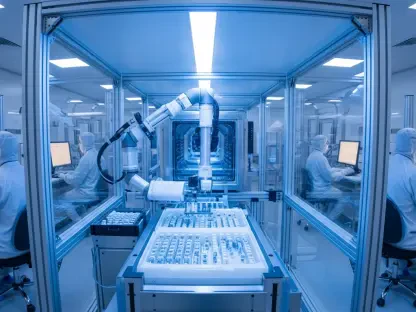
Efficiency in BCI deployment is heavily dependent on the precision of the implantation process, a field where Chinese firms are investing heavily in specialized robotics. While global benchmarks set by Western competitors utilize high-speed robotic systems to avoid blood vessels during electrode insertion, Chinese researchers are focusing on integrating real-time imaging with automated surgical arms to minimize tissue trauma. The goal is to reach a level of “plug-and-play” surgery where the human error factor is virtually eliminated, allowing for the rapid scaling of clinical applications across numerous hospitals.
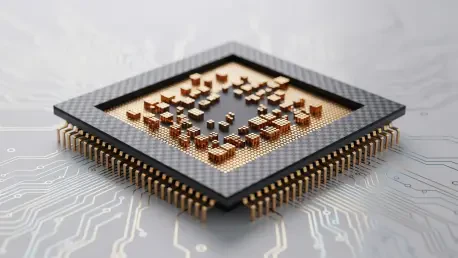
Electrode density remains a critical performance metric, as more sensors directly translate to better command of external devices. Chinese developers are pushing to increase the count of active channels in their arrays to match the thousands found in leading international designs. However, the challenge lies not just in the number of electrodes, but in the power management and wireless transmission capabilities of the hardware. Maintaining a high data rate without overheating the surrounding brain tissue is the current bottleneck that Chinese engineers are working to resolve through new low-power integrated circuit designs.
Current Developments and Strategic Shifts
The strategic landscape changed dramatically when the Chinese government designated BCIs as a “core future strategic industry.” This was not just a change in nomenclature; it resulted in a massive influx of capital, with firms like NeuCyber receiving hundreds of millions of yuan in direct state support. This financial backing allows companies to focus on long-term research and development without the immediate pressure of turning a profit, a luxury that many private startups in the West do not possess. This state-led model aims to bridge the current three-year technical gap by sheer force of investment and rapid iteration.
Moreover, there is a visible shift toward aggressive clinical scaling. Rather than spending years in small-scale animal trials, Chinese firms are prioritizing high-volume human studies to gather vast amounts of neural data quickly. By planning to expand trials to dozens of patients within a single year, China is creating a feedback loop where clinical results directly inform the next generation of hardware. This data-first strategy is designed to accelerate the refinement of neural decoding algorithms, which are the software “brains” that translate electrical pulses into digital commands.
Real-World Applications and Commercialization
Practical applications of this technology are already manifesting in clinical settings across major Chinese cities. Quadriplegic patients and individuals suffering from severe spinal cord injuries have begun using these implants to regain independence, controlling robotic arms or computer cursors with their thoughts. These successes serve as powerful proof-of-concept milestones that validate the government’s heavy investment. The focus remains primarily on restorative medicine, targeting conditions that were previously considered untreatable through traditional physical therapy.
A significant milestone occurred when China became the first nation to approve a wireless, invasive BCI device for commercial use. This approval for Neuracle’s implant indicates a regulatory environment that is willing to accept higher levels of risk to achieve market leadership. Unlike tethered systems that require a physical connection through the skin, these wireless units reduce infection risks and allow patients to use the technology in their daily lives. This move toward commercialization suggests that the technology is moving out of the experimental phase and into a broader healthcare market.
Technical Hurdles and Competitive Challenges
Despite the rapid progress, the industry faces substantial hurdles, particularly in the realm of integrated surgical systems and long-term device stability. The current three-year gap behind international leaders is most evident in the refinement of surgical robotics and the miniaturization of the external hardware components. While Chinese firms excel at mass-producing electronic components, the delicate balance of creating bio-stable interfaces that can remain functional for decades remains a significant scientific challenge that requires further breakthroughs in materials science.
Furthermore, the domestic market must overcome the logistical challenge of integrating these complex procedures into the standard healthcare system. Mass-market adoption requires not just the hardware, but a trained workforce of neurosurgeons and technicians capable of maintaining these systems. The reliance on domestic supply chains for high-end semiconductors also poses a risk, as the performance of BCI chips is directly tied to the availability of advanced manufacturing nodes. To mitigate these issues, China is doubling down on domestic research and development to ensure that every component of the BCI stack is produced locally.
Future Outlook and Global Trajectory
The trajectory of Chinese neurotechnology points toward an inevitable collision with global healthcare standards. As the technology matures, the focus will likely shift from simple motor restoration to more complex cognitive enhancements and sensory feedback systems. These “closed-loop” interfaces, which can both read from and write to the brain, could revolutionize the treatment of psychiatric disorders and neurological diseases. The long-term impact will be felt in how humans interact with every digital interface, potentially making keyboards and touchscreens obsolete in specialized industrial and medical fields.
The competition for global parity is also driving innovation in neural decoding. By leveraging its vast datasets from high-volume human trials, China aims to develop AI models that can interpret neural intent with unprecedented accuracy. If successful, this could lead to a scenario where Chinese BCI standards become the default for many international markets, especially in regions looking for cost-effective alternatives to expensive Western medical technology. The integration of BCI with broader AI ecosystems will likely be the next frontier in this technological evolution.
Summary of Clinical and Strategic Progress
The evaluation of the Chinese BCI sector revealed a landscape characterized by a high-velocity catch-up strategy backed by unprecedented state involvement. While technical disparities in surgical automation and signal density persisted compared to international frontrunners, the Chinese approach leveraged regulatory speed and massive clinical data collection to shorten the development cycle. The transition from experimental prototypes to approved commercial devices marked a pivotal shift in the industry’s maturity, proving that the state-led model could deliver tangible medical outcomes.
Researchers and policymakers successfully shifted the focus toward large-scale human trials, which provided the necessary empirical evidence to refine neural decoding algorithms. This move underscored a pragmatic realization that the fastest route to parity lay in high-volume application rather than purely theoretical research. The progress made in restorative applications for spinal cord injuries and motor impairment established a solid foundation for future expansions into cognitive and sensory interfaces. Ultimately, the industry moved closer to its goal of becoming a global leader in neurotechnology by prioritizing a unified national framework over fragmented private development.