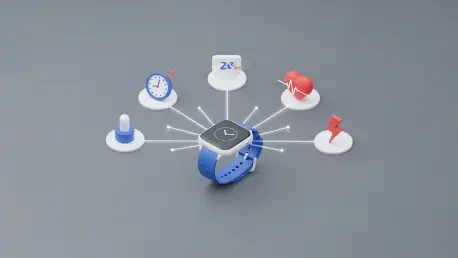

The silent progression of metabolic dysfunction often remains hidden beneath the surface of routine physical exams until it reaches a critical threshold of chronic disease. Recent research spearheaded by Google and published in the journal Nature suggests that the wearable technology already on your wrist may be the key to identifying these early metabolic warning signs before they escalate into life-altering conditions. By focusing on insulin resistance—a primary precursor to type 2 diabetes, cardiovascular issues, hyperlipidemia, and hypertension—this study demonstrates how consumer smartwatches can transition from simple fitness trackers into sophisticated medical screening tools. Rather than relying on occasional and often inconvenient clinic visits, this new approach uses continuous data to monitor an individual’s metabolic health in real time. This offers a more comprehensive view of how the body manages glucose and physiological stress throughout the day, providing a vital window into health.
Synthesizing Digital Signals and Clinical Data
The study’s methodology involved a diverse cohort of over 1,100 participants to build a highly accurate predictive model that integrates various aspects of human physiology. Researchers combined traditional blood markers, such as fasting glucose and lipid profiles, with continuous digital signals like heart rate variability, sleep quality, and physical activity levels recorded by everyday devices. A major takeaway from this experiment is that traditional fasting glucose tests often fail to capture the full picture of a person’s metabolic health because they only measure a single point in time under specific conditions. By integrating lifestyle factors and fluctuating physiological data, the researchers created a ground-truth measure that allows for a much more precise estimation of insulin resistance than standard clinical tests alone. This method provides a reliable foundation for identifying individuals who are at risk but might otherwise go undetected for several years.
Scaling this technology to millions of users worldwide presents an opportunity to create an accessible early warning system for those at risk of chronic metabolic conditions. The synthesis of various data streams allows for a sophisticated understanding of how daily habits influence internal biological processes. For example, the interplay between sleep deprivation and insulin sensitivity can be observed in real time, rather than inferred from a patient’s memory during a brief consultation. By establishing these predictive models, the research team has shown that the vast amount of data already being collected by consumer wearables can be repurposed for clinical-grade health monitoring. This approach removes the need for frequent, invasive clinic visits while maintaining a high level of diagnostic accuracy. It essentially democratizes health data, allowing individuals to gain a deeper understanding of their metabolic trajectory without requiring expensive specialized medical equipment.
Personalized Insights: The Role of the IR Agent
A standout innovation in this research is the development of the IR Agent, which is a specialized large language model designed to interpret complex health data for the average user. This AI-driven tool goes beyond simple data reporting by synthesizing an individual’s biomarkers and lifestyle habits into actionable health interventions that are easy to understand. By providing personalized recommendations based on specific metabolic responses, the IR Agent represents a significant leap toward the realization of truly personalized medicine in the modern era. It effectively bridges the gap between raw data collection and meaningful lifestyle changes, allowing users to understand how their daily choices directly impact their risk profile. Instead of receiving generic advice to eat better or exercise more, individuals receive tailored feedback that accounts for their unique physiological reactions to food, stress, and physical activity throughout the week, making the data useful.
The integration of artificial intelligence into metabolic monitoring ensures that the vast quantities of data generated by smartwatches do not become overwhelming or ignored by the user. The IR Agent acts as a continuous health companion, highlighting trends that might be invisible to the naked eye while offering a context-aware analysis of physiological changes. For instance, if the system detects a decline in heart rate variability alongside a slight increase in resting heart rate, it can correlate these signs with recent activity or sleep data to provide a nuanced health update. This level of insight empowers individuals to take ownership of their health by providing them with the tools to intervene early. The ability of the AI to translate technical medical signals into clear, actionable advice is a crucial component of this framework. It transforms the smartwatch from a passive data collector into an active participant in the user’s preventive healthcare strategy.
Shifting Perspectives: Continuous Health Narratives
Medical experts are increasingly advocating for a fundamental shift from snapshot diagnostics to what is described as a continuous movie of an individual’s internal health status. Traditional blood tests provide only a single point in time, which can frequently miss the dynamic fluctuations and invisible stressors the body faces during the course of a typical, demanding day. In contrast, smartwatches capture the cumulative demands of exercise, sleep, and daily activity, providing a longitudinal record of how the body adapts to various challenges. This continuous stream of data reveals metabolic stressors that are often undetected during episodic testing at a doctor’s office. Experts involved in the analysis agree that this approach provides a much more accurate reflection of how a person’s body manages glucose and insulin throughout the day and night. It allows for a deeper understanding of metabolic flexibility, which is the body’s ability to switch between fuel sources.
Capturing these fluctuations is essential because metabolic health is not a static state but a dynamic process influenced by numerous internal and external variables. Standard clinical exams often occur in a resting, fasted state, which may not accurately represent how an individual responds to a high-carbohydrate meal or a high-stress work environment. By monitoring physiological strain over longer periods, the technology identifies subtle patterns that suggest the early stages of insulin resistance or other metabolic imbalances. This level of granularity is particularly important for individuals in the early stages of metabolic decline, where symptoms are non-existent or vague. The move toward continuous monitoring allows for a more proactive stance in medicine, where trends are identified and addressed before they manifest as chronic illness. This shift in perspective prioritizes long-term health trends over isolated data points, leading to more informed and effective care.
Scalability: Transforming Global Healthcare Outcomes
Because smartwatches are already widely used across various demographics, this diagnostic framework is inherently scalable and accessible to millions of people on a global scale. By removing significant barriers such as the need for frequent invasive testing or expensive specialist appointments, this technology enables early detection for populations that might lack regular medical access. The ultimate goal of this initiative is to identify insulin resistance several years before it progresses into full-onset type 2 diabetes. Through timely adjustments in diet, exercise, and sleep hygiene, this proactive model of care has the potential to significantly reduce the downstream burden of preventable chronic diseases on global healthcare systems. As these devices become more sophisticated, the cost of preventative screening will continue to decrease, making it a viable solution for public health initiatives aimed at reducing metabolic disease rates in both developed and emerging markets.
The widespread adoption of this technology could fundamentally alter the relationship between patients and the broader healthcare system by fostering a more collaborative approach. When individuals arrive at a clinical consultation with months of high-quality physiological data, physicians can make more informed decisions and provide more targeted treatments. This data-driven approach reduces the reliance on patient recall, which is often subjective and prone to error, and replaces it with objective, recorded evidence. Furthermore, the ability to monitor populations in real time allows health organizations to identify emerging health trends and allocate resources more effectively. The scalability of this framework means that even minor improvements in individual health behaviors could lead to massive shifts in public health outcomes. This transition toward technology-enabled prevention represents a necessary evolution in medical practice, ensuring that healthcare remains sustainable.
Strategic Implementation: Future Steps for Metabolic Wellness
The research team successfully demonstrated that integrating wearable technology with advanced algorithmic analysis provided a superior method for early disease detection. Stakeholders in the medical community recognized the importance of moving toward these continuous monitoring systems to prevent the onset of chronic conditions. It was determined that individuals who utilized these digital tools were more likely to implement the necessary lifestyle changes before their metabolic health reached a critical state. Clinicians observed that the objective data provided by the smartwatches allowed for more meaningful patient interactions and highly personalized treatment plans. The focus shifted toward ensuring that these technological frameworks remained equitable and accessible to all segments of the population. As a result, the integration of consumer electronics into clinical workflows became a standard practice in preventive medicine. This proactive approach laid the groundwork for a more resilient and efficient healthcare system.