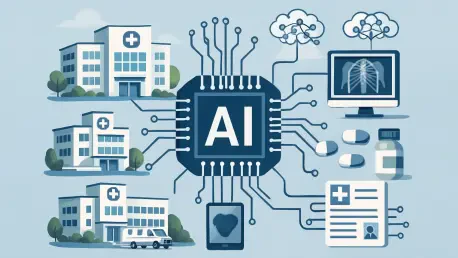

The current landscape of medical technology is defined by a frantic race to turn experimental algorithms into bedrock clinical tools that actually improve patient outcomes at a meaningful volume. As the healthcare sector moves through 2026, the honeymoon phase of artificial intelligence pilots has effectively ended, replaced by an urgent mandate for systemic implementation. Health systems are increasingly finding themselves at a crossroads where the slow, deliberate release cycles of traditional Electronic Health Record vendors collide with the immediate needs of overburdened clinical departments. This tension has birthed a new strategic priority: achieving AI autonomy to bypass the late-mover disadvantage that threatens organizational survival.
The Shift from Pilot Programs to Large-Scale AI Operationalization
For years, the industry operated under the assumption that AI would naturally flow through the pipes already laid by major EHR providers. However, the pace of innovation has outstripped these legacy roadmaps, leaving executives to grapple with the reality that waiting for a vendor update might mean falling years behind the competition. The pressure to operationalize is no longer just about staying modern; it is about maintaining a competitive edge in a market where efficiency is the only buffer against rising costs.
Consequently, the narrative has shifted from “if” a system will use AI to “how fast” it can be integrated into the daily workflow. Organizations are no longer satisfied with isolated success stories in single departments; they are looking for enterprise-wide solutions that can be deployed in months rather than years. This urgency stems from the realization that the traditional vendor-client relationship is often too rigid to accommodate the rapid iterations required by modern machine learning models.
The Evolving Importance of AI Autonomy in Healthcare
This shift toward independence marks a significant reversal from the historical reliance on EHR-native solutions that dominated the start of the decade. Research into AI scaling is now a survival mechanism for non-profit health systems operating on razor-thin margins and facing unprecedented levels of clinician burnout. Organizations are realizing that inaction is a decision in itself, one that often leads to staff turnover and financial stagnation as nimbler competitors adopt specialized third-party tools.
The broader relevance of this trend lies in the fundamental restructuring of the healthcare IT stack. By decoupling intelligence from the record-keeping layer, systems gain the agility to swap out underperforming models without overhauling their entire infrastructure. This autonomy allows for a more responsive approach to patient care, where the best available tool is utilized regardless of which logo is on the login screen.
Research Methodology, Findings, and Implications
Methodology
The study utilized a rigorous survey approach, gathering data from over 60 senior IT leaders, including prominent Chief Information Officers and Chief AI Officers across the country. Researchers employed a comparative analysis to track the declining sentiment toward traditional vendor loyalty, focusing specifically on how deployment timelines influence decision-making. Success was measured not by the existence of a pilot, but by the ability to move a tool into daily clinical or administrative workflows across the entire enterprise.
Findings
The data revealed a stark reality: only 22% of leadership teams are currently willing to wait for vendor-native solutions, a plummet from just a year ago. While 42% of systems have successfully deployed some form of AI, a sobering 4% have achieved measurable scale. This operationalization gap is widened by the fact that 80% of leaders struggle to measure ROI, and half of the respondents admitted that managing a fragmented vendor ecosystem is draining up to a quarter of their total IT bandwidth.
Implications
The pivot toward third-party ecosystems is creating a new set of logistical headaches, as IT departments must now manage a web of disparate integrations rather than a single unified platform. This fragmentation puts immense strain on technical staff and risks complicating the user experience for clinicians who are already fatigued by software bloat. Furthermore, with most organizations requiring a return on investment within 12 months, the financial stakes for choosing the right AI partner have never been higher.
Reflection and Future Directions
Reflection
There is a curious disconnect between the high priority assigned to AI and the dismal percentage of organizations reaching full-scale deployment. Managing a multi-vendor environment requires a level of orchestration that many legacy IT departments are simply not equipped to handle. Overcoming this vendor management drain will require a fundamental shift in how hospitals evaluate software, moving away from simple feature lists toward deep integration capabilities that can bridge the gap between third-party intelligence and legacy data.
Future Directions
Future investigations should focus on developing standardized ROI frameworks that specifically account for the nuances of healthcare AI, such as reduced physician charting time. There is also a significant opportunity to explore hybrid models where the EHR serves as a stable infrastructure while specialized third parties provide high-level cognitive processing. The role of the Chief AI Officer will likely morph into that of a master orchestrator, balancing the need for speed with the necessity of a cohesive digital strategy.
Conclusion: Balancing Agility with Integration
The transition from total EHR dependence toward a diversified AI strategy ultimately underscored the industry’s need for agility over traditional stability. Health systems that prioritized scaling over simple adoption found themselves better positioned to tackle the persistent challenges of clinician exhaustion and operational waste. Moving forward, the focus shifted from managing vendor relationships to mastering the integration of fragmented intelligence into a seamless patient care experience. Leaders recognized that while third-party tools offered speed, the ultimate success of these programs depended on creating a unified data environment that prevented organizational stagnation. This evolution suggested that the future of healthcare would be defined not by a single platform, but by the ability to orchestrate a complex ecosystem of specialized intelligences.