
Medical professionals across the United States operate under a heavy burden of responsibility, yet recent data reveals a startling reality where approximately half of all patient harm events go completely unrecorded within hospital systems. This invisibility is not a result of negligence but rather a symptom of a systemic reliance on manual, voluntary reporting that simply cannot keep pace with the complexities of modern clinical environments. When clinicians are stretched thin, the documentation of a near-miss or a minor complication often falls to the bottom of a never-ending priority list.
The objective of this exploration is to examine how Artificial Intelligence acts as a sophisticated safety net, catching the critical data points that human observation frequently misses. By transitioning from a reactive model to an automated, proactive framework, healthcare organizations can finally begin to address the latent risks that have long been buried in unstructured notes. This discussion covers the evolution of reporting technologies, the mechanics of AI-driven data mining, and the strategic shifts necessary for leadership to foster a genuine culture of safety.
Key Questions in Modernizing Patient Safety
Why Do Traditional Reporting Systems Fail to Capture Half of All Patient Harm?
The current crisis of invisibility stems from a fundamental mismatch between human capacity and the volume of data generated in a high-pressure medical setting. For decades, hospitals have relied on “voluntary” reporting, which requires a nurse or physician to manually enter an event into a database after their shift. However, when a clinical floor is understaffed or a patient’s condition is deteriorating, the administrative task of filing a report is often overlooked. This creates a skewed data set where only the most obvious or catastrophic errors are recorded, while subtle systemic failures remain hidden.
Moreover, traditional medical coding is designed primarily for billing rather than safety analysis. It captures structured data points but ignores the rich, narrative detail found in nursing shift notes or discharge summaries. Because many safety events are nuanced—such as a slight delay in medication or a recurring miscommunication during handoffs—they do not fit neatly into a checkbox. Consequently, these incidents live on as “white noise” in the medical record, inaccessible to risk managers who need that specific information to prevent future harm.
How Can AI Identify Safety Risks That Humans Overlook?
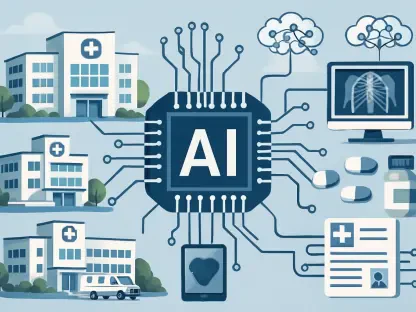
Artificial Intelligence transforms the reporting landscape by utilizing natural language processing to scan millions of unstructured documents in real time. Unlike a human reviewer who might take hours to audit a single chart, AI algorithms can instantly identify specific “markers” of harm, such as mentions of unexpected return to surgery or the use of specific rescue medications. By mining narrative text for keywords and context, these tools uncover patterns of vulnerability that were previously impossible to detect at scale.
This technology is particularly effective at highlighting risks faced by underserved or vulnerable populations. For instance, by flagging terms related to mobility aids or the need for an interpreter in clinical notes, AI can reveal if specific groups are experiencing a higher rate of falls or medication errors. This granular level of detail allows hospitals to move beyond general safety goals and implement targeted interventions. The result is a much clearer picture of the hospital’s safety profile, derived from data that already exists but was previously unsearchable.
Does the Integration of AI Create More Work for Healthcare Staff?
One of the most significant advantages of AI in a clinical setting is its ability to reduce, rather than increase, the administrative burden on frontline workers. By automating the detection of adverse events, the system removes the “guilt” and time-pressure associated with manual reporting. Instead of asking a tired clinician to fill out a digital form, the AI identifies the event and drafts a preliminary report. This allows the safety team to focus their energy on investigating the root cause and implementing solutions rather than chasing down missing documentation.
Furthermore, AI-enabled systems help prioritize the workflow for risk management departments. Instead of sorting through a mountain of low-impact alerts, the technology can cluster similar events and highlight high-risk trends that require immediate attention. This creates an intelligent learning loop where the system becomes more efficient over time. By handling the rote tasks of data entry and organization, AI empowers human experts to do what they do best: apply judgment, empathy, and strategic thinking to improve patient care.
Strategic Path Forward
The shift toward a technology-driven safety model required a total rethink of how hospitals value their internal data. Organizations that successfully bridged the reporting gap did so by investing in dual-purpose infrastructure that supported both clinical care and automated oversight. This move necessitated a cultural change where AI was viewed as a partner in the “Zero Harm” mission rather than a replacement for human oversight. Leaders began to understand that comprehensive visibility was the only way to protect both the patient and the provider from systemic failures.
The integration of these advanced tools helped eliminate the reliance on memory and manual effort, which had been the primary roadblocks to safety for years. By surfacing the “invisible” 50% of harm events, hospitals gained the insights needed to redesign workflows and prevent errors before they reached the patient. This transition proved that while technology provides the data, the ultimate success of a safety program still relies on the commitment of leadership to act on those findings.
Final Thoughts on Achieving Zero Harm
As the healthcare industry continues to evolve, the moral and financial costs of ignoring half of all patient harm have become impossible to justify. The transition to AI-enabled reporting is a necessary step for any organization serious about reaching the goal of universal patient protection. It is time to move away from outdated, human-dependent systems and embrace the precision that modern computational tools provide.
Every healthcare professional should consider how enhanced visibility could transform their specific department. Whether it is identifying medication errors more accurately or ensuring that vulnerable populations receive equitable care, the potential for improvement is vast. The path to a safer future is paved with data, and the tools to harness that data are finally within reach.